


After attending drop in yoga classes offered at my community centre and gym, I had
a strong desire to learn more.
I gifted myself a 4 week Yoga Basics Workshop at Breathe Yoga Studio for my 60th Birthday.
This turned out to be one of the best decisions I have made.
I was working in a busy paediatric clinic at the time and my exercise was running and swimming. Yoga provided a different way
for me to mobilize joints, strengthen muscle and stretch out tight hamstrings.
However it was the alignment of the breath with movement that created such a strong sense of well being for me. That sense of well being lingered long after class and kept me returning to the mat.
The sense of lightness, calmness and shared community helped me navigate the challenges of my daily life.
With a regular yoga practice I have noticed that areas in my body have become more open. Also muscle aches,
stiffness and discomfort that normally with aging, or repetitive use, are actually decreased.
I never expected to enroll in the Teacher Training Program at Breathe Yoga Studio 8 years after
my Yoga Basics Workshop, but I’m very grateful to my teachers for having encouraged
me to do so. Apart from deepening my own practice, it made me realize the benefit
of yoga for myself, was just coming to the mat and trying, and not to perform the
perfect pose.
Age is no barrier to begin your own yoga journey!
I continue to be inspired and supported by my yoga teachers and fellow yogis.
Svitlana September 2nd, 2021
Posted In: Uncategorised, Yoga Teacher Training
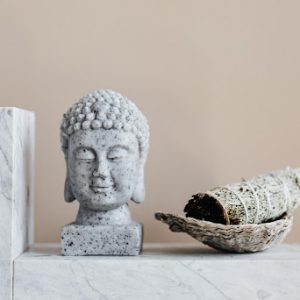
Yoga isn’t your typical exercise routine. Sure, it will help you improve muscle tone and flexibility, everything you want from a standard workout at the gym. What sets yoga apart is the uniquely holistic approach it takes to strengthen your body, mind, and soul. For many, yoga serves as an essential retreat from a chaotic or busy life, a time to regroup, unwind, and build mindfulness.
Yoga provides a myriad of both physical and mental health benefits. In addition to engaging muscle-groups in poses — or Asanas — that promote strength, flexibility, and balance, yoga also incorporates deep breathing, meditation, and body awareness. This helps decrease stress, relieve anxiety, and promote deep relaxation. Yoga is an accessible exercise option for beginners and a great way to build a healthy lifestyle. You don’t need much in the way of specialized equipment to start practicing in your own home yoga room today.
Why a Yoga Room?
If you’re looking for a good way to work out at home but find yourself daunted by the cost of home gym equipment, a yoga room might be right for you. Yoga may be the perfect avenue to reach your physical fitness goals. It is ideal for almost every body type and will help you grow strong and limber with dedicated practice. Rather than sinking hundreds of dollars into expensive weights and treadmills, all you need for a yoga room is some free space clear of visual clutter, a mat, and an instructional video. You may wish to invest in blocks or straps down the road, but it doesn’t take much to get started.
A “yoga room” doesn’t even require you to set aside an entire room in your house; a corner in your living room or bedroom will do. The space you set aside for yoga practice is simply an area for you to practice mindfulness of your physical body. You can use this space for high-intensity, strength-building yoga exercises. You can also use this space to meditate, read, or practice self-care. Think of your yoga room as a combination of your lounge, meditation room, and exercise area. This will help you get more use out of the space.
You should set up your yoga room as a place that inspires mindfulness and tranquility. Remember that sense of zen you feel when you step into your favorite yoga studio? These studios are often set up with elements that play on your senses to help get you into the right frame of mind. Think scented candles, calm lighting, or a smiling Buddha statue. When designing your home yoga space, incorporate elements that help you stop, breathe, and be present in your body.
How to Prepare Your Space
Preparing and decorating your home yoga space should be done with thoughtfulness and intentionality. A yoga room should be calming, inviting, and relaxing. In addition to basic yoga supplies, you’ll want to consider visual aesthetics, lighting, and sensory inputs to help you achieve the best possible yoga experience.
Minimize clutter
A clean space with few visual distractions will help you get into the right frame of mind for yoga practice. How do you feel when you come home to an apartment full of piles of laundry and dirty dishes in the sink? Clutter isn’t great for your mental health, so your yoga room should serve as a refuge. When it comes to a yoga room, less is more. Be very intentional with what items you include in your yoga space. Only leave those that are functional and beautiful.
Lighten and brighten your space
Lighting has a significant effect on your mood, energy, and overall wellness. Consider installing dimmer switches for your ceiling lights to alter the mood of your yoga room quickly. Cotton drapes are also an excellent tool to soften and brighten a space. They can also be used to curtain off your yoga space from the rest of the living area, filtering light and adding privacy.
You may wish to take advantage of natural light by setting up your space near a window or balcony. Doing so can help make the area feel more open and airy. Conversely, if you feel calmer in a dark environment, set up your yoga space away from windows, or consider adding blackout curtains.
Satisfy your senses
Once you have established your yoga area, it’s time to add all those little touches that make you feel calm and grounded. It may be a little difficult to decide what to place in your home yoga studio, particularly if working with a small area. To get inspired, use your five senses as a guide for items and decor that get you into that yoga vibe.
Décor
The great thing about having your very own yoga space is that you can personalize the décor according to your own style. Consider which design elements inspire your soul, mind, and body. What would you like to see and feel most when practicing yoga?
Plants are a great option for making the air feel fresh and alive. Including items of sentimental value is a great way to make space your own. Remember not to go overboard on décor. When it comes to a yoga room, less is more, so make sure to leave plenty of open space.
Assemble yoga supplies
Now that you’ve achieved that perfect atmosphere for your yoga room, it’s time to get the actual yoga equipment in order. The most fundamental piece of equipment you will need is a mat. Choosing a yoga mat with a color or design you love will inspire you to practice more often. As you progress in your practice, you may find yourself incorporating yoga blocks into your routine. Make sure you have everything you need to carry out your favorite poses.
Yoga for Your Mind and Soul
Use the time you practice yoga to be consciously mindful of your day and thankful for everything going on in your life. One of the best aspects of yoga is that it has been proven to impact mental health positively. Because yoga requires you to be highly conscious of and present with your body, it’s an excellent practice to see yourself from another perspective, cultivates body positivity, and take some time to love yourself.
Your yoga sessions are a special time to focus on your body, breathe deeply, and let go of stress. While there are many styles of yoga that are focused on building physical strength and balance, you don’t have to use your yoga room exclusively for physical routines. A yoga room can also serve as a calm, tranquil spot to simply breathe and meditate.
Enjoy Your Yoga Room
While you may not make it to the studio every week, a home studio makes it easy to fit yoga and meditation sessions into a busy life. A regular yoga practice conditions both the body and mind for inner stability and centeredness; you will quickly find that this positively impacts all aspects of your daily life. Setting up your yoga space to inspire peace and tranquility is key to unlocking the myriad of benefits that come from practicing yoga daily.
Svitlana May 28th, 2021
Posted In: Uncategorised
|
|
|
|
Svitlana September 17th, 2020
Posted In: Uncategorised

July 30, 2020
Dear Breathe Community,
You have likely heard the positive news by now that Toronto is moving into Stage 3 openings. As a yoga studio, Breathe falls into the category of businesses that the City of Toronto is allowing to re-open.
However, with social distancing requirements it is still not possible or economically feasible to open the studio for live classes. Even with strict adherence to social distancing and other safety protocols, including cleaning and disinfecting, we are still a yoga studio whose foundational principle is to Breathe. Breathing in a group environment with fans blowing in an older building still creates unacceptable risk.
So far all the reasons above, Breathe’s physical location will remain closed and we will continue to Live Stream our classes with our wonderful teachers along with our amazing support staff.
On behalf of all of us at Breathe I can’t tell you how grateful we are for your on-going support which enables us to continue to do what we absolutely love. This thing called Yoga.
I’d also like to convey my deepest gratitude for all of your messages of thanks and expressions of how much our live streaming classes have helped you stay centred, fit and connected to Community. Please know that we do pass on your messages to staff and teachers.
I know that many of you will be disappointed with this decision as you have been looking forward to getting back to the studio to help instil some normalcy back into your lives. Trust me, I understand. But I do think this is the best decision I can make at this time for the sake of everyone.
Many thanks and I will be in touch again soon. In the meantime, stay safe and continue your yoga practice with us and the Breathe Community. If you’ve been practising regularly, you’ll know it helps during this time of uncertainty.
If you have any feedback or would just like to reach out I’d love to hear from you. Please email me on info@breatheyogastudio.com
|
Svitlana August 3rd, 2020
Posted In: Uncategorised

My sincerest apologies for this inconvenience. Hopefully I am making the right decision. What I am told is that these next two or three weeks are critical if we are to reduce the impact of the pandemic, flatten the curve and reduce the strain on our healthcare system. In light of this information, I believe it’s the best decision I can make for the health safety of Breathe staff, You – our members and your extended families.
Svitlana March 15th, 2020
Posted In: Uncategorised
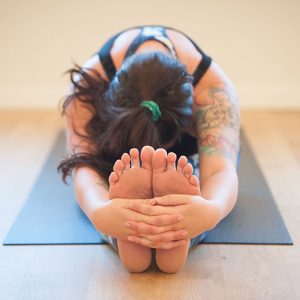

Breathe Director of Teacher Training, Margot and Breathe Founder, Svitlana
“During this teacher training I was going through a tough transition in my life and I then had to deal with some difficult personal issues halfway through the programme. Not only did the programme give me tools and space to focus on myself and to heal but it also gave me a hugely supportive, caring and wise group of peers and teachers who helped me to cope and to learn more about myself and become stronger and comfortable with myself. I was able to be vulnerable and share in the space that Breathe gave me and this made a very big impact on my wellbeing.”
– Graduate, Breathe Yoga Teacher Training Program
Over the 10+ years that Breathe has offered Yoga Teacher Training in Toronto, our Founder Svitlana has seen literally hundreds of students pass through the program. And what stands out the most to her?
When she started the teacher training program, Svitlana thought that her biggest wish was to see her graduates become yoga teacher superstars. Dynamic personalities with super advanced yoga practices that would fill up classes at Breathe.
But as the years went by, something more meaningful emerged.
What actually transpired year after year was that students enrolled in the teacher training program were finding courage to make profound changes in unhealthy lifestyle habits, relationships, jobs. Anything that was no longer serving them.
About a month into the program Svitlana would start seeing a lot of emotion. Some cried. Others were asking a lot of deep questions like “Why am I so unhappy?” . ” Why do I feel so much happier after I’ve been practising yoga?”. “Why do I love this so much?”. Even realizations like, “I want to leave my job.” “I need to leave my job.” “This relationship is making me unhappy.” “I need to leave this toxic relationship”.
On the other end of the spectrum “I am truly happy doing what I am doing.” “My partner makes me happy.” “I am so grateful to have kids, a partner and friends who love me – I need to start appreciating them more”.
Essentially Svitlana started noticing that the biggest and the most important thing that was happening was TRANSFORMATION.
By spending a lot of time on their yoga mats and the self study that ensues, students were beginning to embrace their fears. They started articulating the root cause of unhappiness. Or the root cause of their happiness. With this knowledge, they could start working towards change for the better. Change for the healthier. Almost all would leave the program with a deeper sense of gratitude for the journey. And for the blessings they have in life.
Today would she take the super star teacher graduate who could fill Studio Classes ? Sure. But knowing that the Breathe teacher training program here in Toronto * is really about is enabling its participants to undergo positive change in their lives is way more gratifying. She’ll take that any day.
And by the way? Along this path of self growth, finding courage to make positive healthy choices and studying the Breathe teacher training curriculum, Breathe yoga teacher training grads become outstanding yoga teachers. Our yoga teacher training graduates are amongst the best teachers in the Toronto, teaching in some of the leading yoga studios and health clubs. Many employment opportunities can even be found online these days using job search tools such as https://ca.jooble.org/. Svitlana couldn’t be prouder of them.
APPLICATIONS FOR THE 2020 TEACHER TRAINING PROGRAM ARE BEING ACCEPTED NOW. APPLY NOW.
* Read ‘Why Take Your Teacher Training Program in Your Community’ here
Svitlana February 27th, 2020
Posted In: Uncategorised
February is coming to an end and we are making our way through 2020.
Unfortunately many of us are falling into the habits we swore off at the beginning of January. We are back into the habit of being busy. We live in a society where this is the norm, if not the celebrated way of life. We are all so used to the constant pressure to be “everything” to everyone. Many of us are feeling our most tired, most stressed, and even at the end of our rope.
Here’s the thing. Most of us have others relying on us. Our children, partners, ageing parents, colleagues or other people that hold a special place in our life. Many of us take too much on, feeling like we can’t say no. This leads our overall wellness to suffer. And frankly a lot of this is our own fault. Yes, some things are an emergency. But most of what we are running ourselves ragged over, isn’t.
How can we course correct two months into this New Year? If you are like most of us, you do everything because you can.
You may even (secretly) be proud of your never-ending To-Do List, like a badge of honour. But if you are at the point of Burn-Out, is it really something to be proud of?
This might be the time for a little introspection and realization that just because you are capable of doing a task doesn’t mean it’s your’s to do.
Time is a non-renewable resource. Every time you commit your time to one thing it will always be a trade-off for something else. For every “Yes” you give, there is a silent “No” to something else.

Let’s be honest. It is gratifying to get things done and to “achieve” at work, at home and in life.
However, if you are completely spent and you aren’t doing the things that bring you joy like:
you will eventually come to an existence of feeling resentful, bitter, exhausted, unfulfilled and all around miserable.
We change our priorities.
If we don’t prioritize and pay attention to our wellness, it will get our attention through other aspects of our life falling apart.
You cannot burn a candle on both ends. You need to slow down.
This can be scary for most of us. But Breathe is here to help you make the transition and improve the overall quality of your wellness.

Svitlana February 26th, 2020
Posted In: Uncategorised

As 2020 commences, and we have the inevitable resolutions that come along with a new year, I’d like to share some strategies that have been useful for me in sticking with the changes I wish to make in the new year.
The first strategy is a simple and obvious one: choose attainable goals. Small, bite size things you can do that you will actually succeed at. Failed resolutions out number successful ones, but there are simple ways around that.
Firstly, it’s helpful to apply resolutions targeted to specific goals, such as towards your health, exercise, study, sleep, or behavior. As well, I like doing things that include numbers, because when you count (such as minutes or repetitions) you can see if you’ve reached your goal.
For example, for a resolution towards health or diet, you could make a simple resolution to drink one glass of water first thing in the morning before doing anything else. That small addition has been shown to lead to greater dietary improvements by behavioral economist Dan Ariely.
If you have a hard time practicing yoga regularly, make a resolution to do five sun salutations five days per week. If some days you do more, that’s great. But set a minimum bar, not a maximum, and stick to the minimum. Who knows, over time, your minimum might expand naturally.
If you don’t practice yoga but do other exercise and have a hard time sticking with it, make a simple plan. For example, with cardiovascular exercise, you don’t need to do a whole lot for it to be effective. Try 25 jumping jacks, 25 pushups, 25 squats, and perhaps 25 seconds of mountain climbers five days per week and you’ll be pretty well situated. Or choose a reasonable amount of just a few exercises that you can do regularly.
My particular desire this year is to read more and finish the books I start. I’ve made a resolution to read 25 pages per day. So far so good. I started in December (a little early) and have finished five books since then and am feeling pretty good about myself for that!
If you want to start or keep a meditation habit going, you can use the idea in some of the yoga texts that moments of concentration added together equal meditation. Each time you bring your mind to concentrate on one breath, or one mantra, it equals one moment of concentration. So, if you are looking to start or keep up with a meditation practice, you could start by trying to do 25 moments of concentration on either each breath, or on a mantra. It takes several minutes to do so, and if you do it in a relaxed manner, pausing slightly between each moment of concentration to remind yourself what you are doing, your mind can stay relatively thought free during that practice. An easy mantra to use is the So’ham mantra, inhaling the sound “so” and exhaling the sound “ham”. This is a contraction of “sah” and “aham,” which means, in Sanskrit, “I am That.”
By repeating any of your resolutions on a regular basis, your activity gets wired into your brain through neuroplasticity, and that becomes a new pattern of behavior for you. If you can keep any of your resolutions up for at least five to six weeks, they start to become automatic as they become a part of you, and thus are easier to maintain.
Another way to look at resolutions is through the Sanskrit word sankalpa, which means a resolve (like a resolution), an intent, a vow or determination to perform a ritual or observance, or a conception or idea formed in the mind or heart. Remembering why we formed the resolutions that we do, on a regular basis, can sometimes be the best support we can find within us for actually sticking to them. It can keep us going when we start to lose steam.
If you look at a resolution as a vow, we can also find vows as the foundational practices of Ashtanga Yoga, the five yamas, which were described by Maharishi Patanjali as the maha vratas, “great vows.” These can be observed (to a certain degree) by anyone, anywhere, born at any time, who is desirous of spiritual liberation… or if not desirous of that, then perhaps of just trying to be a good person. Here is a great commentary on the great vows.
Svitlana January 8th, 2020
Posted In: Uncategorised
Tags: anxiety, Personal Development, Yoga, Yoga Teacher Training Toronto, YTT
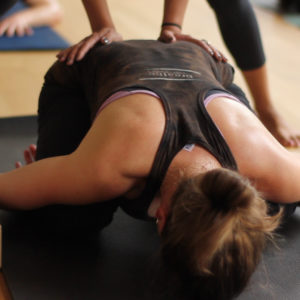
Breathe will be hosting a Yoga Teacher Training Information Session on December 15th. Click here to attend and meet Program Director Margot Stokreef.
Svitlana December 10th, 2019
Posted In: Uncategorised
Tags: anxiety, Personal Development, Yoga, Yoga Teacher Training Toronto, YTT
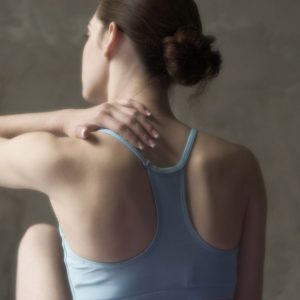
Injuries are apart of participating in sports, but luckily the body has the amazing ability to heal itself. The body’s innate ability to create chemical reactions and cellular metabolism are the back bone to our body’s healing ability. Science has allowed us to understand how this works and consequently how to manage injuries. This article will highlight the type of injuries that can occur, the phases of healing, and the basics on how to handle these type of injuries.
Injuries happen to all types of tissues. A muscle strain is when muscle fibers tear, usually due to forcibly stretching a muscle actively or passively. Tendinitis is inflammation of the tendon itself due to an acute irritation, whereas, tendonosis is inflammation of the tendon as a result of repetitive overuse.
To find out more about how injuries happen and how you can proactively prevent and treat both acute and chronic injury, like and Osteopath read more on the Breathe Blog. A sprained ligament is usually due to an acute incident which causes ligament fibers to tear. Bone fractures are when the bone tissue is compromised, which results in a simple or compound fracture.
When tissue is damaged, the body goes through a predictable sequence of healing – the 3 phases of healing are the inflammatory phase, the fibroblastic (repair) phase, and the long term process. The inflammatory phase is generally the first 3-4 days where the site of injury is red, hot, swollen, and there’s a loss of function. The inflammatory phase is a result of cellular injury, which leads to altered metabolism and chemical mediation. The fibroblastic phase begins around day 3 and takes up to 6 weeks. The fibroblastic phase is called the repair phase because it is the period where cells proliferate and regenerate, leading to a scar formation and the repair of the injury. The last phase is the long term process, which lasts 6 weeks to years and focuses on strengthening the injury by applying appropriate stress and strain on the scar. It’s critical that injured structures are exposed to loads progressively to increase strength, facilitate the remodelling and realignment of fibers and help with the range of motion.
When these injuries occur the athlete should look to “POLICE” their injury – an acronym that stands for Protection, Optimal Loading, Ice, Compression, Elevation. Protection can be broken down into examples like shielding the injury by using a cast, using a sling or crutches to take load off the joint, and preventing joint movement by using a splint or cast. It’s especially important to unload the injury site when dealing with acute soft tissue injury. Optimal loading is the stage when rest should be replaced with a balanced, incremental rehabilitation to encourage a fast recovery. Icing plays a vital role during the inflammatory stage because it freezes out nerve pain, decreases the metabolism and secondary injury, and prevents further swelling – ice does not reduce swelling! The best method of icing is to have a combination of ice and water in a plastic bag compressed on the injury site, and follow a regimen of “10 minutes on 10 minutes off”. Compression helps to limit the amount of blood flow to a region by up to 95% if tied tightly and 60% if loosely wrapped. Lastly, elevation can help reduce blood flow to the site of injury, but it must be at least 30cm above the heart. Elevation reduces blood flow up to 20% when it’s 50cm and 25% when the injury site is 70cm above the heart.
By understanding the type of injury and the phases of healing, health practitioners can help facilitate a healthy recovery. If you are dealing with any type of injury or pain, please seek professional advice.
BOOK WITH CLARKE THOMPSON AND EXPERIENCE WHAT OSTEOPATHY CAN DO FOR YOU
Svitlana September 18th, 2019
Posted In: Uncategorised
Tags: acupuncture, anxiety, Breathe Profile, stress, wellness
