


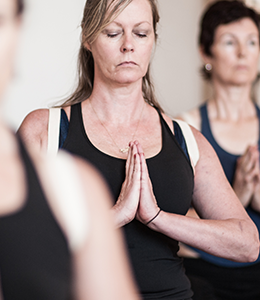
When most people think of yoga, the first thing that comes to mind is moving through postures on a mat. But yoga is much more than physical movement. One of the quieter, more meditative branches of yoga is Kriyā Yoga—a practice designed to calm the mind, balance your energy, and help you connect more deeply with yourself.
Kriyā Yoga uses a combination of breathing techniques, hand gestures, sound, and visualization to turn the focus inward. Instead of stretching the muscles, this practice gently stretches the mind—teaching it to let go of distractions and rest in stillness.
It may sound mysterious, but at its heart Kriyā Yoga is very simple: use the breath and body to quiet the mind, and from there, you naturally drop into a deeper meditation.
Here are a few of the main tools used in practice:
Breathwork (Pranayama): Focused breathing that calms the nervous system and clears the mind.
Mudras: Hand gestures or simple body positions that help direct energy and attention.
Visualization: Guided awareness of energy moving along the spine and through the chakras (energy centers).
Chanting: The use of sound and vibration to create focus and inner harmony.
Each of these can be practiced on their own, but when woven together, they form the heart of Kriyā Yoga.
Kriyā Yoga offers benefits for both body and mind:
Less stress and more calm
Sharper focus and mental clarity
A natural boost of energy
A deeper meditation practice
A growing sense of connection with your inner self
Join Breathe Yoga for its upcoming workshop Introduction to Kriya Yoga. with Breathe Instructor Riva to learn the basics and explore its wide benefits.
Svitlana September 25th, 2025
Posted In: Uncategorised
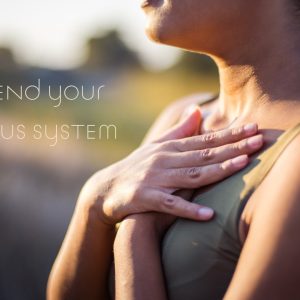
SOMATIC PRACTICES are mind-body practices which focus on working, or partnering, with our
nervous system. These simple, evidence-based practices (e.g. movement, grounding, box
breathing, self-hug, shaking, re-bounding, humming, singing, being in nature) can help
release physical and emotional tension which can get stuck in the body and nervous system.
CENTRAL TO SOMATIC APPROACHES to well-being is Polyvagal Theory, developed by Dr. Stephen
Porges. It explains how the human nervous system has evolved to enable us to survive in
moments of danger (through our fight/flight or freeze response) and to thrive in times of safety
(through our social engagement/connection/ventral vagal system).
POLYVAGAL THEORY explains that our “threat response “or survival system is built for short-term
use to defend against a perceived threat to our life (e.g. a tiger in the jungle). When we
perceive threat (often an unconscious & automatic process based on past experiences), our
body responds by activating the fight/flight/freeze branch of the nervous system (e.g.
escalating the heart rate, releasing adrenaline, increasing blood flow to the muscles and
enhancing oxygen uptake) while simultaneously shutting down other functions (e.g. digestion,
elimination, rest, social engagement), which take energy from the more immediate need to
fight/escape danger. Once the perceived threat has passed, the nervous system is designed
to move back into a state of regulation (e.g. feeling calm, connected and curious).
AND YET IN TODAY’S WORLD of constant stimulus, pressure, endless “to do’s “, and stressful or
traumatic events, our systems can become stuck “ON” in fight/flight or “OFF” in freeze mode.
In these states, we lose our ability to feel safe, calm and connected to ourselves, to others, to
the world around us and to spirit. We continue to feel anxious, agitated, angry or lethargic,
detached and depressed. Often, we swing between these dysregulated states.
THE GOOD NEWS IS we can learn how to befriend our nervous system and cultivate a place of
safety and stability from within. With somatic practices we are gently working to bring
flexibility and flow back to the nervous system. With flexibility restored we are more easily
able to return to state of regulation following a big challenge or particularly stressful situation.
In addition, over time, and with practice, it is possible to increase our capacity to experience a
wider range of life – taking on more excitement, goals and challenges and having capacity to
be with difficult experiences without shutting down, tuning out or disassociating.
Please join me in our upcoming Somatic Skills Workshop, on October 4, 1:30-4:30 pm at
Breathe Yoga Studio, where we will bring the theory into practice.
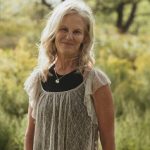 Trish Sullivan has been practicing and teaching yoga and meditation for over 20 years. She is a Registered Yoga Teacher (RYT200) with an additional certification in Trauma Informed Yoga and Somatics (100 hrs). She has also earned her certification as a Mindfulness Based Stress Reduction (MBSR) facilitator and has been leading courses, workshops and trainings for the past 8 years in mindfulness and body based practices to facilitate living with greater ease and well being. Trish leverages evidence-based tools and the ability to create a compassionate container to support individual learning and growth. Trish’s passion for teaching comes from experiencing the benefits of yoga, mindfulness and somatic practices in her own life. She loves to share her learning and to be in community with other seekers. Trish has recently completed a 3 year Somatic Experiencing Practioner (SEP) training program and is working towards her final certification as an SEP.
Svitlana September 24th, 2025
Posted In: Uncategorised
