


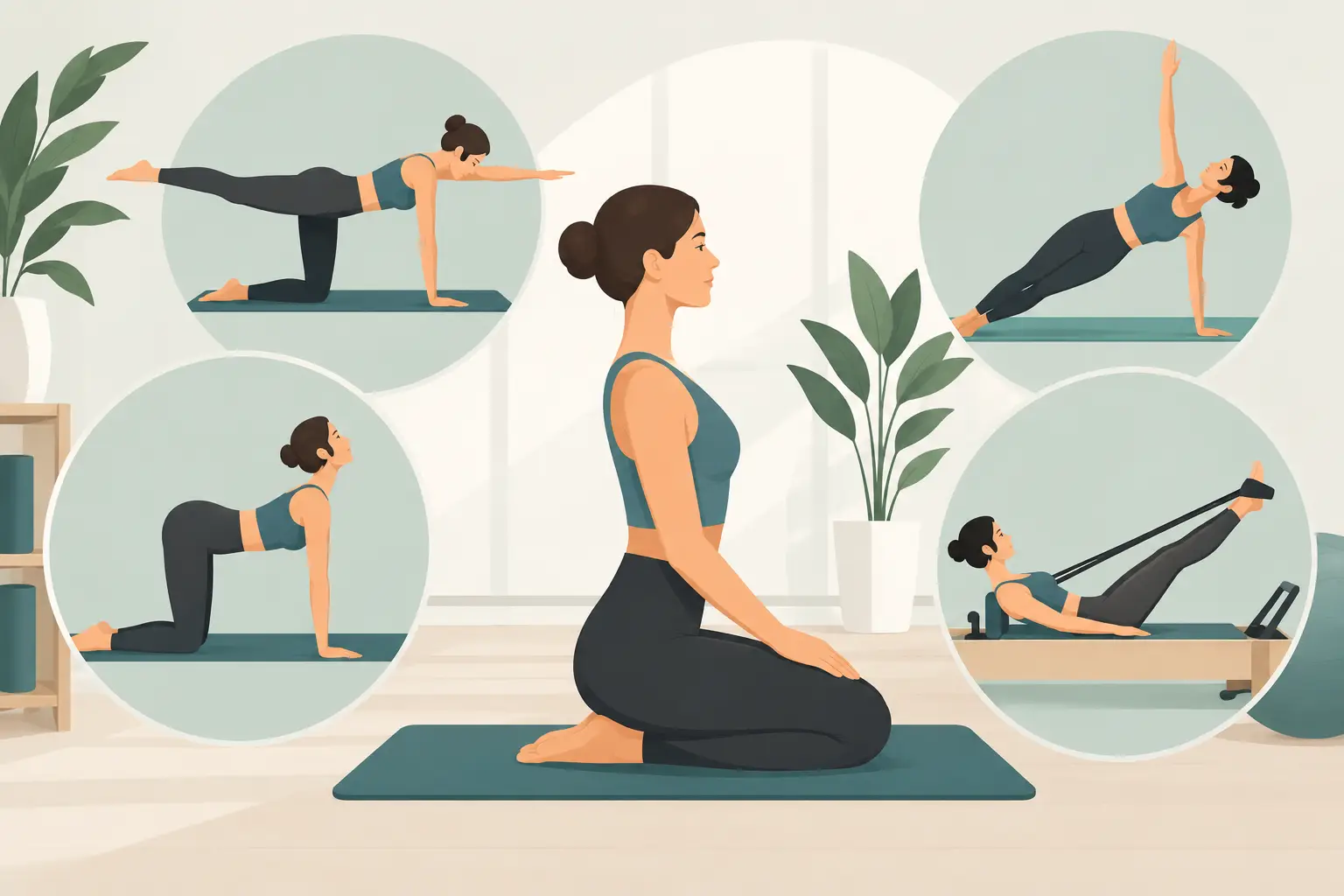
A posture practice should not feel like being told to pull your shoulders back and hold yourself rigidly all day. Helpful posture is responsive: your spine can lengthen, your ribs can move with your breath, and your muscles can support you without gripping. The best Pilates exercises for posture build that kind of strength from the inside out.
For many of us, long hours at a desk, commuting, carrying children, scrolling, or simply moving through a busy Toronto day can leave the chest feeling tight and the upper back fatigued. Pilates offers a thoughtful reset. Rather than chasing a military-straight stance, it develops awareness, mobility, and control so you can find a more comfortable alignment in the positions your life actually requires.
What Pilates Can Change About Your Posture
Posture is not one fixed shape. It changes when you sit, stand, walk, reach, breathe, and rest. The goal is not to eliminate every curve in your spine. Those curves are part of healthy anatomy. The goal is to improve your capacity to organize your body well, then move freely from that foundation.
Pilates is particularly useful because it connects deep abdominal support with the muscles around the hips, shoulder blades, and spine. When those systems work together, the neck does not have to do the work of the upper back, and the lower back does not have to compensate for a lack of hip or core control.
Consistency matters more than intensity. A few well-executed repetitions, practiced two or three times a week, can be more valuable than forcing a long workout through poor alignment. If you have persistent pain, numbness, recent injury, osteoporosis, or a diagnosed spinal condition, start with guidance from a qualified health professional or experienced Pilates instructor.
10 Best Pilates Exercises for Posture
1. Pelvic Curl
Lie on your back with knees bent, feet parallel and hip-width apart. Inhale to prepare. As you exhale, gently engage through the lower abdomen and press through both feet to slowly lift your spine into a bridge. Pause when your body forms a long diagonal from shoulders to knees, then roll down from the upper back to the pelvis.
Pelvic Curl teaches the glutes and hamstrings to contribute to pelvic support while mobilizing the spine segment by segment. Keep the ribs soft rather than thrusting them upward. If your hamstrings cramp, reduce the height of the lift and bring your heels a little closer to your sitting bones.
2. Chest Lift
From the same starting position, place your hands behind your head with elbows wide. Exhale and lift your head, neck, and upper ribs just enough to feel the abdominal wall deepen. Inhale to lower with control.
This is not a neck exercise. Imagine the back of your skull resting into your hands as your breastbone glides toward your pelvis. Chest Lift builds front-body support that can make upright sitting and standing feel less effortful, especially when paired with upper-back strengthening.
3. Dead Bug Toe Taps
Lie on your back with knees over hips and shins parallel to the floor. Arms can reach toward the ceiling or rest by your sides. Exhale to lower one foot toward the mat without changing the position of your pelvis or ribs, then return and alternate.
Toe taps challenge deep core control without asking the hip flexors or lower back to take over. Move only as far as you can maintain a calm, steady trunk. A smaller range is not a lesser version – it is often the smarter one.
4. Single Leg Stretch
Curl the head and shoulders up only if that feels comfortable for your neck. Draw one knee toward the chest while extending the other leg on a diagonal, then switch smoothly. Keep the pelvis level and your breath flowing.
Single Leg Stretch develops abdominal endurance and coordination. It also reveals common posture habits: ribs popping, shoulders creeping toward ears, or the pelvis rocking side to side. Bend the extended knee or keep your head down if that helps you maintain better alignment.
5. Swan Prep
Lie on your front with legs long and hands under or slightly ahead of your shoulders. Lengthen the crown of your head forward as you gently lift your chest a few centimetres from the mat. Lower with control.
Swan Prep strengthens the spinal extensors, which help counter the rounded upper-back position many people adopt at a screen. Think length first, height second. The lift should come from the upper back, not from compressing the lower back or jamming the shoulders upward.
6. Swimming Prep
Stay on your front with the forehead hovering or resting lightly on the mat. Reach one arm forward and the opposite leg back, then return and switch sides. Keep the back of the neck long and the pelvis heavy.
This cross-body pattern wakes up the muscles that support walking and everyday reaching. It asks the back body to work with the glutes rather than relying on tension around the neck. For a more accessible option, lift only the arm or only the leg.
7. Dart
With arms by your sides and palms facing your thighs, lie face down and gently lift the head, chest, and arms. Reach the fingertips toward your feet as the shoulder blades slide down the back. Hold for one full breath, then lower.
Dart is small but powerful for opening the front of the chest and building endurance between the shoulder blades. Avoid squeezing the shoulder blades aggressively together. Instead, feel them settle wide and low, creating space across the collarbones.
8. Side-Lying Leg Lift
Lie on one side with your head supported and both legs extended slightly forward of your torso. Lift the top leg to hip height without rolling the pelvis backward, then lower slowly. Complete both sides.
Your side hip muscles are quiet posture heroes. They stabilize the pelvis during walking, standing on one leg, and climbing stairs. When they are stronger, the lower back and knees often have less compensatory work to do.
9. Side Plank Prep
Begin on one forearm with the bottom knee bent and the top leg long, or keep both knees bent for more support. Press the floor away and lift the underside of your waist, creating one long line from head to knee or foot.
Side Plank Prep strengthens the obliques, shoulders, and lateral hip in one integrated position. It is demanding, so prioritize quality over duration. If you feel pressure in the shoulder, make sure the elbow sits directly under it and lower your hips slightly.
10. Wall Roll Down
Stand with your back near a wall, feet a few inches forward. Let the back of your head, upper back, and pelvis find light contact if that is available to you. Nod the chin slightly and peel the spine away from the wall, rolling down only as far as your hamstrings allow. Slowly stack back up.
Wall Roll Down turns posture into a standing skill rather than something practiced only on a mat. It can improve awareness of how the head, ribs, and pelvis relate to one another. The wall is feedback, not a test – not every body will touch it in exactly the same places.
A Better Way to Practice for Lasting Results
Choose four or five of these movements and practice them for 15 to 20 minutes. Start with Pelvic Curl, Chest Lift, and Toe Taps to find core connection. Follow with Swan Prep or Dart for upper-back strength, then add Side-Lying Leg Lift or Side Plank Prep for hip stability. Finish with Wall Roll Down and a few unhurried breaths.
The details matter. Exhale without force, relax your jaw, and notice whether your shoulders can remain away from your ears. If an exercise makes you feel pinched, strained, or more tense afterward, adjust the range or seek support. Pilates should leave you feeling organized and energized, not held together by effort.
In a small, instructor-led class, you can also learn which cues make sense for your particular body. At Breathe Yoga Studio, Pilates classes offer space to build strength with careful attention to alignment, breath, and sustainable progression – whether you are returning after time away or refining an established practice.
Your posture does not need to be perfect to serve you well. Give it regular movement, patient strength work, and moments of awareness throughout the day. Over time, standing taller may become less of a correction and more of a feeling: supported, mobile, and at home in your body.
