


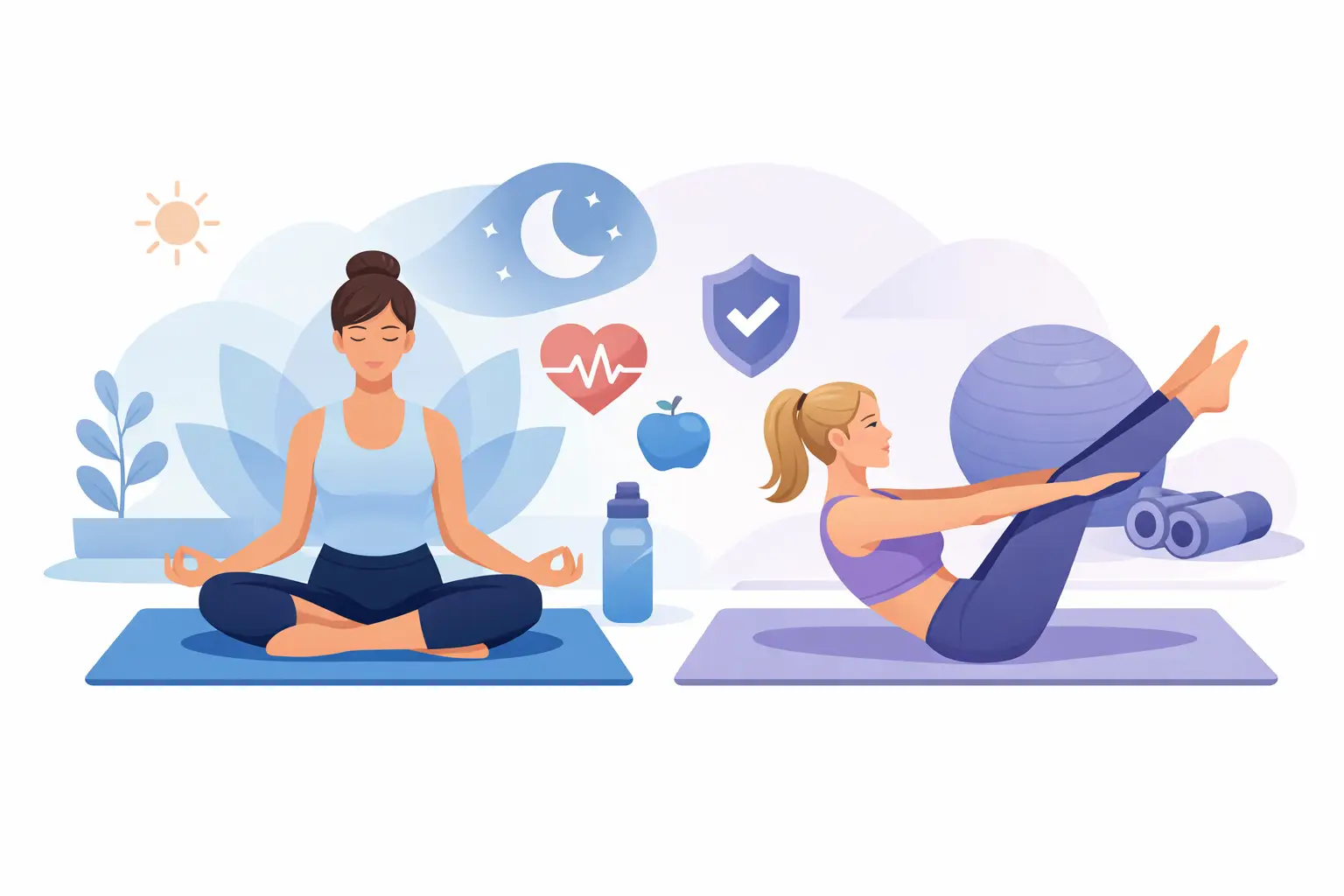
A morning Pilates class can leave you feeling strong and switched on. A gentle evening yoga practice can make it easier to breathe, settle, and sleep. So, can you do yoga and Pilates everyday? For many people, yes – provided that “everyday” does not mean pushing through fatigue with the same intensity, shapes, or goals.
The real opportunity in a daily movement practice is not to do more for the sake of it. It is to build a steady rhythm that supports your strength, mobility, nervous system, and energy over time. Yoga and Pilates can work beautifully together because they ask different things of the body. The key is thoughtful variety, honest self-awareness, and enough recovery to let the benefits land.
Can You Do Yoga and Pilates Everyday Without Overdoing It?
You can practise yoga and Pilates every day when the intensity, duration, and class style match your current capacity. A 15-minute restorative yoga practice is very different from a vigorous Ashtanga class. In the same way, a fundamentals-focused Pilates session has a different training effect than a challenging strength-based reformer or mat workout.
Daily practice tends to work best when it includes a mix of more active and more restorative days. Pilates can build core strength, hip stability, postural awareness, and control. Yoga can complement that work with mobility, balance, breath awareness, and opportunities to downshift from the pace of daily life. Neither practice is automatically “easy,” though. Advanced yoga transitions, repeated chaturangas, long holds, deep backbends, and high-volume abdominal work can all be demanding.
A useful question is not simply, “Can I do a class today?” Ask, “What would support my body today?” Some days, the answer may be a challenging Pilates class. On another, it may be a slow flow, restorative yoga, or a few quiet minutes on the floor with your breath.
Why Variety Matters More Than Streaks
Consistency creates change, but a perfect attendance streak is not the same as sustainable progress. Muscles, tendons, joints, and the nervous system all need time to adapt. Repeating the same movement pattern at high effort every day can lead to irritation rather than improvement, especially in the wrists, shoulders, low back, hips, and neck.
Yoga and Pilates practitioners can also fall into the trap of treating mobility as an unlimited resource. If you are naturally flexible, it may feel satisfying to move into your deepest range every day. Yet strength and control at the edge of your range are often more protective than simply going farther. Pilates is especially valuable here, as it helps develop stability around mobile joints.
For people who sit for much of the day, daily movement can be a genuine relief. The answer may be more frequent low-intensity movement rather than a harder workout. A short mobility practice between meetings, a gentle yoga class after work, or a focused Pilates session a few times per week can be more effective than saving all your effort for one exhausting session.
A Balanced Week of Yoga and Pilates
There is no single ideal schedule, but most people benefit from alternating challenge and recovery. If you are new to either practice, start with two or three instructor-led sessions per week and add brief, gentle movement on the other days. This gives you time to learn alignment, breathing patterns, and how your body responds.
An established practitioner might enjoy two or three Pilates classes each week, two yoga practices with moderate intensity, and one or two restorative or mobility-focused sessions. A stronger Ashtanga or dynamic flow day can be followed by a slower practice that emphasizes breath, supported shapes, and release. If you have had a particularly demanding workday, poor sleep, or a hard strength-training session, that restorative practice is not a compromise. It is part of the training plan.
Consider rotating your intention as well. One session may focus on lower-body strength and stability. Another may support spinal mobility and shoulder comfort. A quieter practice can centre on long exhalations and nervous system regulation. This approach keeps your practice interesting while reducing repetitive stress.
A simple way to choose your class
Before booking or unrolling your mat, take a quick inventory. Notice your energy, soreness, stress level, and sleep quality. If you feel clear, stable, and well recovered, a more active class may be appropriate. If you feel depleted, unusually stiff, or mentally overloaded, choose a gentler option.
This is not about avoiding all discomfort. Productive effort can include muscle fatigue, concentration, and the feeling of learning something new. The signs to respect are sharp pain, tingling, numbness, joint pain, increasing soreness that does not ease, dizziness, or a sense that you must force your way through the practice. Those are cues to stop, modify, or speak with a qualified health professional.
How Yoga and Pilates Support Different Goals
Pilates is often a strong fit when you want to develop trunk strength, improve movement mechanics, and feel more supported in daily activities. The work can be precise and surprisingly challenging, particularly when it asks you to maintain alignment while moving the arms or legs. It can also be a helpful complement to running, cycling, strength training, and desk-based work.
Yoga offers a broad spectrum of practice. A strong flow can develop endurance and balance. Ashtanga and Mysore practice can create structure and progression for students who enjoy a disciplined method. Gentle, yin-inspired, or restorative classes can provide a sanctuary for people whose bodies and minds have been running at full speed.
Together, the disciplines can help you become both stronger and more responsive. Pilates may help you feel your deep abdominal support and pelvic stability in standing poses. Yoga may help you bring more easeful breath and whole-body awareness into Pilates. The result is not perfection in either practice. It is a more capable relationship with your body.
When Daily Practice Needs More Care
Everyday yoga and Pilates may not be the right plan during an acute injury, after surgery, or when you are experiencing unexplained pain. Pregnancy, postpartum recovery, osteoporosis, hypermobility, inflammatory conditions, and chronic pain can also call for individualized guidance. Movement is often beneficial in these circumstances, but the right dosage and exercise selection matter.
If you are hypermobile, for example, you may need to spend less time passively stretching and more time developing controlled strength. If you are managing low-back discomfort, your instructor may offer ways to reduce range, use props, or adjust load. A skilled teacher can help you distinguish between a useful challenge and a pattern that is not serving you.
Nutrition, hydration, sleep, and stress also affect recovery. Feeling unusually flat in class is not always a motivation problem. It can be a sign that your body needs fuel, rest, or a less demanding session. A whole-body approach to wellness leaves room for these realities.
Make Your Daily Practice Something You Can Keep
The most sustainable routine is usually the one that fits real life. You do not need 60 minutes every day to benefit. Ten minutes of mindful mobility before breakfast, a lunchtime mat session, or a calming practice before bed can all count. On busier weeks, attending fewer full classes while keeping a small home ritual may protect your sense of continuity.
At Breathe Yoga Studio, the range of yoga and Pilates classes makes it easier to match your practice to the day you are having, rather than forcing every day to look the same. A teacher who knows your goals, movement history, and usual patterns can be an invaluable part of building confidence safely.
Let your practice be responsive rather than rigid. Choose the class that meets you where you are, leave enough space to recover, and notice how you feel not only during movement but later that evening and the following morning. That kind of attention turns daily yoga and Pilates from another obligation into a steady source of strength, calm, and care.
