


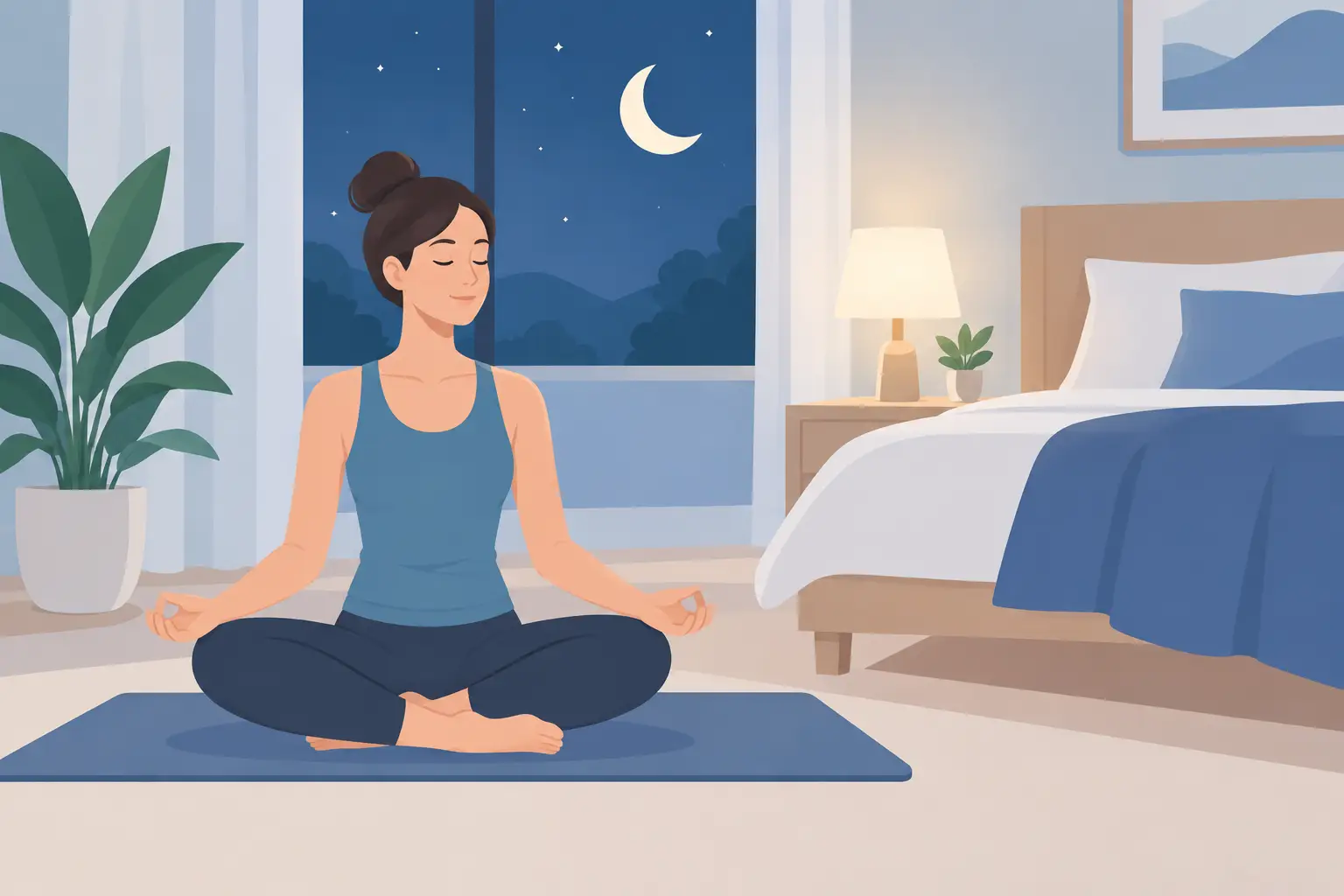
The problem is rarely that you do not know sleep matters. It is that your body is still carrying the day when your head reaches the pillow: the meeting that ran late, the commute, the family logistics, the bright screen, the tight shoulders. Can yoga improve sleep quality? For many people, it can help create the conditions for more settled rest, especially when stress, physical tension, and a busy mind are part of the picture.
Yoga is not a sedative, and one evening class will not erase chronic insomnia. Its value is more gradual and more useful than that. A consistent practice can teach your nervous system to shift out of high alert, help release the tension that makes it hard to get comfortable, and offer a reliable transition between doing and resting.
Can Yoga Improve Sleep Quality? The Short Answer
Yes, yoga may improve sleep quality, particularly for people whose sleep is affected by stress, anxiety, low mood, pain, or an irregular routine. Research on yoga and sleep often finds improvements in perceived sleep quality, how quickly people fall asleep, and daytime fatigue. The results vary, but the pattern makes sense: yoga combines gentle movement, slower breathing, body awareness, and intentional rest.
That does not mean every style of yoga is equally sleep-supportive. A strong, heat-building practice can be energizing. An evening of challenging balances, deep backbends, or fast vinyasa may leave some students feeling clear and accomplished, while leaving others too stimulated to settle. The right practice depends on your body, your schedule, and what is keeping you awake.
For someone who has been sitting all day and feels physically restless, a moderate flow may help. For someone who lies awake replaying conversations or wakes at 3 a.m. with a racing mind, restorative yoga, quiet breathwork, and a slower pace are often the better place to begin.
Why Yoga Can Help the Body Prepare for Rest
Sleep is not something we can force. It is a biological process that arrives more easily when the brain reads safety and the body has enough opportunity to downshift. Yoga can support that shift in several connected ways.
It gives the stress response somewhere to go
Stress is not only a thought. It can show up as a clenched jaw, shallow breathing, gripping through the hips, or an urge to keep moving even when you are exhausted. Mindful movement offers a way to notice those signals without judging them. As muscles soften and attention returns to the breath, the body may begin to move away from the activated state that is useful for deadlines but unhelpful at bedtime.
Slower exhalations can be especially calming. You do not need an elaborate technique. Breathing comfortably through the nose and allowing the exhale to become slightly longer than the inhale can help reduce the feeling of urgency. The goal is not to control every breath. It is to give your system a steady, quiet rhythm.
It eases common sources of nighttime discomfort
Neck tension, low-back stiffness, tight hips, and achy legs can make falling asleep harder or interrupt sleep once it begins. Gentle yoga will not solve every pain condition, but regular mobility work can make it easier to find a comfortable sleeping position and may reduce the end-of-day stiffness that comes from desk work, driving, or repetitive movement.
Poses such as supported child’s pose, a gentle reclined twist, legs up the wall, and a well-supported resting shape can be useful because they ask very little of the body. Comfort matters more than depth. If a pose creates strain, it is not restorative simply because it is quiet.
It builds a repeatable wind-down cue
A bedtime routine works partly because repetition is persuasive. When you dim the lights, put away the phone, roll out your mat, and spend ten minutes moving slowly, you are giving your brain a familiar message: the active part of the day is ending.
This is why short practices can be more powerful than occasional ambitious ones. A 12-minute routine that happens four evenings a week is likely to support sleep more than a 90-minute class that feels impossible to fit into your life.
The Best Types of Yoga for Better Sleep
Restorative yoga is often the most direct match for sleep support. It uses bolsters, blankets, blocks, and longer holds to make rest physically accessible. Instead of stretching to your edge, you are supported enough to let effort drop away. Many people find this style particularly helpful during high-stress periods, after travel, or when their energy is low.
Gentle hatha yoga can also work well in the evening, especially when it includes unhurried standing poses, simple hip and shoulder mobility, and a generous final rest. Yin yoga may feel deeply calming for some practitioners, but long-held shapes can be intense. If you are new to yoga, managing an injury, or already feeling depleted, choose a class and teacher who can help you modify rather than pushing through sensation.
More active practices still have a place. A morning Ashtanga, Pilates, or strength-focused class can support better sleep indirectly by building strength, regulating stress, and helping you feel more physically ready for rest at night. The question is not whether active yoga is good or bad for sleep. It is whether the timing and intensity suit you.
A Simple Evening Practice That Does Not Ask Too Much
If your nights feel rushed, begin with a small ritual rather than a perfect sequence. Set aside ten to fifteen minutes about an hour before bed. Lower the lights and keep your phone out of reach if possible.
Start on your back with your knees bent, one hand on your chest and one on your abdomen. Take five easy breaths, letting the exhale lengthen naturally. Move into a few slow cat-cow rounds, then rest in child’s pose with a pillow or bolster under your chest. From there, try a reclined figure-four or a gentle twist on each side.
Finish with your calves on a chair or your legs up a wall for two to five minutes, provided this position is comfortable for you. Then lie down with a blanket over you and stay still for a few more breaths. There is no need to achieve a particular state. Simply noticing that you are supported is enough.
If you wake during the night, keep the response gentle. Bright lights, scrolling, clock-checking, and intense stretching can signal wakefulness. A few quiet breaths or a comfortable supported position may be more helpful than trying to make sleep happen immediately.
When Yoga Is Not Enough on Its Own
Yoga can be a meaningful part of a sleep-supporting routine, but persistent sleep problems deserve proper care. Speak with a healthcare professional if you regularly struggle to sleep for months, wake gasping or snoring heavily, experience strong daytime sleepiness, or feel your mood and functioning are affected. Sleep apnea, depression, medication effects, chronic pain, hormonal changes, and other conditions can all influence sleep.
For chronic insomnia, cognitive behavioural therapy for insomnia is widely considered a first-line treatment. Yoga can complement that work, but it should not replace assessment or treatment. This is an act of care, not a failure of your practice.
It is also worth looking at the wider rhythm of your days. Caffeine late in the afternoon, inconsistent wake times, alcohol close to bed, and long stretches without movement can all work against sleep. Nutrition, stress, activity, and recovery are connected. A whole-body approach leaves room for yoga while recognizing that no single habit carries the entire load.
At Breathe Yoga Studio, restorative classes and thoughtful, expert-led instruction offer a welcoming place to explore what kind of practice helps your body settle. Whether you are brand new to yoga or returning to the mat after a difficult season, the most useful practice is the one that feels sustainable enough to become part of your life.
Tonight, resist the urge to turn rest into another task to perform. Make a little space, take a slower breath, and let your practice be a quiet invitation rather than a demand. Sleep may not arrive on command, but your body can learn, one calm evening at a time, that it is safe to soften.
