


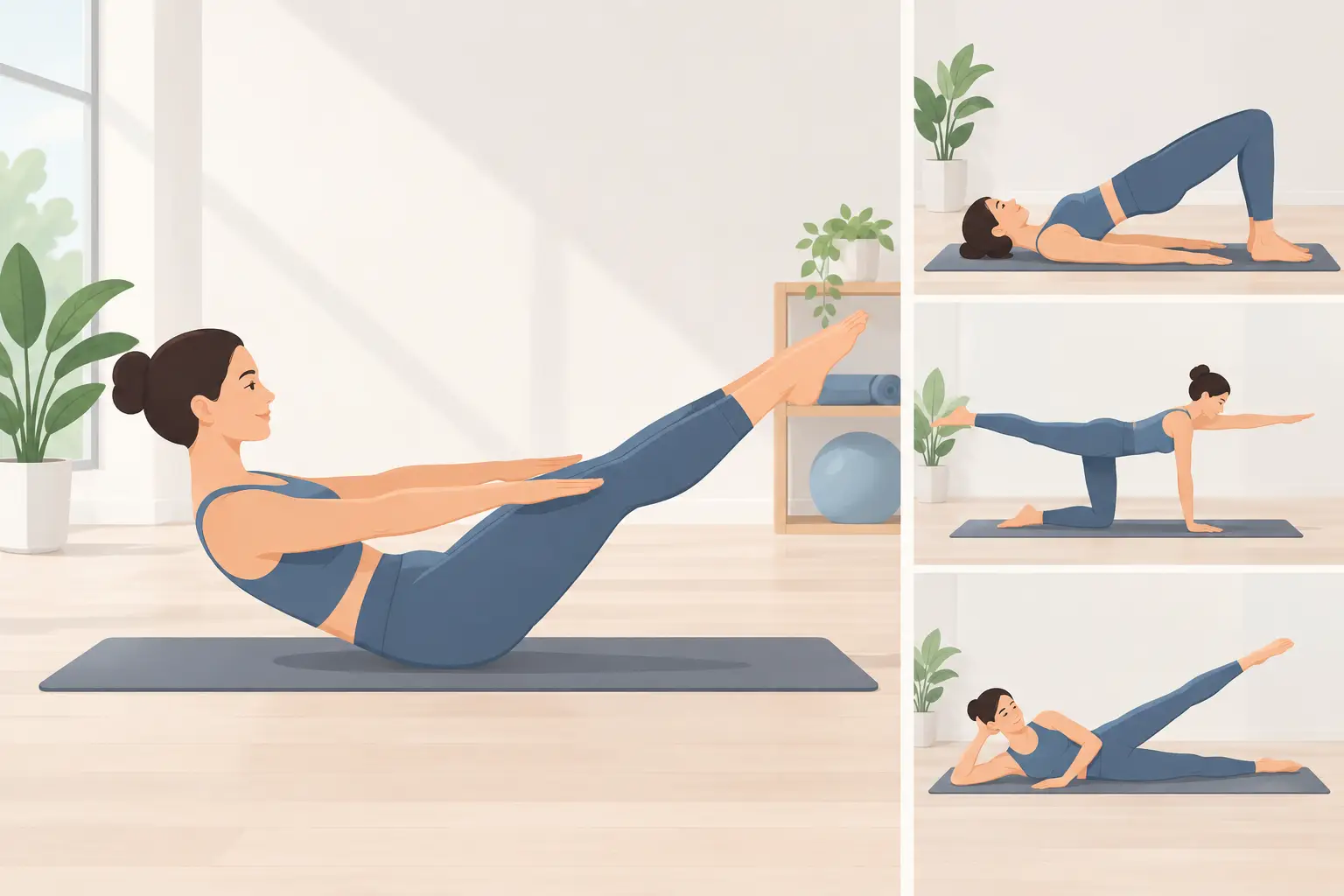
A Pilates class can look deceptively calm until you try to keep your ribs from flaring, your shoulders relaxed, and your breath moving all at once. That is exactly why the best Pilates moves beginners start with are not necessarily the most dramatic. They are the exercises that teach you how to find connection through your centre while building strength, mobility, and body awareness you can carry into daily life.
For a new student, Pilates is less about forcing a deep range of motion and more about practising control. A small, well-supported movement can be far more valuable than a large movement performed with tension in the neck or low back. Begin slowly, work in a pain-free range, and treat each repetition as useful feedback.
What makes a Pilates move beginner-friendly?
Beginner Pilates should help you feel your alignment, breath, and stabilizing muscles without asking your body to compensate. The most useful foundational exercises generally keep one or more areas supported by the mat, allowing you to focus on your form before progressing to longer levers, faster transitions, or more balance-based work.
You may hear instructors refer to the “core,” but this is not an instruction to grip your stomach as tightly as possible. Think of a gentle, responsive support around your midsection, coordinated with an easy exhale. Your pelvic floor, deep abdominal muscles, diaphragm, hips, and back all contribute. If you are holding your breath, clenching your jaw, or feeling pressure in your low back, reduce the range or take a pause.
10 best Pilates moves beginners can practise
1. Lateral rib breathing
Start on your back with your knees bent and feet flat on the floor, about hip-width apart. Rest your hands around the sides of your lower ribs. Inhale and notice the ribs expand outward into your hands; exhale slowly and feel the front of the ribs soften down.
This may not look like a traditional exercise, but it is the foundation for the work that follows. Breathing with awareness can reduce unnecessary tension and helps you create steady support without bracing. Keep your neck and shoulders relaxed.
2. Pelvic tilts
Remain on your back with your knees bent. On an exhale, gently tip your pelvis so your low back becomes a little heavier on the mat. Inhale back to a neutral position, where there is a small natural curve beneath the low back.
The aim is not to flatten your spine with force. Pelvic tilts teach you to recognize the difference between moving from your pelvis and pushing with your feet or squeezing your glutes. This simple exercise can be particularly helpful for people who spend much of the day sitting.
3. Knee folds, or marching
Find a neutral pelvis and lift one foot a few centimetres from the floor so the knee stays bent over the hip. Lower it with control, then repeat on the other side. Keep the movement small enough that your pelvis does not rock from side to side.
Marching challenges deep abdominal support while one leg moves independently. If your hip flexors feel like they are doing all the work, make the lift lower or press your fingertips lightly into the front of your hip bones to monitor for movement.
4. Toe taps
From a tabletop position, with both knees bent over the hips, lower one foot toward the floor and return it to tabletop. Alternate sides. Your low back does not need to be pressed hard into the mat, but it should not arch noticeably as the leg lowers.
Toe taps are a natural progression from marching because the lever is longer and the demand on your trunk is greater. Start with a very small tap. Lowering the foot halfway is still a successful repetition when you can maintain calm, controlled alignment.
5. Chest lift
Lie on your back with your knees bent. Support the base of your skull with your hands, keeping your elbows in your peripheral vision. Exhale to nod the chin slightly and lift your head and upper ribs just enough to feel your abdominal muscles engage. Inhale to lower.
Avoid pulling on your neck or trying to sit all the way up. The quality of this movement comes from lengthening through the back of the neck and lifting the ribcage with the abdominals. If your neck becomes tired, place your head down and focus on the breath pattern instead.
6. Single-leg stretch preparation
Begin with one knee drawn toward your chest and the other foot resting on the floor. Hold behind the thigh or at the shin, wherever your hips and knees feel comfortable. Exhale as you gently draw the knee in, then switch sides without rushing.
This preparation introduces the coordination used in classic Pilates single-leg stretch without requiring both legs to hover. It can build hip mobility and abdominal awareness while keeping the exercise accessible. People with sensitive knees may prefer to hold behind the thigh rather than at the shin.
7. Glute bridge
With your feet grounded and knees bent, exhale and lift your hips by pressing gently through both feet. Create a long diagonal line from shoulders to knees, then lower with control. Keep your ribs from thrusting upward and let your glutes and hamstrings share the effort.
Bridges support hip strength, spinal articulation, and posture. They are also a useful antidote to the feeling of being folded forward at a desk. If you feel cramping in your hamstrings, bring your feet slightly closer to your sitting bones or reduce the height of the lift.
8. Side-lying clamshell
Lie on one side with your knees bent and your head supported. Keep your feet together as you open the top knee, then close it slowly. Your hips should stay stacked rather than rolling backward.
The clamshell targets the outer hip muscles that help stabilize the pelvis during walking, stairs, and single-leg movement. It is a subtle exercise, so resist the urge to lift the knee as high as possible. A smaller range with steady hips is usually more effective.
9. Swan preparation
Lie on your stomach with your forehead resting on your hands or a folded towel. Draw the shoulder blades gently down your back, then lengthen the crown of your head forward as you lift your breastbone slightly from the mat. Lower with control.
Swan preparation strengthens the upper back and invites extension through the spine, which can feel especially welcome after hours of screen time. The lift should come from length, not from compressing the low back. If lying on your stomach is uncomfortable, an experienced instructor can offer a supported alternative.
10. Child’s pose with side reach
Finish on hands and knees, then sit your hips toward your heels as comfortably as you can. Walk both hands to one side and breathe into the opposite side of your ribs, then switch sides. A cushion under the hips or chest can make the position more restful.
Although often considered a yoga pose, this gentle stretch belongs beautifully in a beginner Pilates practice because it encourages breath, recovery, and side-body mobility. Strength work is more sustainable when your body also has space to release.
How often should beginners do Pilates?
Two or three sessions per week is a realistic starting point for many people. Consistency matters more than intensity, especially as you learn the coordination behind the exercises. A 15-minute home practice can reinforce what you learn in class, but it should not feel like a test you have failed if life gets busy.
Your ideal frequency depends on your current activity level, sleep, stress, injuries, and other movement practices. If you also run, lift weights, or play a sport, Pilates can be a supportive complement that improves control and recovery. If you are returning to movement after a long break, one class a week may be the most appropriate first step.
When form support matters most
Videos and written cues can introduce these movements, but Pilates is highly individual. The same toe tap that feels steady for one person may cause another person to grip through the hip flexors or strain through the back. In a smaller in-studio class, an experienced teacher can adjust your setup, offer props, and help you choose progressions that suit your body.
This is especially worthwhile if you are managing persistent pain, are pregnant or recently postpartum, have osteoporosis, or are recovering from an injury or surgery. Pilates can be wonderfully adaptable, but appropriate guidance matters. Stop any movement that causes sharp pain, numbness, dizziness, or symptoms that worsen afterward, and seek advice from a qualified health professional when needed.
At Breathe Yoga Studio, beginner-friendly Pilates offers a supportive place to build these skills alongside a welcoming Junction community. You do not need to arrive strong, flexible, or familiar with the terminology. Arrive curious, let the breath set the pace, and allow each careful repetition to become a little more familiar than the last.
