


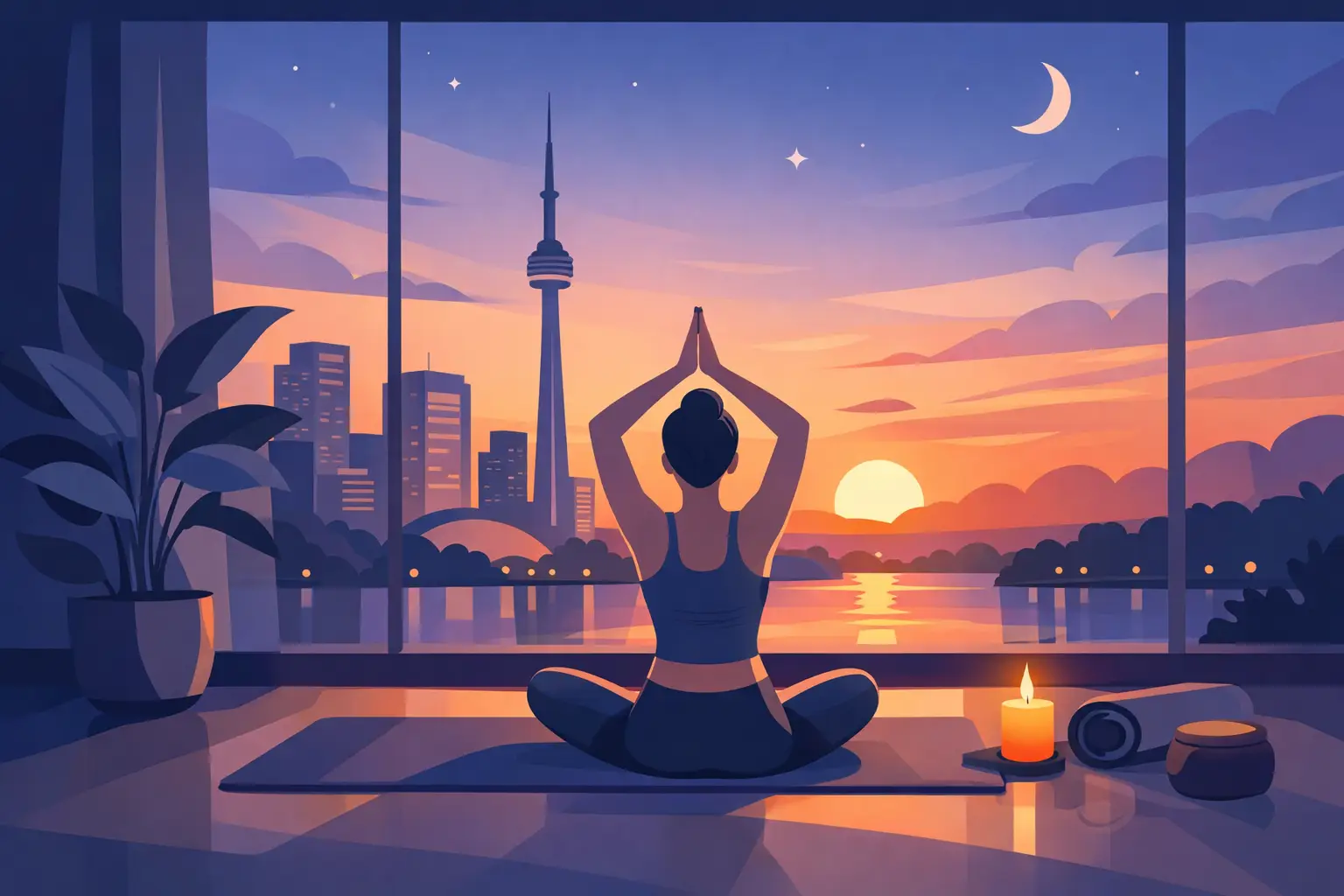
The workday rarely ends the moment you close your laptop. Your shoulders may still be lifted, your mind may be replaying conversations, and the energy you hoped to have for yourself can feel spent. Evening yoga classes Toronto residents can attend in person offer a meaningful transition: time to move, breathe, and arrive back in your body before the rest of the night begins.
For some people, that reset looks like a steady, strengthening flow. For others, it means slower shapes, longer exhales, and a practice designed to settle an overactive nervous system. The right evening class is not about pushing through exhaustion. It is about choosing the kind of movement and support that meets you where you are.
Why evening yoga classes in Toronto can feel different
Toronto life moves quickly. Between commuting, caregiving, demanding work, and the constant pull of a full calendar, wellness can become another item to complete. An evening class creates a clearer boundary. You step out of the pace of the day and into a space where your breath, posture, and attention matter.
That boundary has practical benefits too. A thoughtfully paced practice can ease the stiffness that builds from desk work, driving, standing, or repetitive movement. It can develop strength and mobility without asking you to make another early-morning commitment. Just as importantly, practising alongside others can replace the isolating feeling of trying to fit wellness into the margins of a busy week.
The result is not always instant calm. Some evenings you may arrive restless, tired, or distracted. That is normal. With consistent practice, many students begin to recognize the studio as a sanctuary where they can shift gears without needing to perform, compete, or already feel centred.
Choose a class that matches your evening
There is no single best yoga class after work. The right choice depends on your energy, movement experience, sleep patterns, and what your body has been carrying that day. A vigorous class can feel energizing when you have been sitting for hours, while a restorative practice may be the wiser choice after a demanding week.
When you want strength and momentum
Flow-based yoga and strength-focused formats can be a good fit when you want to feel capable, warm, and physically engaged. Expect a guided sequence that may include standing poses, core work, balance, and purposeful transitions. These classes can build heat and help you reconnect with muscles that have been underused during the day.
The trade-off is timing and intensity. If you know a fast-paced class leaves you wired at bedtime, choose an earlier evening time slot or ask the teacher about a more moderately paced option. A strong practice should leave you feeling grounded, not depleted.
When you want to deepen your practice
Ashtanga and Mysore practice appeal to students who appreciate structure, repetition, and gradual progression. In a Mysore setting, students work through a sequence at their own pace with individualized guidance from an experienced teacher. This can be especially valuable for practitioners who want more personal attention while still sharing the energy of a group room.
These approaches are not reserved for people who are already highly flexible or advanced. They do ask for patience and consistency, however. If you are newer to yoga, a conversation with the teacher can help you understand whether the class is appropriate now or whether a beginner-friendly option will create a stronger foundation first.
When your nervous system needs a quieter landing
Restorative yoga is often the class people wish they had tried sooner. Supported postures, bolsters, blankets, and longer holds create room for the body to soften without forcing a stretch. The practice can be especially welcome during periods of high stress, poor sleep, burnout, or recovery from an intense training schedule.
Restorative work is not about doing less because you are incapable of doing more. It is a deliberate practice of recovery. If you spend much of your week switched on, this slower pace may be the most productive choice you can make for your long-term wellbeing.
When yoga is not the only movement you need
Pilates can complement an evening yoga routine beautifully. Its focus on core strength, alignment, control, and functional movement may support people who want more targeted conditioning alongside mobility and breath-led practice. Some students enjoy alternating yoga and Pilates through the week, using one for restoration and range of motion, the other for strength and stability.
Your best routine may change with the season. A winter week filled with commuting and long workdays may call for more restorative classes. In a more energetic season, you may want a stronger practice or Pilates class after work. Listening to those shifts is part of building a sustainable relationship with movement.
What makes an evening class feel supportive
The experience of a class depends on more than the style listed on the schedule. Skilled teaching matters. A teacher who offers clear options, observes the room, and explains how to work with your own body can help both new and experienced students practise with more confidence.
Smaller class settings can make that support more tangible. You may receive a modification for a sensitive wrist, assistance with set-up, or a quiet reminder to rest when your effort has become strain. This kind of attention is particularly useful if you are returning after time away, managing an injury, or simply uncertain about where to begin.
Community matters too, though it does not have to mean being outgoing. Sometimes it is as simple as recognizing familiar faces, being greeted by name, or knowing that you have a place to go on a Wednesday night when you need to reset. At Breathe Yoga Studio in Toronto’s Junction area, the intention is to offer that neighbourhood oasis while supporting every level of your wellness journey.
Make your after-work practice easier to keep
Consistency is less about willpower than reducing friction. Choose a class time that works with your actual routine, not the version of your routine you wish you had. If getting home first makes it unlikely you will leave again, go straight from work. If you need a snack before class, keep something simple in your bag and give yourself enough time to digest.
Arrive a few minutes early when you can. It gives you space to settle, let the teacher know about relevant injuries or concerns, and begin without rushing. Wear clothing that lets you move comfortably, but do not worry about having a perfect yoga wardrobe. Most studios provide or rent the essential equipment, and teachers can guide you through using props effectively.
For your first few visits, give yourself permission to try more than one class style. A single experience does not define whether yoga is for you. You may find that a lively flow feels wonderful one week and a restorative class becomes essential the next. The goal is not to choose the most impressive practice. It is to find one you can return to with honesty and care.
Beyond the mat: support for sustainable energy
Movement is one part of a larger wellness picture. If low energy, stalled weight changes, stress, or disrupted routines have been affecting how you feel, it can be helpful to look beyond exercise alone. Sleep, recovery, nourishment, and metabolic health all influence how available you feel for a practice at the end of the day.
A whole-body approach does not require perfection. It asks better questions: Are you recovering from your workouts? Are you eating in a way that supports stable energy? Does your weekly schedule include both challenge and rest? For people who want more individualized guidance, science-based metabolic programming can offer another layer of support alongside yoga, Pilates, and restorative practices.
The evening does not need to disappear into another round of obligations. Choose a class that feels realistic, enter with curiosity rather than pressure, and let the practice become a reliable place to come back to yourself.
