


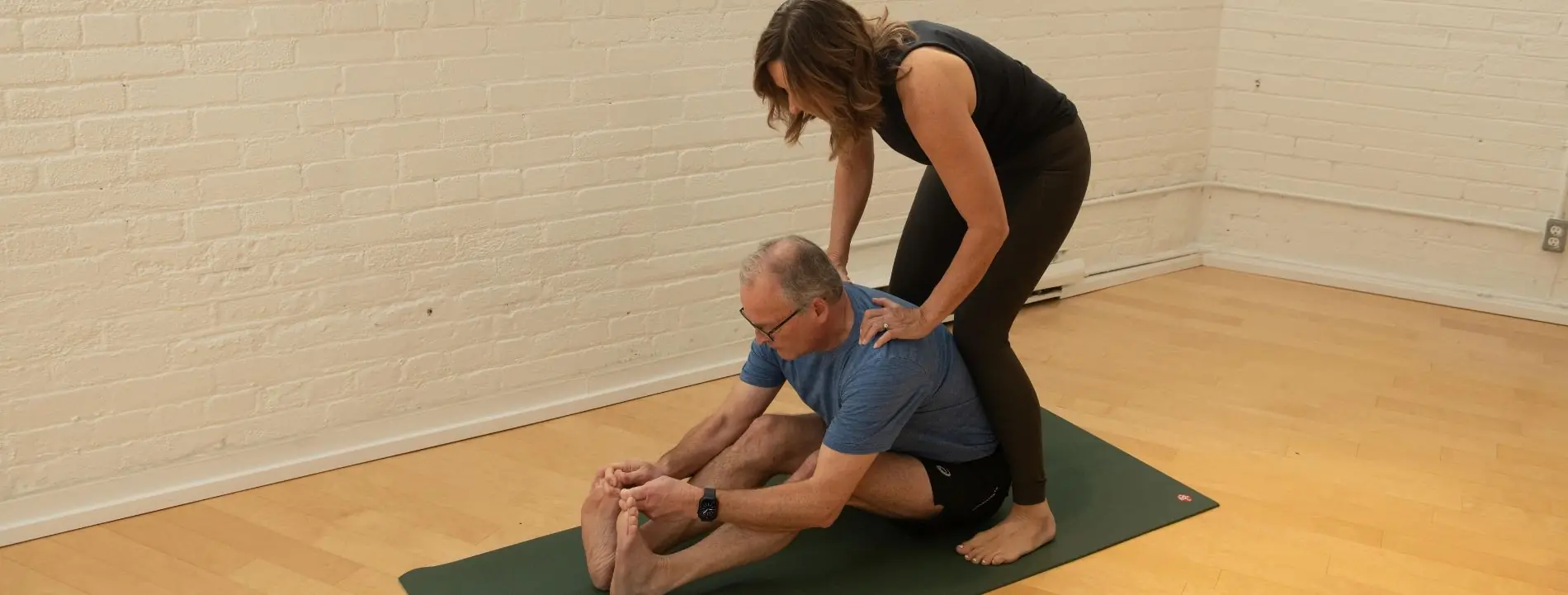
A sore shoulder after carrying groceries, a stiff back after a long day at a desk, a knee that objects halfway through a run – these moments rarely come from one movement alone. They often reflect a pattern of limited mobility, fatigue, poor load management, or simply moving on autopilot. Yoga for injury prevention offers a practical place to notice those patterns and build more options in the body before discomfort becomes a bigger interruption.
The goal is not to make your body invincible. Injuries can happen in sport, at work, and in ordinary life, even when you train carefully. A well-taught yoga practice can, however, help you develop strength, range of motion, balance, breath awareness, and the skill of responding to your body’s signals with more care.
What yoga can and cannot do for injury prevention
Yoga can support the physical qualities that help us move well. Regular practice may improve mobility around commonly tight areas such as the hips, ankles, chest, and upper back. It can also strengthen the muscles that stabilize joints, especially when poses are held with attention rather than rushed through.
Just as valuable is proprioception: your ability to sense where your body is in space. When you can feel whether your weight has shifted into one foot, whether your ribs are flaring, or whether your shoulders are creeping toward your ears, you have better information for making adjustments. That awareness carries into lifting, running, cycling, gardening, and sitting at your desk.
Still, yoga is not a guarantee against injury, nor is every yoga class the right choice for every body. A person recovering from a rotator cuff injury, dealing with osteoporosis, or managing persistent low-back pain may need a different approach than someone preparing for a recreational race. Acute pain, unexplained swelling, numbness, weakness, or symptoms that do not improve deserve assessment from an appropriate regulated health professional. Yoga works best as one part of a sensible movement and recovery plan.
The foundations that make practice protective
Injury prevention is often less about finding one perfect pose and more about practising several qualities consistently. Think of yoga as a movement education rather than a stretch session.
Build usable strength, not just flexibility
Flexibility can feel satisfying, particularly after hours spent in a chair, but range without control is not always helpful. In yoga, slow transitions and steady holds teach muscles to support joints through a comfortable range. Chair pose, lunges, plank variations, bridge pose, and standing balance work can develop strength in the legs, glutes, trunk, shoulders, and feet.
The best version of a pose depends on your current capacity. A higher lunge with hands on blocks may build more useful control than forcing your back knee close to the floor. Knees-down plank can be an intelligent strength choice, not a lesser one. Over time, progressive loading matters more than performing the most advanced variation in the room.
Maintain mobility where modern life narrows it
Mobility is the ability to move through a range with control. It differs from passively pulling yourself into a deep stretch. Yoga can gently explore motion in the spine, hips, shoulders, wrists, and ankles – areas that may become restricted by repetitive work, training, or long periods of stillness.
A thoughtful practice includes both movement and pauses. Cat-cow can bring awareness to spinal motion; low lunges and hip-focused shapes can address the front of the hips; thoracic rotations can offer the upper back a chance to move. The useful question is not, “How far can I go?” but, “Can I breathe, stay steady, and return from this position without strain?”
Practise balance before you need it
Balance changes with sleep, stress, footwear, vision, strength, and age. It is also highly trainable. Standing poses, controlled weight shifts, and simple one-leg balances ask the feet, ankles, hips, and nervous system to communicate quickly.
Use a wall or chair when needed. Support allows you to practise alignment and confidence without turning a balance pose into a battle. That is especially relevant if you are returning to movement after time away or if you want steadier footing through Toronto winters.
Let breath regulate effort
Many people hold their breath when a movement feels challenging. That response can create unnecessary tension and make it harder to distinguish productive effort from bracing against discomfort. A steady, unforced breath gives you a useful gauge: if you cannot breathe smoothly, the pose may be too intense, too long, or simply not the right variation that day.
Restorative yoga has a role here, too. Recovery is not separate from injury prevention. When stress is high and sleep is short, coordination, decision-making, and tissue recovery can all suffer. Slower practices help create space for down-regulation, which can support a more sustainable relationship with training and daily demands.
How to use yoga for injury prevention in a real week
Consistency beats intensity. One demanding class followed by two weeks of soreness is less useful than a practice you can return to with curiosity. For many people, two or three sessions each week, including even brief home movement, is a realistic starting rhythm.
Choose classes according to what your week already contains. If you have been running, lifting, or cycling hard, a restorative or slower mobility-focused class may complement that load better than another intense session. If your workday has been mostly sedentary, a strength-focused yoga class or Pilates session may provide the activation and postural variety you have been missing. Neither option is universally better; the right choice depends on your energy, goals, and recovery.
Before class, identify one area that has been asking for attention. Perhaps your wrists feel sensitive from computer work, your hips feel restricted after driving, or your neck is tense during busy weeks. Tell your teacher before practice, especially if you are managing an injury, returning after surgery, or working with professional guidance. An experienced instructor can suggest props, modify a transition, or help you avoid the common habit of pushing through a sharp sensation.
During class, favour a sensation of muscular effort, gentle stretch, or warmth over pinching, catching, numbness, or joint pain. Pain is not a requirement for progress. It is information. Come out of a shape, reduce the range, add a block, bend the knees, or rest. These are skills that protect a long-term practice.
Afterward, notice how you feel later that day and the next morning. A little muscular fatigue can be normal, particularly when introducing new strength work. Lingering joint pain or symptoms that worsen after every class are signals to adjust the plan. Keeping a simple mental note helps you and your teacher understand what supports you best.
Common mistakes that make yoga less helpful
The first mistake is treating every class as a test. Trying to match the deepest backbend or longest plank can shift attention away from alignment and breath. Your practice should meet your body as it is, not as it was five years ago or as you hope it will be next month.
The second is using flexibility to bypass stability. People who are naturally bendy may need to work more deliberately with strength, joint positioning, and controlled range. Conversely, people who feel stiff may benefit from gradual exposure to movement rather than aggressive stretching. Both experiences are valid, and both can progress.
Finally, do not overlook rest. A full schedule of workouts, errands, work, and family responsibilities leaves little room for adaptation. Restorative practices, sleep, nourishment, and quieter days are not detours from progress. They are part of the foundation that lets you keep moving.
Find guidance that meets you where you are
Small, attentive classes can be especially helpful when you are new to yoga, returning from an injury, or looking to refine a long-standing practice. At Breathe Yoga Studio, experienced teachers can help students explore beginner-friendly options, strength-focused classes, restorative practices, and more established disciplines without losing sight of individual needs.
You do not need to wait for pain to become a problem before seeking support. Start with a class level that feels accessible, arrive a few minutes early to speak with the teacher, and give yourself permission to use props and pauses. Those choices build the kind of body awareness that serves you far beyond the mat.
A sustainable practice asks for honesty rather than perfection: notice what you need today, move with care, and return often enough for that care to become a habit.
