


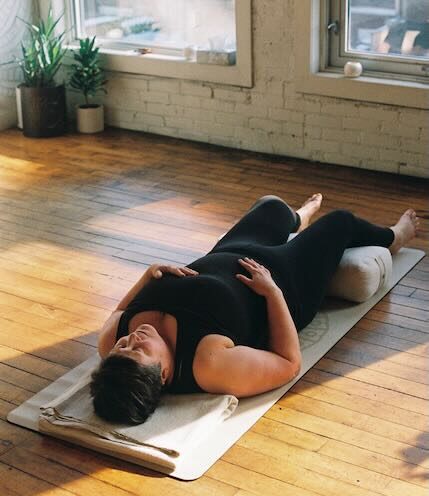
Stress rarely arrives as one dramatic moment. More often, it builds quietly – tight shoulders during the workday, shallow breathing on the TTC, restless sleep, a mind that keeps running long after your laptop closes. That is where restorative yoga for stress relief can be surprisingly powerful. Rather than asking you to push harder, sweat more, or power through, this practice creates conditions for your body to soften, settle, and feel safe enough to rest.
For many people, that shift is not just welcome. It is necessary. If your nervous system has been stuck in overdrive, a gentler practice can do what high-intensity movement sometimes cannot. It offers space to downshift.
What restorative yoga for stress relief actually is
Restorative yoga is a slow, prop-supported practice built around comfort, stillness, and longer holds. Blankets, bolsters, blocks, and straps are used to support the body so that effort decreases rather than increases. In most classes, you will move through only a small number of shapes, often staying in each one for several minutes.
That can sound simple, but it is not the same as doing nothing. A well-taught restorative class is intentional. The shape of each pose, the way props are placed, and the pacing of the room all work together to reduce unnecessary muscular effort and help regulate the nervous system.
This is one reason restorative yoga can feel so different from a flow class. In vinyasa or strength-based formats, challenge often creates heat, focus, and resilience. In restorative yoga, support creates the opening. The goal is not performance. It is recovery.
Why stress responds so well to this style of yoga
 When you are stressed, the body does not always distinguish between a difficult email, a crowded schedule, and an actual physical threat. Heart rate may rise. Breathing may become more shallow. Muscles brace. Digestion can slow. Sleep often suffers. Over time, this state of low-grade activation can start to feel normal, even when it is draining you.
Restorative yoga works by changing the conditions around that stress response. Supported positions encourage the body to release tension that it has been holding unconsciously. Slower breathing can signal safety to the nervous system. Stillness reduces incoming stimulation. Together, those elements can make it easier to shift out of fight-or-flight and toward a calmer, more regulated state.
This does not mean one class erases chronic stress. It means regular practice can help you build capacity to recover from it. That distinction matters. Stress relief is not always about eliminating pressure. Often, it is about improving how your body responds and rebounds.
The benefits most people notice first
The first benefit is usually very physical. Jaw tension eases. Shoulders drop. The breath starts landing lower in the ribs and belly. Many students also notice that their thoughts become less frantic, even if the mind does not go completely quiet.
With consistent practice, the effects can extend further. Better sleep is common. Some people feel less reactive and more patient. Others notice fewer stress-related aches, especially through the neck, upper back, and hips. If you already exercise regularly, restorative yoga can also help balance your routine by giving recovery a more active place in your week.
There is a trade-off here worth naming. Because restorative yoga is quiet and slow, some people expect instant bliss and get frustrated when rest feels unfamiliar. If you are used to staying busy, stillness can feel awkward at first. That does not mean you are bad at it. It usually means your system has had very little practice being supported.
What a class may feel like if you are new
If you have never taken a restorative class, you might wonder whether it will be too easy or whether you will spend the whole time worrying about doing it right. In a supportive setting, neither tends to be the issue.
You can expect a calm room, a slower pace, and a teacher who spends time helping students get comfortable with props. Poses might include a reclined twist, a supported child’s pose, legs up the wall, or a heart-opening shape over a bolster. The holds are long enough for your body to settle gradually rather than forcing a stretch.
That said, comfort in restorative yoga does not always mean immediate comfort in your mind. Some people feel deeply relaxed right away. Others notice impatience, emotion, or mental chatter before the exhale finally arrives. All of that is normal. Rest can bring awareness to what busyness has been masking.
How to get more out of restorative yoga for stress relief
A few practical choices can make a real difference. Try not to treat class as one more thing to rush through. Arriving a few minutes early helps your body transition. If your evening is packed, even giving yourself a small buffer before and after class can protect the calming effect.
Wear layers so your body stays warm during longer holds. Let your instructor know about injuries, pain, pregnancy, or anything that affects positioning. In restorative yoga, the details matter. A prop adjustment under the knees or neck can be the difference between bracing and releasing.
It also helps to let go of the idea that you need to achieve a special state. Some days you will feel profoundly calm. Other days you will simply notice that your breathing is a little easier by the end. Both count. The practice is working with your real nervous system, not an idealized version of it.
When restorative yoga may be the right choice
This style of practice can be especially useful during high-stress periods, after illness, while recovering from physically demanding training, or when sleep has been poor for several nights. It is also a strong option for beginners who feel intimidated by faster-paced classes and want a softer entry point into yoga.
For busy professionals, restorative yoga can serve as a reset that makes the rest of the week more manageable. For longtime practitioners, it can fill a gap that stronger classes do not address. If your routine is all output and no recovery, the body often keeps score.
There are also moments when another format may serve you better. If you feel sluggish, emotionally flat, or mentally foggy, gentle movement or a more energizing class may be a better fit that day. Stress does not show up the same way for everyone. Sometimes regulation comes through stillness, and sometimes it begins with movement.
Creating a more supportive weekly rhythm
The most effective approach is usually not waiting until you are completely depleted. Restorative yoga tends to work best when it becomes part of your rhythm rather than an emergency measure. Even one class a week can create an anchor point – a place where your system learns, repeatedly, what it feels like to come down from high alert.
That weekly pause can also improve how you experience other wellness practices. Strength training, Pilates, walking, and active yoga classes all ask something of the body. Restorative work gives something back. For many adults trying to manage work, family, and constant stimulation, that balance is what makes a wellness routine sustainable.
In a neighbourhood studio setting, that experience can be even more grounding. A familiar room, skilled teachers, and a community that values recovery as much as effort can change how easy it feels to keep showing up. At Breathe Yoga Studio, restorative classes are part of a broader view of wellness that honours movement, rest, and nervous system care as connected rather than separate.
A simple way to start at home
If you are curious but not ready for class, try a short restorative setup at home. Place a bolster or a few firm pillows lengthwise under your spine and rest back with support under the head if needed. Let the arms fall open. Stay for five to ten minutes and breathe naturally.
Or try legs up the wall with a folded blanket under the hips. If the hamstrings feel strained, move farther from the wall. The point is not to create an intense stretch. The point is to create ease.
Home practice can be helpful, but classes have advantages. Teachers can notice when a shape is creating tension instead of relieving it. They can also build a sequence that helps the body unwind progressively. If stress has become your baseline, being guided into rest is often easier than trying to figure it out alone.
There is nothing lazy about choosing a practice that helps you recover. For many people, restorative yoga is the missing piece – the quiet, steady support that makes everything else feel more possible again.
