


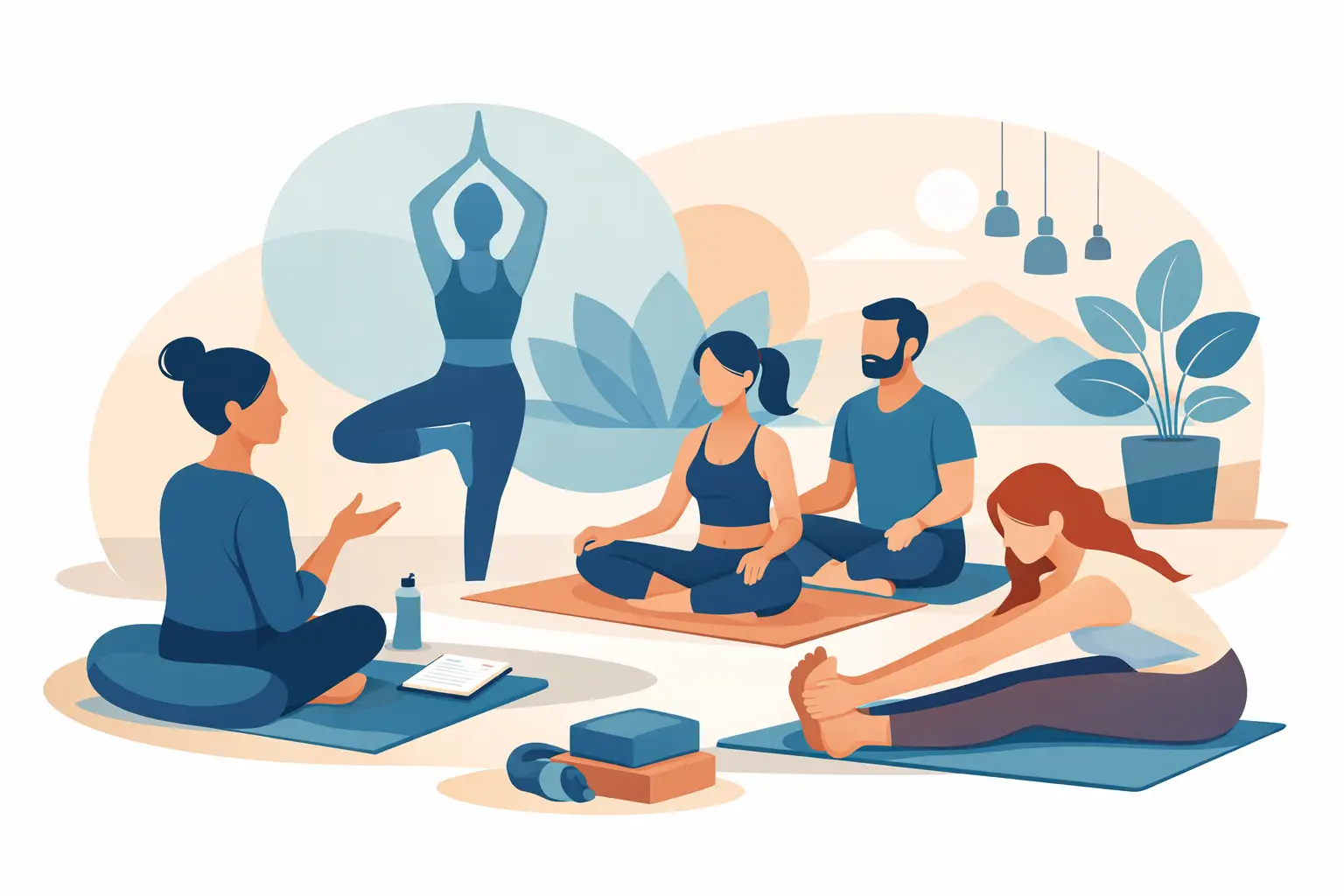
A regular class can change the rhythm of a week. A workshop can change the way you understand your practice. Yoga workshops create the space to slow down, ask better questions, and spend meaningful time with one theme, whether that is building steadiness in standing poses, learning the foundations of breathwork, or finally making sense of a posture that has felt out of reach.
For many students, that focused attention is the difference between simply repeating familiar shapes and practising with greater confidence. It is not about achieving the deepest expression of a pose. It is about learning how your body responds, what support it needs, and how to carry that awareness into every class that follows.
Why yoga workshops feel different from a regular class
A weekly class has its own value: consistency, movement, community, and the chance to return to yourself after a full day. Its pace also needs to serve the whole room. A workshop has a narrower focus and more time. Rather than moving through a broad sequence, you may explore the mechanics of shoulders in weight-bearing poses, the role of the pelvis in forward folds, or the relationship between breath and the nervous system.
That extra time allows an experienced teacher to offer context as well as instruction. You can learn why a pose is approached in a particular way, when a modification is useful, and how props can create support rather than act as a compromise. There is room for questions, observation, and repetition – all valuable parts of learning that can be harder to accommodate in a 60-minute class.
Workshops also offer a helpful reset for established practitioners. If your practice has become automatic, a dedicated session can bring curiosity back to the mat. You may notice habits you had not recognized: holding your breath in effort, pushing past fatigue, or avoiding the quieter practices that would support recovery.
Choosing yoga workshops for your needs
The best workshop is not necessarily the most advanced one. It is the one that meets what is true for you right now. A beginner may benefit most from a foundations session that explains common poses, basic alignment principles, and how to use blocks, straps, or blankets. This kind of setting can make entering a regular class feel far less intimidating.
If you already attend classes consistently, consider what would make your practice more sustainable. A hip mobility workshop may be useful if long hours at a desk leave you feeling restricted. A restorative yoga session may offer practical tools if stress has affected your sleep or energy. A focused Ashtanga or Mysore workshop can help you understand the structure of the method and receive more individual guidance within it.
Your goals matter, but so does your current capacity. A strength-focused inversion workshop can be energizing and rewarding, yet it may not be the right fit when you are managing a wrist concern, recovering from illness, or feeling depleted. In those moments, a workshop centred on breath, gentle mobility, or supported rest may provide more lasting benefit.
Before registering, read the description closely. Look for the intended experience level, the physical focus, the approximate pace, and whether prior knowledge is expected. If you are unsure, asking the studio for guidance is a thoughtful first step. Good instruction begins with meeting students where they are, not asking them to prove they belong.
A workshop is not a performance
It is easy to arrive at a specialized session believing you should already be flexible, strong, calm, or knowledgeable. You do not. Workshops are learning environments, and learning includes uncertainty. A skilled teacher will give options, explain boundaries, and encourage you to work with sensation rather than force.
This matters especially in practices involving deep stretches, backbends, arm balances, and inversions. Progress is rarely linear. Some days a posture feels available; on others, the wisest choice is a smaller variation or rest. The aim is not to override the body. It is to develop the discernment to respond to it well.
What to expect when you arrive
Most workshops begin with a clear introduction to the theme and an invitation to check in with how you are feeling. From there, the teacher may lead a warm-up, break down specific movements, or use short demonstrations to highlight key actions. You will usually have more opportunities to pause and refine than in a flowing class.
Bring water, wear clothing you can move comfortably in, and arrive with enough time to settle. If you have an injury, are pregnant, are returning to movement after a break, or have a health concern that may affect your participation, let the teacher know before the session starts. That conversation helps them offer appropriate options without making you feel singled out.
You do not need special equipment or a polished practice. Studios generally provide the props needed for the session, though the exact setup can vary. What helps most is an open, observant mindset. Notice which cues make a movement feel more stable. Pay attention to your breath when effort rises. Give yourself permission to stop, reset, or choose another variation.
Turning one workshop into lasting progress
The value of a workshop continues after you leave the studio. The following week, choose one or two ideas to bring into your regular practice rather than trying to apply everything at once. Perhaps you learned a more comfortable way to position your hands in downward-facing dog, or a breathing pattern that helps you settle before bed. Repetition is what allows a new insight to become familiar.
A short note after the workshop can be surprisingly useful. Write down a cue that resonated, a prop setup you want to remember, or a question that came up. This is particularly helpful after technical sessions, where there may be more information than you can absorb in one afternoon.
It also helps to notice the broader effects. A workshop on restorative practice may not leave you sweaty, but it can change how you recover from demanding weeks. A session focused on core stability may make everyday lifting and standing feel easier. Breathwork can support a steadier response to stressful moments, although it is not a replacement for medical or mental health care when that support is needed.
A place for practice and community
There is a quiet confidence that comes from learning alongside others. In a workshop, you may meet someone new, recognize a familiar face from class, or realize that other people have the same questions you do. That shared experience can make a studio feel less like a place to exercise and more like a neighbourhood sanctuary for ongoing wellbeing.
At Breathe Yoga Studio, specialized sessions are designed to offer that balance of attentive teaching, practical education, and welcoming connection. For Toronto students balancing busy workdays, family commitments, and their own health goals, a workshop can be a purposeful pause – time set aside to build strength, restore energy, or understand a practice more fully.
Choose a theme that genuinely supports your next step, arrive as you are, and let the learning unfold at a pace your body can trust.
