


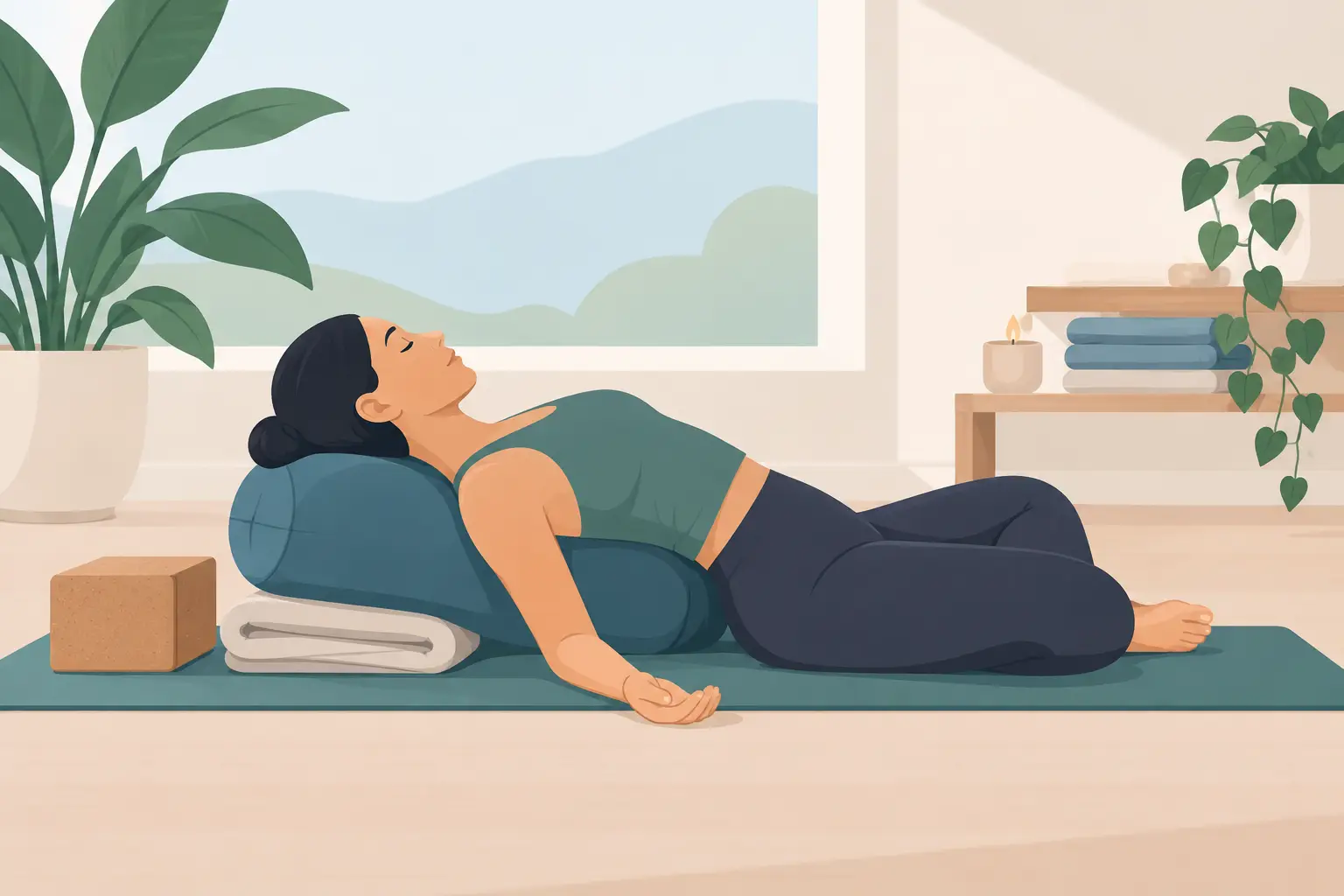
A packed calendar can leave the body looking functional while feeling anything but rested. Tight shoulders, shallow breathing, restless sleep, and a sense of always being “on” are common signals that effort alone is not the answer. This restorative yoga benefits guide looks at why slowing down with intentional support can be one of the most meaningful ways to care for your body, energy, and nervous system.
Restorative yoga is not about stretching farther or holding a pose through discomfort. It is a quiet, fully supported practice designed to help you settle. With props such as bolsters, blankets, blocks, and straps, poses are held for several minutes at a time so the body can soften without needing to work hard to stay there.
What makes restorative yoga different?
A restorative class may include only a handful of poses over 60 to 75 minutes. That can feel surprising if you are used to faster yoga classes, strength training, or a day spent moving from one task to the next. Yet the apparent stillness is purposeful.
In an active yoga practice, muscles contract to create stability, strength, balance, or range of motion. In restorative yoga, thoughtful propping reduces muscular effort. The aim is to create enough comfort and safety that your system has room to shift out of constant alertness. Rather than asking, “How far can I go?” restorative practice asks, “What would allow me to let go?”
This does not mean every moment will feel effortless. Stillness can make you aware of thoughts, emotions, or physical tension that busier movement helps you overlook. An experienced teacher helps you adjust your setup, offering options that meet you where you are rather than pushing you toward one ideal shape.
Restorative yoga benefits guide: what regular practice can support
A calmer nervous system
One of the most valued benefits of restorative yoga is its potential to support downregulation. When life feels demanding, the sympathetic nervous system, often associated with fight-or-flight responses, can remain highly activated. Gentle, supported shapes and unhurried breathing may encourage the parasympathetic response, sometimes called rest-and-digest.
You may notice this as a slower breath, a relaxed jaw, warmer hands, or a sense that your thoughts are no longer racing quite as quickly. The effect varies from person to person, and one class cannot erase chronic stress. Still, a consistent practice can become a reliable cue that you are allowed to pause.
Better conditions for sleep
Restorative yoga is often a helpful evening ritual for people whose bodies are tired but whose minds have not caught up. Practices that emphasize comfortable forward folds, supported twists, legs-up-the-wall variations, and rest can help create a transition between work, caregiving, commuting, and bedtime.
It is not a cure for insomnia, and ongoing sleep concerns deserve appropriate support from a health-care provider. But for many people, restorative yoga reduces the physical agitation that makes it hard to settle at night. The key is gentleness. An intense late-evening workout may energize some bodies, while a supported practice is more likely to invite quiet.
Relief from everyday tension
Hours at a desk, long drives, phone use, repetitive training, and stress can all contribute to tightness around the neck, hips, back, and chest. Restorative poses offer sustained, low-intensity positioning that can feel deeply relieving, particularly when the body is held by props instead of effort.
The goal is not to force flexibility. In fact, pushing into a strong sensation can trigger guarding, which is the opposite of what restorative work intends. A well-supported pose should feel spacious enough that you can breathe steadily. If it does not, more height, more padding, or a different variation may be the better choice.
A more sustainable relationship with movement
Rest is sometimes treated as something we earn after working hard enough. Restorative yoga offers a more useful perspective: recovery is part of training, work, parenting, and well-being, not a reward withheld until the end.
For active practitioners, this can make restorative yoga a valuable complement to strength training, running, Pilates, Ashtanga, or more vigorous vinyasa classes. It gives the body a chance to absorb effort. For beginners, it can be a welcoming entry point into yoga because there is no requirement to be flexible, athletic, or familiar with complex sequences.
Space to notice what you need
A quieter practice can build body awareness. Over time, you may become better at recognizing the difference between productive challenge and depletion, or between ordinary stiffness and a sensation that needs professional attention. That awareness can shape choices well beyond the mat, from how you schedule your week to when you take a true break.
Who may benefit most?
Restorative yoga can support many people, but it is especially relevant during seasons of high demand. Busy professionals, caregivers, students, athletes, and anyone returning to movement after a demanding period may appreciate a practice with a lower physical load.
It can also be a supportive option when you feel run down, are managing ongoing stress, or need a counterbalance to high-output exercise. If you are recovering from an injury, living with chronic pain, pregnant, recently postpartum, or managing a medical condition, speak with a qualified health-care professional and let your teacher know before class. Restorative yoga can be adapted, but the right setup matters.
There are times when a different class may better meet your needs. If your main goal is cardiovascular conditioning or building significant strength, restorative yoga should be one part of a broader movement routine. Its value lies in recovery, regulation, mobility support, and conscious rest, not in replacing every other form of exercise.
What to expect in your first class
Arrive a few minutes early so you have time to settle and share any relevant concerns with your instructor. You will likely use more props than you expect, and that is a good sign. A bolster under the knees, a blanket beneath the head, or blocks under the arms can transform a pose from tolerable to genuinely nourishing.
Wear comfortable layers. As the body becomes still, it can cool down, so socks and a long-sleeve top are often welcome. You do not need special flexibility or expensive equipment. Curiosity is enough.
During class, give yourself permission to make adjustments. If a hip, shoulder, or lower back feels pinched, tell your teacher or come out of the pose. Sensation is not a measure of success. The most effective restorative shape is often the one that allows your breath to stay easy and your attention to soften.
At Breathe Yoga Studio, restorative classes are taught as a sanctuary from the pace of West Toronto life, with experienced guidance and space for each student to find the support that works for their body. Small adjustments can make a substantial difference, especially for people who assume yoga must involve strain to be worthwhile.
How often should you practise?
Once a week can be a grounding starting point, particularly if you already have a full movement routine. Some people benefit from a restorative class every few weeks as a reset, while others build short practices into several evenings each week. Consistency matters more than intensity.
Even 10 minutes at home in a supported resting position can be useful when a full class is not possible. Try placing your calves on a chair while lying on your back, with a folded blanket under your head if needed. Stay only as long as you remain comfortable, breathe naturally, and can rise without feeling stiff or dizzy.
The deeper invitation of restorative yoga is simple: your well-being does not need to wait for a crisis, a holiday, or an empty schedule. Making room for supported stillness can help you meet the rest of your life with a little more steadiness, clarity, and care.
