


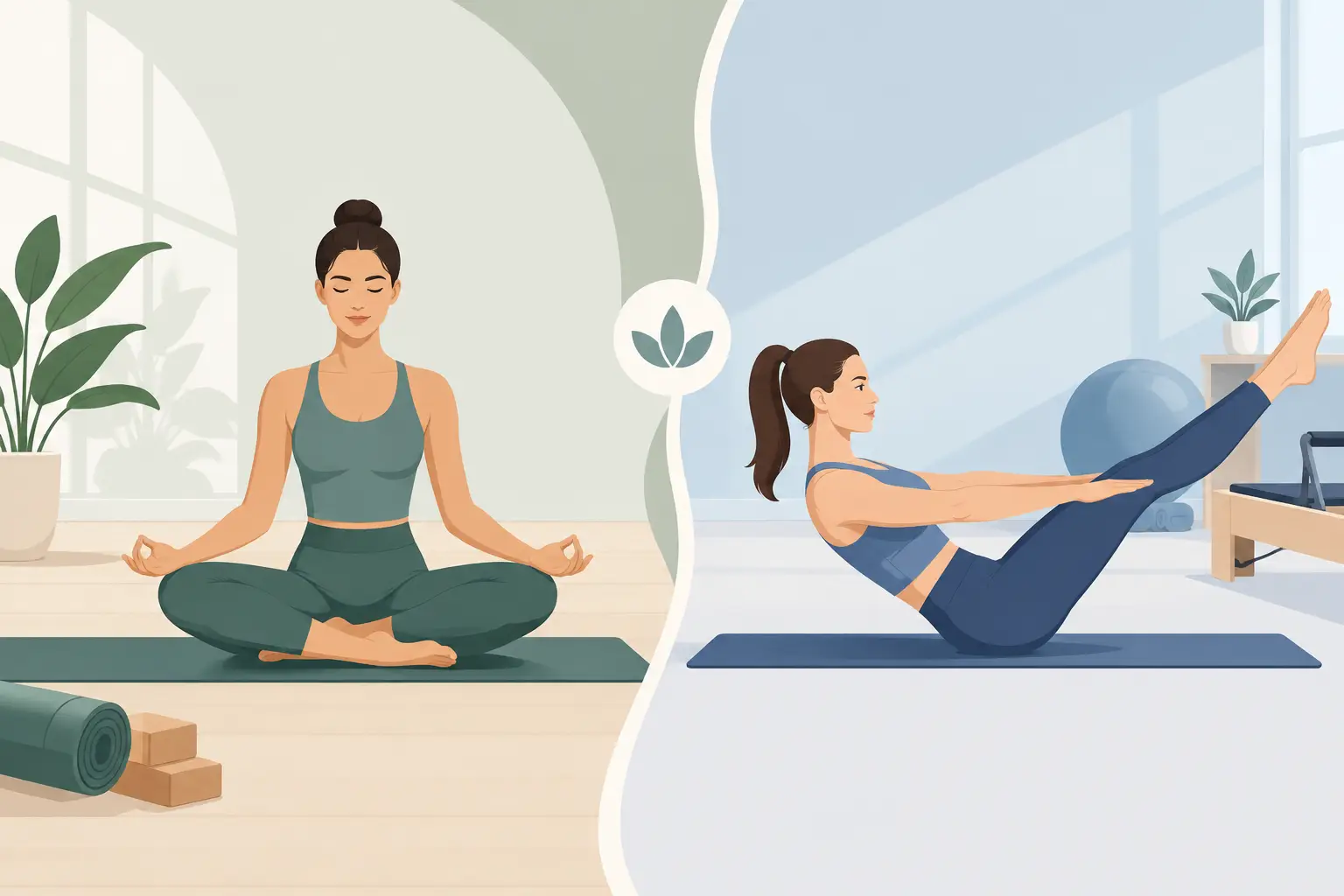
A stiff back after a long day at the desk, a desire to feel stronger without punishing workouts, or a mind that will not quite switch off can all lead to the same question: yoga versus Pilates, which one is right for me? The honest answer is that both can be deeply supportive practices. The better choice depends on what your body needs now, what helps you stay consistent, and the kind of experience you want when you step into the studio.
For many people, the decision does not need to be permanent. Yoga and Pilates overlap in meaningful ways, yet they ask different things of the body and attention. Understanding those differences can help you choose a first class with confidence, or build a movement routine that feels balanced rather than overwhelming.
Yoga Versus Pilates: The Core Difference
Yoga is a broad tradition of movement, breathwork, meditation, and philosophy. A physical yoga class may include standing postures, seated stretches, balance work, strength-building sequences, and periods of stillness. Depending on the style, the pace can range from energizing and athletic to quiet and restorative.
Pilates is a structured movement method developed to build control, strength, alignment, and efficient movement patterns. It places particular attention on the deep muscles that support the trunk, pelvis, and spine. Pilates classes often use precise, repeated exercises to develop core stability, hip strength, mobility, and body awareness.
Both practices ask you to move with intention instead of simply rushing through repetitions. Both can improve posture, flexibility, balance, and resilience. The distinction is usually in the emphasis: yoga often gives more space to breath, presence, and whole-person regulation, while Pilates tends to focus more directly on controlled strength and functional mechanics.
What Yoga May Offer Your Body and Nervous System
Yoga can be a powerful place to reconnect with how you feel, not only how you perform. In a well-taught class, breath is used as an anchor while you explore range of motion, stability, and strength. That combination can be especially valuable when work, caregiving, commuting, or constant notifications have left you feeling disconnected from your body.
A flowing practice can build heat and muscular endurance. Ashtanga-inspired classes, for example, may appeal to students who enjoy a steady sequence, clear progression, and the focus that comes from returning to familiar postures over time. Slow flow and foundational yoga can help newer students develop confidence with shapes and transitions without feeling rushed.
Restorative yoga serves a different purpose. Supported poses are held for longer periods with props, inviting the body to settle rather than strive. It is not simply “easy yoga.” For people managing high stress, poor sleep, intense training schedules, or a general sense of depletion, restorative practice can offer an essential counterbalance to effort.
Yoga may be a particularly good starting point if you are looking for greater mobility alongside stress relief, if you want to explore breath-led movement, or if you value a practice that can meet you differently from one week to the next. You do not need to be flexible to begin. Flexibility is one possible outcome, not an entry requirement.
Yoga is not one intensity level
One reason people hesitate about yoga is that they have seen images of advanced inversions or extreme flexibility. Those images represent only a small corner of the practice. A skilled teacher can offer options for wrists, knees, shoulders, low backs, pregnancy, limited mobility, and days when your energy is lower.
The style matters. A dynamic vinyasa class may feel challenging for someone returning to movement, while a beginner class, gentle flow, or restorative practice may feel like exactly the right doorway. If you are recovering from an injury or have ongoing pain, speak with your healthcare provider and let your instructor know before class so appropriate modifications can be considered.
What Pilates May Offer for Strength and Support
Pilates has a reputation for core work, and that is deserved, but its value goes beyond abdominal exercises. The goal is to develop a stable, responsive centre so the rest of the body can move more effectively. Rather than gripping through the shoulders or relying on the low back, you learn to organize movement with greater awareness.
This can be useful for people who spend hours sitting, feel unstable in one-sided activities, or want a strength practice that complements running, cycling, yoga, or recreational sport. Pilates commonly challenges the glutes, deep abdominal muscles, back body, hips, and shoulder stabilizers. The movements can look small, but precise work often creates a surprising amount of effort.
A Pilates class may suit you if your goals include building strength, improving posture, developing better pelvic and spinal control, or learning how to move with less compensation. It can also be a smart choice for students who want a clear exercise-based format and enjoy feeling tangible progress in control and endurance.
That said, Pilates is not automatically better for every injury or every body. A strong instructor will adapt exercises, offer regressions and progressions, and help you work within an appropriate range. The best class is not the one that leaves you most exhausted. It is the one that challenges you appropriately and lets you return with confidence.
Choose Based on Your Goal, Then Leave Room to Adapt
If stress reduction, breath awareness, balance, and flexibility are high on your list, yoga may be the more natural fit. If you want focused core conditioning, postural support, and movement precision, Pilates may feel more immediately aligned. But goals are rarely that tidy.
Someone with tight hips may benefit from both yoga mobility work and Pilates strength around the pelvis. A runner may use Pilates to build stability and restorative yoga to support recovery. A busy professional may find that a morning Pilates session creates energy and a slower evening yoga class helps ease the transition out of work mode.
Your preferences matter, too. Some people thrive on the rhythm of a yoga flow and the quiet that follows final rest. Others feel most at home with Pilates’ clear structure and detailed cueing. Enjoyment is not a superficial factor. A practice you genuinely want to return to is far more likely to support long-term health than a theoretically perfect routine you avoid.
Consider your current season, not just your ideal self
It is easy to choose a class based on who you think you should be: the person who wakes at dawn for an intense practice or trains hard six days a week. A more helpful question is what you can sustain in your actual life.
If sleep has been inconsistent and your nervous system feels stretched, a demanding class may not be the most supportive starting point. If you feel restless and under-challenged, gentle movement alone may not satisfy you. Your needs can change with workload, age, injury history, hormonal shifts, training demands, and the seasons of life. There is wisdom in adjusting your practice accordingly.
Can You Do Yoga and Pilates Together?
Absolutely. For many students, the combination works beautifully. Pilates can strengthen the foundation that makes yoga postures feel more stable and accessible. Yoga can offer the mobility, breath connection, and recovery space that helps strength work feel more sustainable.
You do not need an ambitious schedule to benefit. Two or three weekly sessions, chosen with intention, can create meaningful change. You might take one Pilates class for strength and control, one yoga class for mobility and focus, then add a restorative practice when recovery calls for it. Consistency matters more than doing every class available.
At Breathe Yoga Studio, the variety of yoga and Pilates classes makes it possible to explore without locking yourself into one label. An experienced teacher can help you find an appropriate starting point, whether you are brand new, returning after time away, or ready to deepen an established practice.
What to Expect in Your First Class
Arrive a little early, wear clothing you can move comfortably in, and tell the instructor if you are new or working with an injury. You do not need specialized knowledge, perfect coordination, or the ability to touch your toes. You only need a willingness to pay attention and take options when they are offered.
In yoga, expect to be invited to notice your breath and choose a version of a pose that feels steady. In Pilates, expect detailed cues that may ask you to slow down and refine movements you thought you already knew. Both can be humbling in the best way: they reveal patterns, build awareness, and give you practical tools to carry beyond the studio.
Give yourself a few classes before deciding whether a practice is for you. The first session is often about learning the language of the room. With repetition, the cues become familiar, your confidence grows, and you can better recognize what your body is asking for.
The right practice is not a test of discipline or identity. It is a supportive appointment with yourself. Choose the class that helps you feel more grounded, capable, and cared for, then allow that choice to evolve as you do.
