


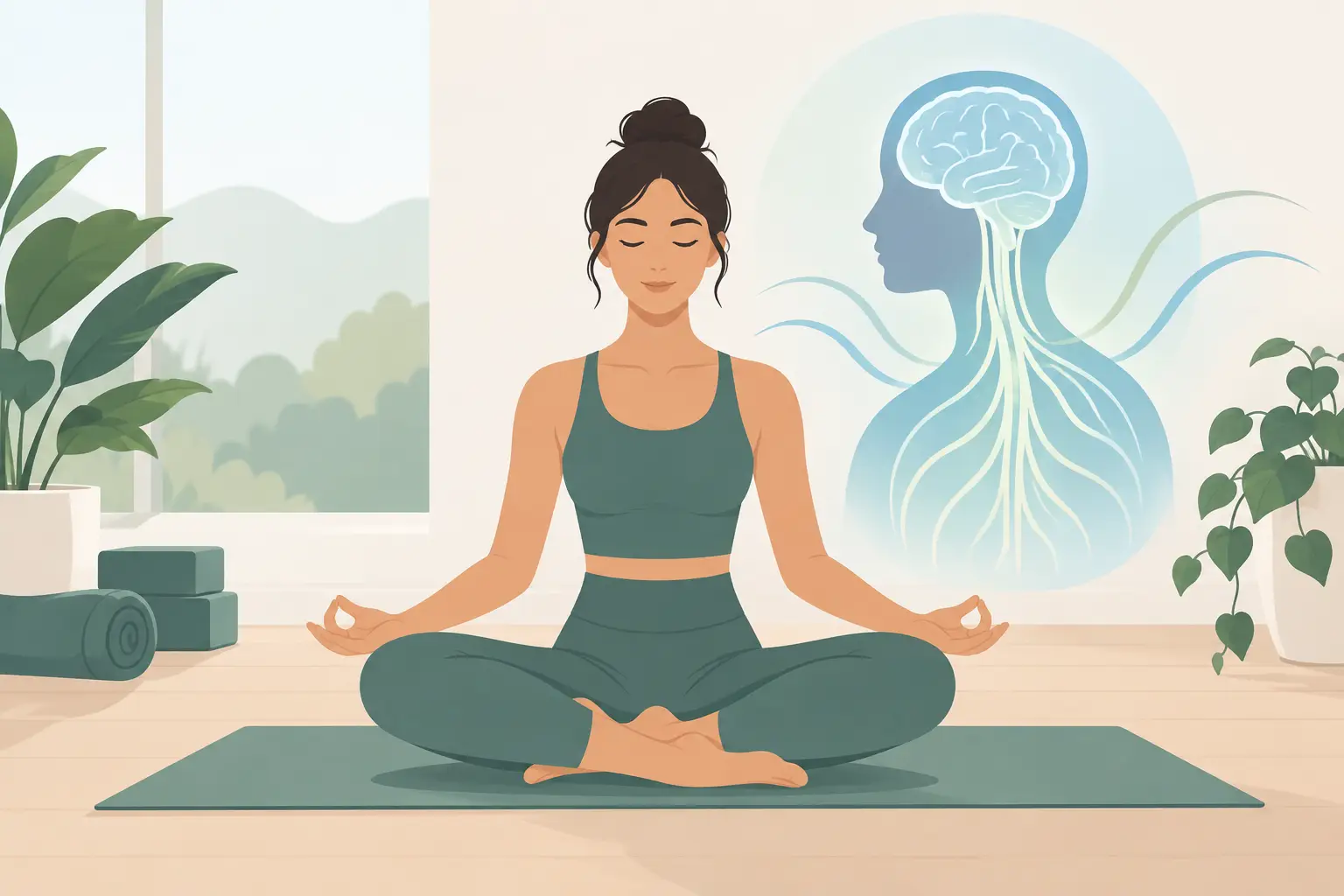
Your body can be sitting at a desk, answering emails, or moving through a familiar yoga class while your nervous system acts as though there is an emergency. A tight jaw, shallow breath, racing thoughts, digestive discomfort, restless sleep, or a sudden short temper can all be signs that your system has been carrying too much for too long. Learning how to regulate nervous system stress is not about becoming calm every minute of the day. It is about building the capacity to notice activation, respond with care, and return to a steadier baseline.
The nervous system is not a switch you can simply turn off. It is an intelligent network designed to protect you. Stress, a packed schedule, poor sleep, pain, conflict, under-fuelling, and even too much intense exercise can signal that protection is needed. Regulation gives your body repeated evidence that, in this moment, it has enough safety to soften.
What nervous system regulation actually means
Your autonomic nervous system constantly scans your internal and external environment. When it senses demand or threat, the sympathetic nervous system mobilizes you: heart rate may rise, muscles brace, and attention narrows. This response can be helpful when you need energy, focus, or quick action.
The challenge comes when activation rarely resolves. The body may stay in a high-alert pattern, or swing in the other direction into shutdown, numbness, fatigue, or disconnection. Regulation is the ability to move through these states with more flexibility. It does not mean avoiding difficult feelings or forcing yourself into stillness when stillness feels unbearable.
A regulated state often looks less dramatic than people expect. You may still have deadlines and emotions, but you can breathe more fully, think with more perspective, sleep with greater ease, and recover after a demanding day. Your capacity grows through small, consistent experiences, not one perfect practice.
Start by noticing your current state
Before choosing a technique, pause long enough to ask: am I keyed up, shut down, or relatively settled? The most supportive practice depends on the answer.
When you feel anxious, restless, irritable, or unable to stop thinking, you may need grounding and a slower exhale. When you feel foggy, heavy, numb, or disconnected, you may need gentle stimulation: daylight, a walk, music, social connection, or a more energizing movement practice. Trying to force a long restorative pose when you are agitated, or an intense power class when you are depleted, can leave you feeling worse.
Common signs your nervous system may be asking for support include:
- difficulty falling asleep or waking unrefreshed
- a body that feels constantly tense or on edge
- trouble focusing, remembering, or making small decisions
- digestive changes, headaches, or unexplained fatigue
- reacting more strongly than usual to ordinary stress
These signs are not a diagnosis. They are information. If symptoms are persistent, severe, or affecting daily life, a regulated wellness routine can complement care from a qualified health professional, but it should not replace it.
Use your breath as a signal of safety
Breathing is one of the most accessible ways to influence your state because it is both automatic and voluntary. The goal is not to take the deepest breath possible. Straining for a large inhale can create more tension, especially when you already feel anxious.
Instead, try a softer, slower rhythm. Inhale comfortably through the nose for a count of four, then exhale gently for a count of six. Repeat for one to three minutes. A slightly longer exhale can support a shift toward rest and recovery, while the counting gives a busy mind one simple place to land.
If breathwork makes you dizzy, panicky, or overly aware of sensations in your body, return to natural breathing. Place one hand on a steady surface, look around the room, and orient to what you can see and hear. Nervous system care should feel invitational, never like another performance to get right.
Choose movement that matches your energy
Yoga can be a powerful regulation practice because it combines breath, movement, attention, and rest. Yet the most soothing class is not always the slowest one. Some people settle through a steady, strength-building sequence that helps discharge pent-up energy; others need fewer poses, longer pauses, and the support of props.
If your days are highly sedentary and your thoughts feel fast, a mindful flow with clear transitions may help you feel more present in your body. If you are exhausted, sore, or stretched thin, restorative yoga can offer a quieter kind of practice. Supported forward folds, legs elevated on a chair, and a well-propped rest pose reduce the demand to hold yourself up and can make space for recovery.
Pilates can also be regulating, particularly for those who feel disconnected from their core strength or posture. Precise, controlled movement asks for attention without requiring you to push to exhaustion. The trade-off is important: exercise that consistently leaves you wired, unable to sleep, or depleted may be exceeding your current recovery capacity. More is not always more supportive.
For some practitioners, a structured Ashtanga or Mysore practice offers the familiarity that helps the mind settle. Knowing what comes next can be grounding. For others, repetition can feel demanding, and a gentler class is a better fit. Your needs may change from week to week, which is why listening is a skill worth practising.
Build regulation into ordinary moments
A 60-minute class can be a meaningful reset, but the nervous system responds especially well to frequent, manageable cues of safety. Think less about finding one ideal routine and more about creating small pauses throughout the day.
Try stepping outside for five minutes of daylight in the morning, eating regular meals with enough protein and carbohydrates, taking a screen-free walk after work, or placing both feet on the floor before a difficult conversation. A warm shower, a familiar playlist, time with a trusted person, and a consistent bedtime can all support the body’s sense of predictability.
Nutrition matters here too. Blood-sugar swings, dehydration, excessive caffeine, and long gaps between meals can amplify feelings that resemble anxiety: shakiness, irritability, brain fog, and a racing heart. There is no single eating plan that regulates every nervous system, but individualized support can be useful when low energy, hormonal changes, or stalled wellness goals are part of the larger picture.
Create a realistic practice for stressful weeks
The most effective routine is one you can return to when life gets busy. Rather than setting an ambitious goal that adds pressure, choose a minimum practice that feels almost too easy. You might commit to five minutes on your mat after work, three slow breaths before opening your inbox, or one class each week that is protected in your calendar.
Consistency teaches the nervous system through repetition. Over time, your body begins to recognize the feeling of arriving, moving, breathing, and resting. That familiarity can make it easier to access steadiness outside the studio too, in traffic, during a meeting, or at the end of a demanding day.
Community can be part of this process. Practising alongside others in a calm, welcoming room offers a form of co-regulation: your system receives cues from the pace, tone, and presence around you. At Breathe Yoga Studio, experienced teachers can help you choose between stronger, slower, restorative, and beginner-friendly practices without treating one approach as the answer for everyone.
When regulation needs more support
Wellness practices are valuable, but they are not meant to ask you to manage everything alone. Consider seeking additional support if you experience panic attacks, trauma symptoms, persistent low mood, significant sleep disruption, thoughts of self-harm, or substance use that feels difficult to control. A physician, therapist, or other qualified mental health professional can help you create a plan that fits your needs.
It is also worth speaking with a healthcare provider about new or concerning physical symptoms. Palpitations, ongoing digestive changes, dizziness, pain, and profound fatigue can have many causes. Caring for your nervous system includes taking your body seriously.
A few quiet breaths, a well-timed meal, a walk through your neighbourhood, or a supportive class may seem small. Practised with patience, these moments become a message your body can trust: you are here, you are listening, and you have somewhere steady to return to.
