


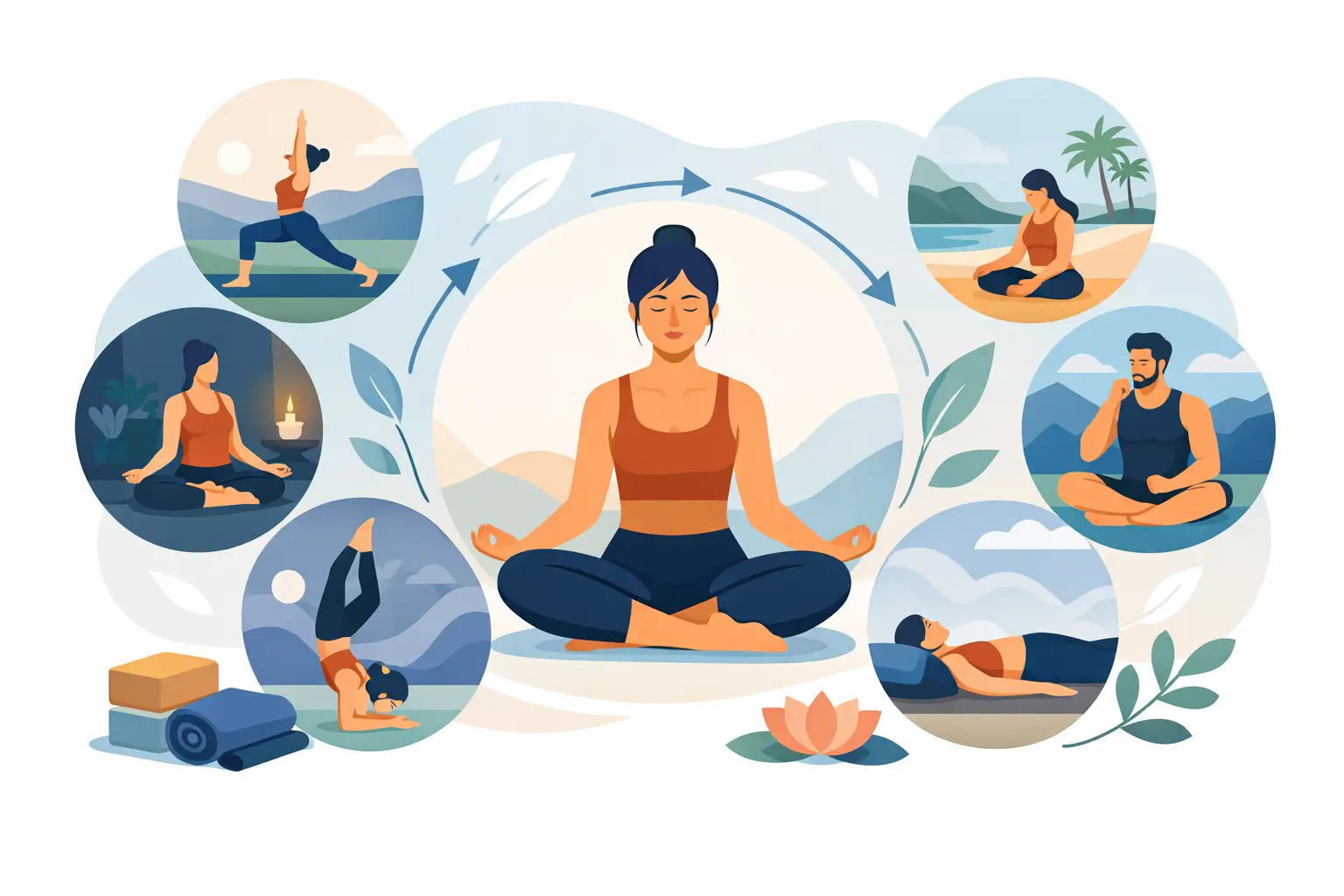
The class that looks best on social media is not necessarily the class your body needs on a Wednesday evening. Learning how to choose yoga style starts with a more useful question: what would help you feel better, stronger, calmer, or more connected right now? Your answer may change from season to season, and that is a healthy part of practice.
Yoga is not one fixed experience. Some classes build heat and physical strength; others create room to slow down, release tension, and settle the nervous system. A good fit should feel both supportive and appropriately challenging. You do not need to choose one style forever. You simply need a sensible place to begin.
How to Choose Yoga Style Based on Your Goal
Your primary reason for coming to class is often the clearest guide. If you are carrying stress in your shoulders, struggling to switch off after work, or feeling depleted, a vigorous practice may not offer the reset you are seeking. If you miss feeling strong and capable in your body, a slower restorative class may be lovely, but not fully meet your movement goals.
Be specific about what you want more of. Perhaps it is mobility after long hours at a desk, strength that supports your other activities, steadier energy, better sleep, or a regular hour that belongs only to you. Yoga can support all of these goals, but different styles emphasize different pathways.
For strength, stamina, and a satisfying physical challenge
Flow-based yoga, power-oriented classes, and Ashtanga-inspired practice can be a strong match when you want to build heat, muscular endurance, balance, and body awareness. These practices often link breath with movement and include weight-bearing poses that develop strength through the arms, legs, and core.
Ashtanga follows a more consistent sequence, which can appeal to people who enjoy structure and measurable progress. Over time, repetition lets you notice subtle changes in your breath, focus, and range of motion. It can be demanding, however, particularly if you are new to regular movement, recovering from injury, or already feeling physically overextended.
Mysore practice offers a more individualized version of this tradition. Students move through a sequence at their own pace while an experienced teacher provides guidance within the room. It can be an excellent option for committed beginners and established practitioners alike, especially if you value personal attention without needing the whole class to move in unison.
For stress relief, sleep, and nervous system support
Restorative yoga is designed for the days when doing less is exactly what helps you move forward. Poses are supported with props and held for longer periods, allowing the body to soften without forcing a stretch. The practice can be deeply useful for people managing stress, poor sleep, busy schedules, or the fatigue that often follows months of putting everyone else first.
Do not mistake restorative yoga for an easy option. Slowing down can ask for patience, self-awareness, and a willingness to notice what is happening beneath the surface. If your mind races when the room gets quiet, that is not a sign you are doing it wrong. It is often a sign that this kind of practice may be valuable.
Gentle yoga can offer a similar sense of ease with a little more active movement. It is a welcoming bridge for beginners, older adults, and anyone returning to exercise after time away.
For mobility, posture, and everyday resilience
If your hips feel tight, your back is stiff, or your posture has become shaped by commuting and screen time, look for classes that prioritize functional movement, alignment, and accessible modifications. A well-taught beginner yoga class can be more beneficial than an advanced format because it gives you time to understand the foundations of standing poses, breath, balance, and safe transitions.
Pilates can also complement yoga beautifully when your goal is core strength, postural support, and controlled movement. While Pilates is not yoga, many students find that it improves the stability and body awareness that make their yoga practice feel more sustainable. Combining the two can be especially useful if you want strength without doing the same type of class every day.
Consider Your Current Capacity, Not Your Ideal Self
It is tempting to select a class based on the person you hope to become: highly flexible, effortlessly calm, or able to hold a challenging arm balance. Ambition has its place, but your starting point matters more. The most effective practice is one you can return to consistently.
Ask yourself what your body and schedule can honestly support this month. A high-energy evening class may sound motivating, but if it leaves you too activated to sleep, an earlier strength class or a quieter practice could serve you better. Likewise, if you tend to avoid exercise when it feels intimidating, choose a beginner-friendly class with clear instruction rather than waiting until you feel “ready.”
Pain, injury, pregnancy, recent surgery, and chronic health conditions also deserve attention. Yoga teachers can offer modifications, but they need accurate information to do so. Arrive early, share relevant concerns privately, and be prepared to skip or adapt poses. Sensation from effort or stretching can be normal. Sharp, pinching, numb, or escalating pain is a cue to stop and seek guidance.
Let the Teaching Style Matter as Much as the Yoga Style
Two classes with the same name can feel entirely different depending on the teacher. One instructor may offer detailed alignment cues and frequent options; another may teach a faster, more intuitive flow. Neither approach is automatically better. The question is whether the teaching helps you feel safe, included, and able to understand what you are being asked to do.
For newer students, seek teachers who welcome questions, explain the use of props, and normalize taking rest. For more experienced students, look for instruction that continues to refine your practice rather than simply making it harder. Smaller class settings can be particularly helpful because a teacher has more opportunity to notice your movement patterns and offer relevant choices.
At Breathe Yoga Studio, the range of yoga, Mysore, restorative, strength-focused, and Pilates classes makes it possible to build a practice around your real needs rather than squeezing yourself into one format. This variety is valuable because wellness is rarely linear. Some weeks call for challenge; others call for recovery.
Try a Few Classes Before You Decide
Your first class is useful information, not a final verdict. Give a style two or three sessions when possible, especially if the movements or pacing are unfamiliar. The first visit can feel awkward simply because you are learning where to put your mat, how to use props, and what common cues mean.
After class, check in with more than your muscles. Did you feel welcomed? Were the instructions clear? Did the pace let you breathe? Did you leave feeling pleasantly worked, steadier, or more at home in your body? These signals are often more meaningful than whether you managed every pose.
It also helps to balance your week. Someone who runs, lifts weights, or works in a high-pressure role may benefit from pairing stronger yoga with restorative practice. Someone who mostly sits and feels low in energy may enjoy beginning with gentle yoga, then adding a more dynamic class as confidence grows. Consistency comes more easily when your schedule includes both effort and recovery.
A Simple Way to Make Your First Choice
If you still feel unsure, start with a beginner or gentle yoga class when you want clear foundations and a lower-pressure entry point. Choose restorative yoga when stress, poor sleep, or exhaustion are taking centre stage. Try a flow, strength-focused, or Ashtanga-based class when you are looking for physical challenge and have the energy to meet it. Consider Mysore if you are drawn to an established sequence and individual guidance. Add Pilates when core strength, stability, and posture are high on your list.
There is no prize for choosing the most intense class, and no need to earn rest by pushing past your limits. The right yoga style is the one that helps you listen more closely, move with greater confidence, and return to your mat with curiosity. Let your practice meet you where you are, then give it room to grow with you.
