


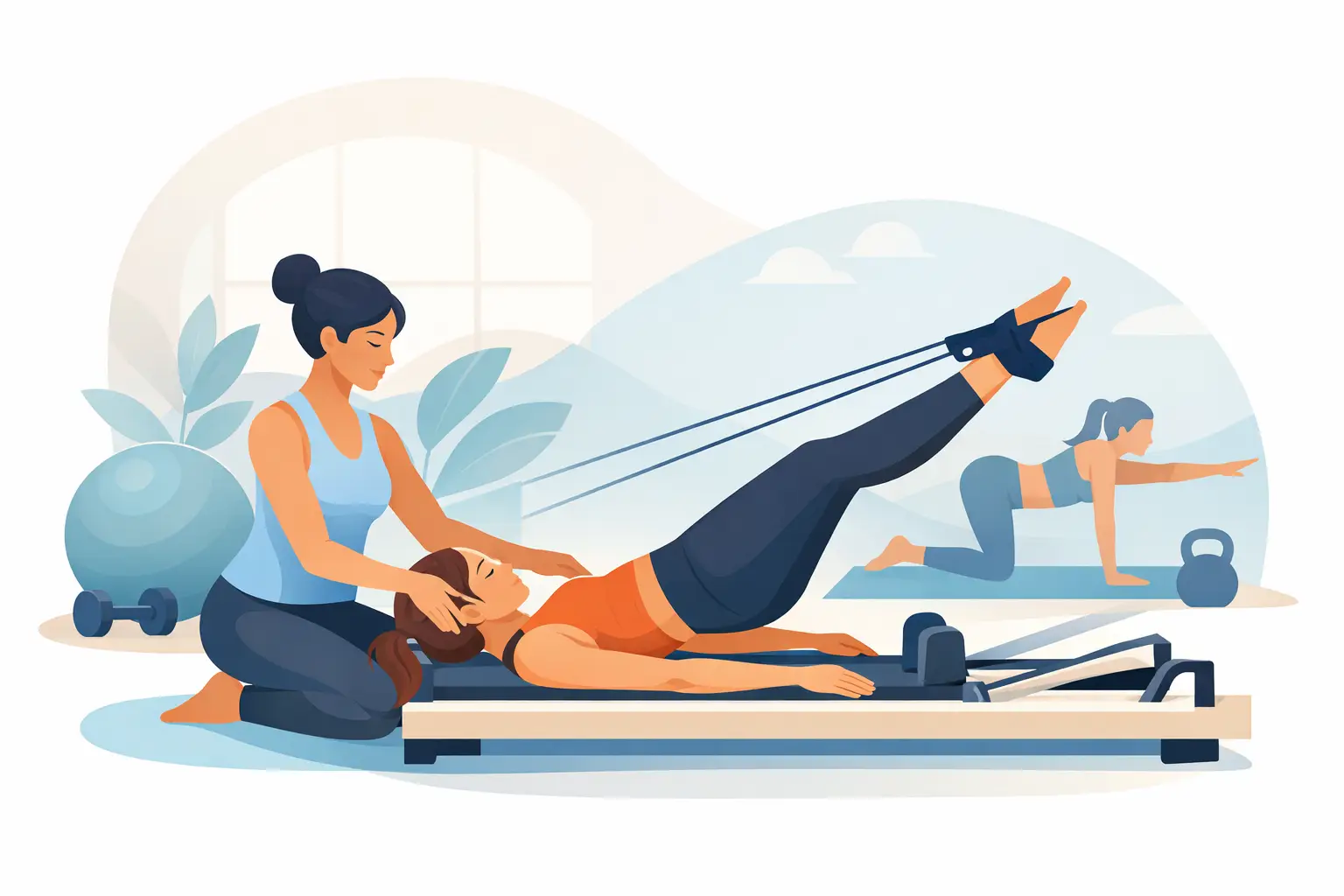
A strong practice should leave you feeling more at home in your body, not depleted by it. Pilates classes offer a focused way to build strength, improve mobility and reconnect with the stabilizing muscles that support how you move through daily life – from long desk days to weekend walks, training sessions and everything in between.
For many people, Pilates is appealing because it is challenging without asking them to push past their limits. The work is precise, intentional and adaptable. You may feel your core working deeply, notice your hips or shoulders moving more freely, and leave with the quiet satisfaction of having paid close attention to yourself.
What Pilates Classes Actually Work On
Pilates is often described as core training, but that description is only part of the picture. A thoughtful class develops whole-body strength by connecting breath, alignment and controlled movement. The core includes more than the muscles at the front of the abdomen. It also involves the deep stabilizers around the pelvis, spine and ribcage that help you move with greater control.
In practice, you might work through slow, deliberate sequences for the abdominals, glutes, legs, back and shoulders. Rather than relying on momentum, Pilates asks you to notice where a movement begins and how the rest of the body responds. This can reveal familiar patterns, such as gripping through the neck, overworking the hip flexors or holding tension in the low back.
That awareness has practical value. Better strength and coordination can support posture, balance and resilience in other activities. It may also make everyday movements – lifting groceries, climbing stairs, sitting comfortably or getting up from the floor – feel more supported. Results vary with consistency, your starting point and the quality of instruction, but the benefits often extend well beyond the studio.
Is Pilates Right for Your Body and Goals?
Pilates can meet people at many different stages of their wellness journey. Beginners often appreciate the clear structure and lower-impact approach. Experienced movers may value the depth of the work, especially when a class offers thoughtful progressions instead of simply adding more repetitions or speed.
If your goal is to build visible muscle quickly, Pilates may work best alongside strength training that uses heavier resistance. If you are looking for a practice that develops control, mobility, functional strength and body awareness, it can stand very well on its own. There is no single correct combination. Your ideal routine depends on your history, schedule, energy and what helps you stay consistent.
Pilates can also complement yoga beautifully. Yoga may invite greater range of motion, stillness and breath awareness, while Pilates often brings a more concentrated focus to muscular support and alignment. Together, they can create a balanced week that includes strength, mobility, recovery and nervous system care.
For anyone managing pain, recovering from an injury, living with a health condition or returning to movement after a long break, it is wise to speak with a qualified health-care provider first. Then choose an instructor who welcomes questions and can offer modifications without making you feel singled out.
What to Expect at Your First Pilates Class
Your first visit does not need to be a performance. Arrive a little early, let your teacher know that you are new, and give yourself permission to learn. Pilates has its own vocabulary, and movements that look small can feel surprisingly demanding. That is normal.
Many mat-based classes begin with breath and foundational alignment: how to position your pelvis, organize your ribs and find gentle support through the abdominals. From there, the class may move into exercises for the legs, glutes, spine, arms and upper back, with careful transitions between positions. Props such as blocks, bands or small balls may be used to create feedback, assistance or added challenge.
You do not need to arrive with a strong core or exceptional flexibility. In fact, class is where you develop those qualities. Wear clothing that lets you move comfortably, and choose socks with grip if your studio requests them. Most importantly, focus on accuracy rather than trying to make every movement look large. A smaller range with steady breath and good alignment is often more effective than forcing depth.
The difference skilled teaching makes
In Pilates, detail matters. A teacher’s cue can help you shift effort away from the shoulders and into the back, find stability through a standing leg, or breathe without losing support through the centre. Those adjustments can make a familiar exercise feel entirely different.
Smaller class settings are especially valuable for new students and anyone refining their technique. They create room for teachers to offer options, respond to individual needs and help you understand the purpose behind the movement. At Breathe Yoga Studio, this kind of attentive instruction is part of creating a welcoming space where people can begin with confidence and continue to grow.
How Often Should You Practise?
Once a week is a meaningful place to start. It gives you time to learn the foundations, notice how your body responds and build a habit that fits your life. Two or three weekly sessions can bring more noticeable progress in strength, control and movement confidence, particularly when paired with adequate rest and everyday movement.
Consistency is more useful than intensity followed by long gaps. If your week is demanding, one class that helps you reset and move well is worthwhile. If you have more capacity, alternating Pilates with yoga, walking or resistance training can support a well-rounded approach.
Pay attention to how you feel after class and the next day. Normal muscle fatigue is one thing; sharp pain, persistent joint discomfort or exhaustion that does not resolve is another. Progress is not always about doing more. Sometimes it is about choosing a modification, resting between sessions or returning to a foundational variation until it feels secure.
Choosing Pilates Classes That Support Real Progress
Not every Pilates class will feel the same, and that is a good thing. Some sessions emphasize foundational technique and accessible strength. Others move at a quicker pace or layer more complex coordination into familiar exercises. The best choice is not necessarily the most intense option. It is the class where you can practise with attention, receive appropriate challenge and return often enough to build on what you learn.
When deciding where to begin, look for experienced teachers, clear descriptions and an environment where questions are encouraged. A class should offer options for different bodies and energy levels without losing its structure. You want to feel guided, not rushed or left to guess.
It can also help to define what success means to you before you start. Perhaps you want less stiffness after work, more confidence in your body, stronger support for your yoga practice or a sustainable way to train during a busy season. That intention can guide your choices far better than comparing yourself with the person on the next mat.
Building a Practice You Will Want to Keep
The most lasting movement habits are rooted in how they make you feel. Pilates is not a test of whether you can hold the longest plank or reach the deepest position. It is a practice of learning where strength can be steadier, where breath can be freer and where your body can move with less unnecessary effort.
Give yourself time to become familiar with the work. Notice the small changes: a more stable balance, less tension in your shoulders, a stronger connection through your centre, or the simple relief of having made space for your wellbeing. Those quiet gains are often what make a practice sustainable.
Choose Pilates classes that meet you with skilled guidance and room to progress, then let consistency do its patient work. Your body does not need perfection to change. It needs care, attention and a practice you can return to.
