


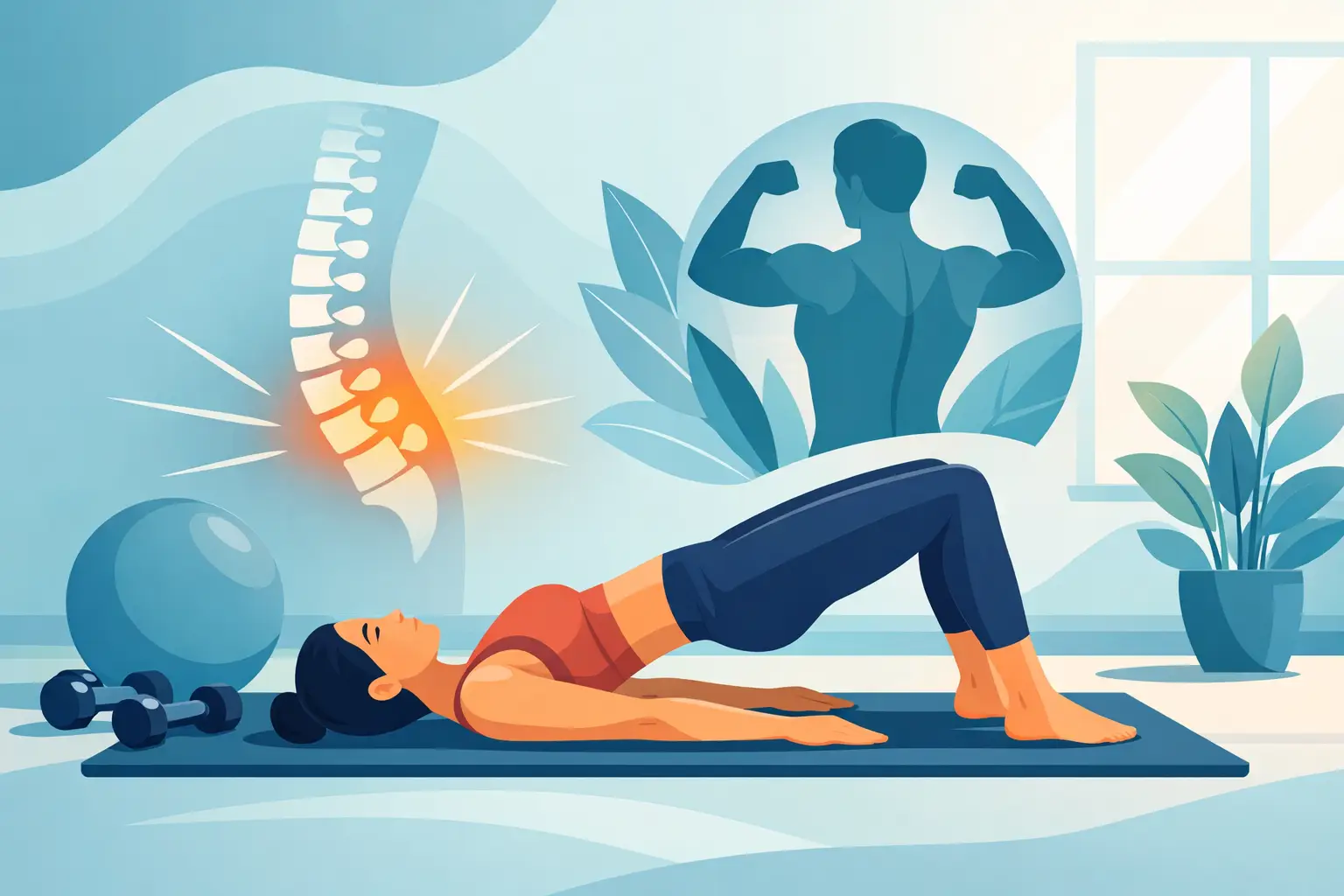
A sore back rarely stays in one place. It can change how you sit at your desk, carry groceries, sleep, train, and even take a walk through the neighbourhood. Pilates for back pain can be a supportive way to reconnect with movement, but the goal is not to force a stretch or chase a harder workout. It is to build trust in your body through thoughtful strength, mobility, breath, and control.
For many people, back pain is not simply a sign that they need to be still. Extended rest can leave the body feeling more guarded and less capable. The right kind of movement may help you maintain function, reduce fear around everyday activities, and develop the strength to move with greater ease. What is right, however, depends on the source, severity, and history of your symptoms.
Why Pilates can support a sore back
Pilates is often associated with the core, but in a well-taught class, core strength means much more than tightening your abdominals. It includes how your diaphragm, deep abdominal muscles, back muscles, hips, and pelvic floor coordinate to support movement. Instead of isolating one area and holding tension, Pilates teaches the body to create stability while still allowing the spine and hips to move.
That distinction matters. A back that feels stiff does not always need aggressive stretching, and a back that feels weak does not always need heavy loading. Sometimes it needs better options: the ability to hinge at the hips, rotate gently, get up from the floor, or carry a bag without bracing every muscle.
Pilates also brings attention to alignment and pacing. Repetitions are usually slower and more deliberate than in a fast-paced fitness class. This gives you time to notice whether a movement feels comfortable, effortful, pinchy, or simply unfamiliar. With guidance from an experienced instructor, those observations become useful feedback rather than a reason to stop moving altogether.
Pilates for back pain is not one-size-fits-all
Back pain is a broad description, not a diagnosis. It may be linked to a long workday, a sudden increase in training, pregnancy or postpartum changes, arthritis, disc-related symptoms, persistent stress, or a condition that requires clinical care. Two people can say their backs hurt and need very different things from movement.
This is why a good Pilates practice starts with a conversation. An instructor may ask what movements aggravate or relieve your symptoms, whether pain travels into your leg, what your daily routine looks like, and what you hope to return to. In a smaller class setting, they can offer options that help you work within a useful range rather than trying to match someone else’s shape or pace.
For one person, that might mean keeping a bridge low and supported. For another, it could mean working on hip mobility or upper-back rotation. If getting down to the mat is uncomfortable, standing exercises, props, or a raised setup may be the better starting point. Progress is not measured by how advanced an exercise looks. It is measured by whether you can move with more confidence and carry that confidence into daily life.
What a back-friendly Pilates class may include
A thoughtful class often begins by settling the nervous system. Slow breathing is not a decorative add-on. When pain has been present for a while, the body may become protective and tense. A few moments of breath awareness can make it easier to feel your ribs, pelvis, and spine without immediately gripping through the shoulders or low back.
From there, you may practise gentle pelvic movement, spinal mobility, and controlled hip work. Exercises such as pelvic tilts, supported bridges, leg slides, side-lying strength work, and modified bird-dog variations can help develop coordination without placing unnecessary demand on the spine. The exact exercises matter less than the way they are taught: with clear cues, manageable ranges, and permission to modify.
Pilates can also strengthen the areas that influence how the back shares load. The glutes help with walking, stairs, and lifting. The upper back and shoulder muscles support posture and arm movement. Hip mobility can reduce the urge to take every movement from the lumbar spine. This whole-body approach is one reason Pilates may feel especially valuable for people whose discomfort is connected to long periods of sitting or repetitive daily tasks.
You do not need to leave class exhausted for it to be effective. A session that leaves you feeling steadier, more aware, and appropriately challenged can be far more useful than one that flares symptoms for days.
The difference between effort and warning signs
Some muscle fatigue, mild stiffness, or the sensation of doing unfamiliar work can be a normal part of returning to exercise. Sharp pain, increasing symptoms, numbness, tingling, or pain that radiates strongly down the leg are different signals. Do not try to push through them to prove that you are committed.
Seek prompt medical assessment before beginning or continuing exercise if you have back pain alongside any of the following:
- New bowel or bladder changes
- Numbness around the groin or inner thighs
- Significant weakness in a leg or foot
- Fever, unexplained weight loss, or pain following a serious fall or accident
- Pain that is severe, constant, or worsening despite rest and gentle movement
If you are under the care of a physician, physiotherapist, chiropractor, or other regulated health professional, Pilates can often complement their recommendations. Sharing any movement restrictions with your instructor helps create a safer, more connected plan.
How to begin without doing too much
The most common mistake when starting Pilates for back pain is doing too much too soon. When a good class brings relief, it can be tempting to add more sessions, more repetitions, or more intensity immediately. Your back may respond better to consistency than to a dramatic reset.
Begin with a beginner-friendly or foundational class where technique and modifications are part of the experience, not an interruption. Arrive a few minutes early and let the instructor know about your back. Be specific: mention whether forward bending, sitting, twisting, standing, or getting out of bed is difficult. This helps them offer options before you reach a painful point.
During class, aim for a moderate effort. You should be able to breathe normally and maintain control. Reduce the range of motion when needed, rest between sets, and use props without hesitation. A block, cushion, or folded blanket is not a shortcut. It is a tool that helps the exercise meet your body where it is today.
Afterward, notice how you feel later that day and the next morning. A little muscular awareness is expected, but a sustained flare-up is useful information. Adjusting does not mean the practice failed. It means you are learning your current capacity, which is the foundation for meaningful progress.
Building strength beyond the studio
Pilates works best when it supports the life you want to live outside the studio. If your goal is to sit through meetings with less discomfort, play with your children, return to running, or feel confident travelling, name that goal. It gives your practice direction.
Gentle walks, regular position changes during the workday, adequate sleep, and stress-management practices can all influence how your back feels. Persistent pain is complex, and it is not always explained by posture or strength alone. Stress, recovery, workload, and past experiences with pain can shape the nervous system’s sensitivity. A compassionate approach leaves room for all of these factors.
At Breathe Yoga Studio, Pilates is offered as part of a wider wellness practice that values strength alongside recovery. For Toronto students who spend much of the day at a desk or on the move, an instructor-led class can be a welcome oasis: a place to build capability without comparison and learn movement skills that last beyond the mat.
The most helpful next step is often the simplest one: choose a class that feels accessible, tell your instructor what is going on, and give yourself permission to start gently. Your back does not need perfection from you. It needs patient, informed movement and enough time to discover what feeling stronger can look like.
