


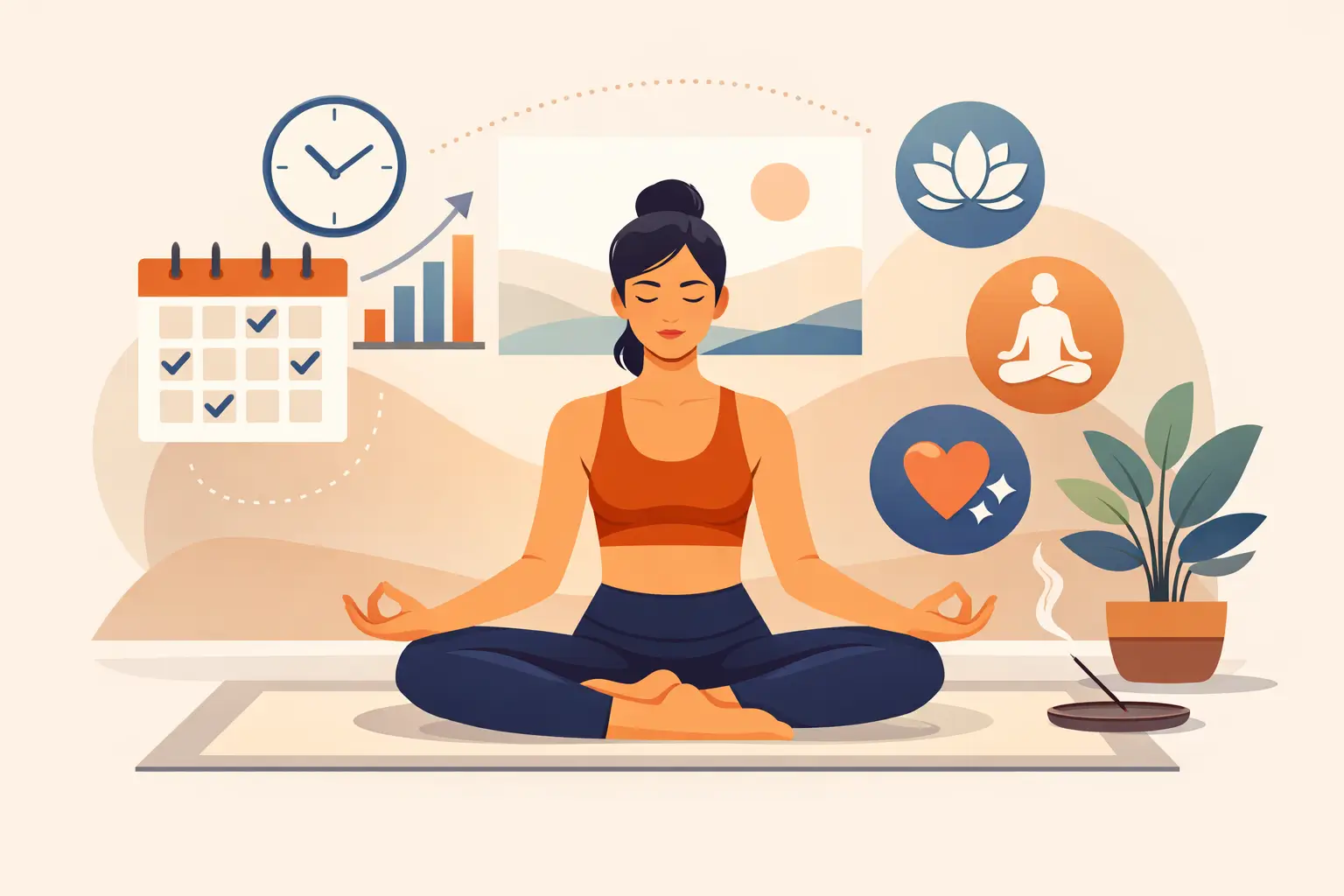
A yoga practice rarely falls apart because someone does not care enough. It usually gets crowded out by a late meeting, a long commute, poor sleep, family plans, or the quiet belief that a 20-minute practice does not count. Learning how to build yoga consistency means creating a rhythm that can hold real life, not chasing a perfect streak.
For some people, consistency is three studio classes a week. For others, it is one well-chosen class, a few minutes of breath-led movement at home, and the willingness to return after a missed week. Both can be meaningful. The goal is not to prove discipline. It is to build a practice that supports your strength, mobility, energy, and nervous system over time.
Start with a rhythm you can protect
The most common mistake is setting a schedule based on your best, most motivated week. A new routine of five classes may feel exciting in January, then become impossible when work gets busy or your body needs more rest. When the plan breaks, people often decide they have failed and stop altogether.
Begin with the smallest frequency that still feels intentional. For many beginners, one class each week is a strong foundation. If you already have experience or are looking for more support with stress, stiffness, or strength, two classes can create a steadier rhythm without demanding that yoga take over your calendar.
Choose specific days rather than relying on a vague promise to go “when there is time.” A Tuesday evening class and a Sunday morning practice have a better chance of happening because they have a place in your week. Think of them as appointments with your future self, while leaving room for the occasional change of plan.
It also helps to match class style to the actual day ahead. A dynamic flow or Pilates class may suit a day when you want to feel strong and energized. Restorative yoga can be the wiser choice after a demanding week, poor sleep, or a period of emotional overload. Consistency is easier when the practice meets your needs instead of asking you to override them.
How to build yoga consistency with fewer decisions
Decision fatigue is real. By the end of a full day, even an activity you enjoy can feel like another task to negotiate. Reduce the number of choices between you and your mat.
Book your classes ahead when possible. Put them in your calendar, set out comfortable clothes, and decide how you will get there before the day gets busy. If you practise at home, leave your mat visible rather than rolled away in a closet. These small cues tell your brain that yoga is part of the environment, not an optional project that requires a burst of motivation.
Create a simple fallback practice too. This is not a replacement for skilled instruction or the experience of practising in community. It is a bridge for the days when a class is not realistic. Five minutes of slow breathing, cat-cow, a supported forward fold, and legs up the wall can keep the relationship with your practice intact.
The key is to set a minimum that feels almost too easy. On a difficult day, you may only sit on your mat and take ten steady breaths. That still counts. Often, beginning is the hardest part, and a few minutes naturally become more. If they do not, you have still honoured the habit without turning yoga into another source of guilt.
Choose classes that make you want to return
A consistent practice needs more than a convenient time slot. It needs to feel safe, relevant, and rewarding enough that you want to come back. For newer students, a beginner-friendly class with clear options can build confidence far more effectively than forcing yourself into a fast-paced format before you are ready.
For experienced practitioners, progression matters. You may be drawn to the discipline of Ashtanga, the individual attention of Mysore practice, or strength-focused yoga and Pilates that help you feel capable in daily life. Regularity becomes more natural when you can notice change: a steadier breath, greater ease in a twist, a stronger core, or less hesitation before a posture that once felt unfamiliar.
The teacher matters as much as the style. Experienced instruction helps you understand the purpose of a pose, adapt around injuries or limitations, and distinguish productive effort from strain. Small adjustments can turn a frustrating class into one where you feel seen and supported.
At Breathe Yoga Studio, a varied weekly schedule can make it easier to build a routine around changing energy and commitments, rather than treating one class format as the only path forward. Variety is useful, but give yourself enough repetition to learn what your body responds to. Attending a familiar class for several weeks lets the practice become less about figuring out what comes next and more about being present in it.
Let recovery be part of the plan
Yoga consistency is not the same as intensity. If every session leaves you depleted, sore, or pressured to perform, the routine may not be sustainable. Your body adapts through a balance of challenge and recovery, particularly if you also run, lift weights, play sports, or spend long days seated at a desk.
Pay attention to patterns rather than judging a single class. Are you sleeping better? Do you feel more grounded after practice? Is your low back less reactive after hours at your computer? Or are you repeatedly pushing through pain and feeling less willing to return? These observations are useful information, not a test of commitment.
Restorative classes, gentle mobility work, and breath practices deserve a place in a well-rounded week. They can support down-regulation after chronic stress and help you build awareness of what your body needs. For some people, the practice that protects consistency is not another vigorous flow. It is permission to slow down.
If fatigue, low energy, or stalled progress feels persistent, movement may be only one part of the picture. Sleep, nourishment, stress, medical concerns, and metabolic health can all affect how your body feels in class. A personalized approach is often more helpful than trying to solve every challenge by exercising harder.
Use community as gentle accountability
Willpower is unreliable when life is full. Community can provide a quieter, more lasting form of accountability. When a teacher knows your name, a familiar face saves you a spot, or you share a regular class time with a friend, attending becomes connected to belonging as well as fitness.
This does not mean you need to become the most social person in the room. A brief hello before class or a conversation after a workshop can be enough. Over time, the studio can become a neighbourhood sanctuary: a place where you step out of work mode, breathe more fully, and remember that caring for yourself is not separate from the rest of your life.
If you enjoy structure, commit to a short, realistic experiment. Attend the same class once a week for four weeks, then reflect on what made it easy or difficult. Perhaps the timing was perfect but the intensity was too high. Perhaps you loved the teacher but need to pack your bag the night before. Adjust the system, not your self-worth.
Expect interruptions, then return kindly
Travel, illness, deadlines, caregiving, and seasonal changes will interrupt even a well-established routine. The difference between a temporary pause and a full stop is your return plan.
Avoid the urge to compensate for missed classes by overdoing it. Come back with a class that feels accessible, tell the teacher if something has changed in your body, and let the first session be a re-entry rather than a performance. Your flexibility, balance, and stamina may fluctuate. Your capacity to begin again is the more valuable skill.
A sustainable yoga practice is built in ordinary moments: booking the class before the week fills up, choosing rest when rest is needed, and coming back to your breath after time away. Let each return be proof that your practice is here to support your life, exactly as it is.
