


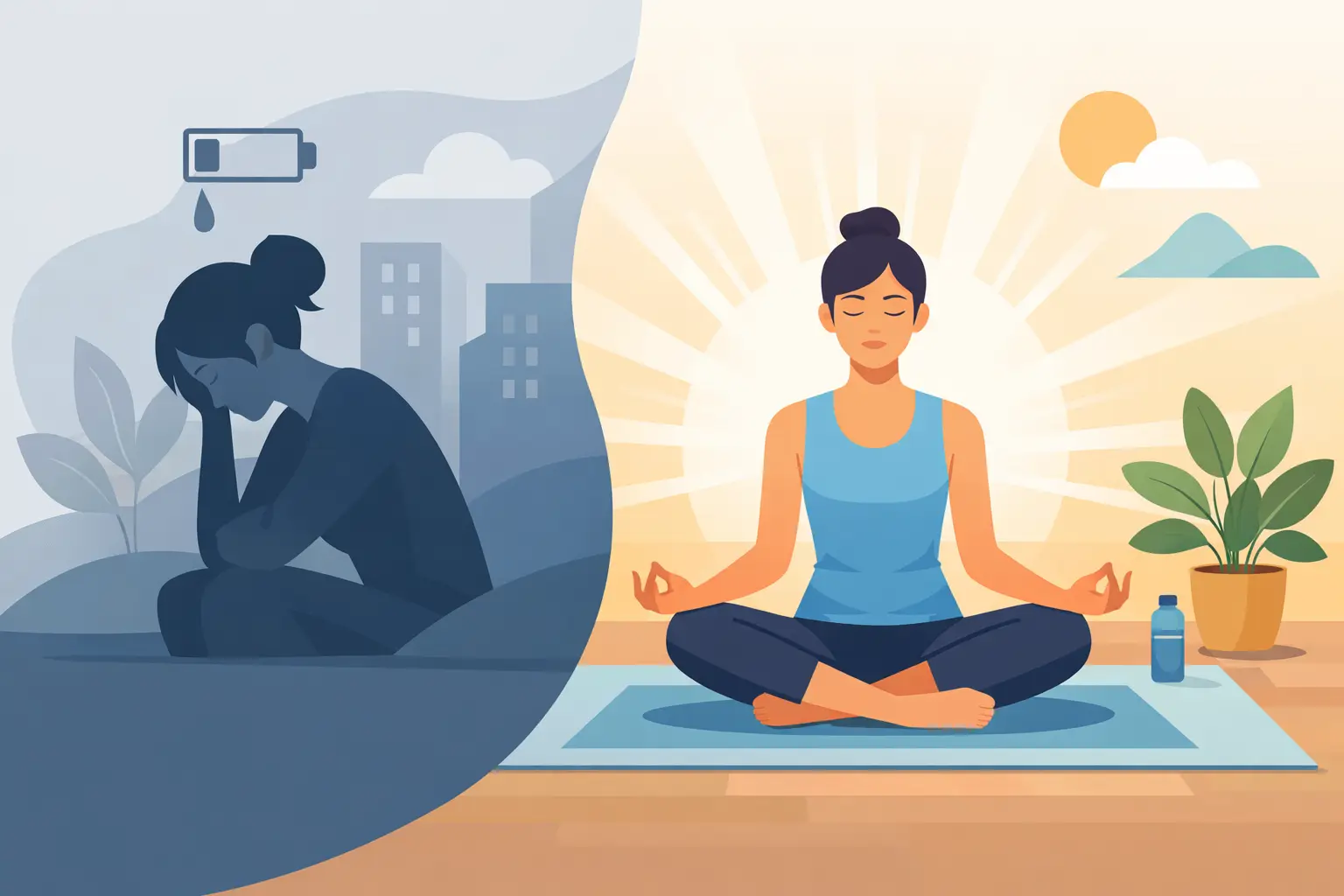
That 3 p.m. slump is not always a sign that you need a stronger coffee. Sometimes it follows a restless night, a stressful morning, hours spent sitting, an under-fuelled lunch, or a training routine that asks more of your body than it can currently restore. So, can yoga help low energy? For many people, it can be a practical part of the answer – not by forcing a quick burst of motivation, but by helping the body regulate stress, improve circulation, build sustainable strength, and make space for genuine recovery.
Yoga is not a cure for persistent fatigue, nor should it be used to push through symptoms that need medical attention. But when low energy is connected to stress, poor sleep, stiffness, inconsistent movement, or feeling chronically switched on, the right practice can help you feel more steady, present, and capable in your day.
Can yoga help low energy? It depends on the kind of fatigue
“Low energy” can describe several very different experiences. You may feel mentally foggy after a demanding workweek, physically sluggish after too much desk time, or wired and exhausted after months of high stress. You may also be depleted because you are not sleeping well, eating enough, recovering from illness, or managing a health concern.
Yoga helps most when it meets the real cause rather than treating every tired day with the same high-intensity class. A vigorous practice can feel enlivening when you are simply sedentary or mentally flat. On another day, that same practice can leave you more depleted if your nervous system is already overextended.
This is where experienced instruction matters. A thoughtful teacher can offer options, encourage rest without judgement, and help you notice the difference between the normal effort of movement and the feeling of running on empty. The goal is not to prove how hard you can work. It is to leave with more capacity than you had when you arrived.
Why movement can create energy instead of draining it
It sounds counterintuitive: if you are tired, why move at all? Yet gentle to moderate movement can increase circulation, ease muscular tension, and interrupt the dulling effects of prolonged stillness. A well-paced yoga class also asks for attention. Coordinating breath, posture, and balance can draw your focus away from a racing to-do list and back into your body.
Over time, regular movement may support better sleep quality, mobility, and physical confidence. Strength-focused yoga and Pilates can be especially useful for people who feel tired partly because everyday movement feels effortful. Building leg, hip, core, and upper-body strength can make stairs, carrying groceries, and long days on your feet feel less taxing.
There is also a nervous system piece. When stress stays high, the body can spend much of the day in a state of urgency. Breathing practices, slower transitions, and restorative postures may help signal safety and downshift that response. This does not erase a packed schedule, but it can make recovery more available.
Choose the practice that matches your energy today
The most useful class is not always the most intense one. Before you roll out your mat, take an honest reading of how you feel. Are you sleepy but calm? Tense and restless? Weak from poor sleep? Sore from a hard workout? Your answer can guide the practice.
When you feel stiff, dull, or mentally foggy
A beginner-friendly flow, a gentle vinyasa class, or a measured strength-focused practice may help wake up the body. Look for movements that mobilize the spine, hips, shoulders, and ankles, then gradually add standing poses and light core work. Sun salutations can be energizing, but they do not need to be rushed.
Even 20 minutes of intentional movement can change how your body feels after a morning of screens or a long commute. The key is a pace that leaves you clearer, not breathless and spent.
When you feel stressed, wired, and tired
Choose slower movement. Restorative yoga, gentle floor-based work, and supported shapes can be more productive than trying to sweat out stress. Longer exhalations, quiet pauses, and props such as bolsters and blankets give the body a chance to soften.
This kind of practice may not create the immediate buzz of a hard workout. Its value is subtler: you may sleep more deeply, feel less reactive, or notice that your energy stops crashing as sharply later in the week.
When you want a consistent energy-building routine
A balanced weekly rhythm often works better than relying on one perfect class. You might pair two more active yoga or Pilates sessions with one restorative practice. People drawn to a disciplined method, such as Ashtanga or Mysore, may appreciate its structure and progression, while still benefiting from lighter days and deliberate rest.
Consistency matters more than intensity. A practice you can return to three times a week, at a sustainable level, is usually more supportive than an occasional all-out session followed by days of exhaustion.
Breathwork is helpful, but it is not a shortcut
Breath is one of yoga’s most accessible tools for shifting your state. If you are sluggish, a few rounds of upright, spacious breathing paired with gentle movement can help you feel more alert. If you are anxious and depleted, slowing the breath and lengthening the exhale may be more appropriate.
Avoid treating breathwork as a performance. Forceful techniques are not right for everyone, particularly if you feel dizzy, are pregnant, have certain cardiovascular or respiratory conditions, or are already feeling overwhelmed. A simple place to begin is to sit comfortably, inhale softly through the nose, and let the exhale be a little longer than the inhale for several rounds.
The point is not to manufacture energy on demand. It is to become more responsive to what your body needs.
Support your practice with the basics
Yoga works best as part of a wider foundation. If your energy is consistently low, assess the ordinary factors with compassion rather than self-criticism: sleep timing, hydration, regular meals, protein and fibre intake, alcohol, stress load, and recovery between workouts all matter.
For some people, low energy is also tied to blood-sugar swings or a metabolic pattern that deserves more individualized support. A science-based program that considers blood analysis, nutrition habits, and personal goals can be useful when generic wellness advice has not moved the needle. Movement and nutrition are not competing solutions. They can support each other when both are tailored to the person.
At Breathe Yoga Studio, the variety of yoga, Pilates, restorative, and metabolic wellness offerings makes it easier to build a routine around real life rather than forcing yourself into a one-size-fits-all plan.
Know when low energy needs medical care
Please do not assume fatigue is simply a fitness problem. Speak with a health-care provider if low energy is severe, lasts for several weeks, worsens despite rest, or comes with unexplained weight changes, shortness of breath, chest pain, fainting, fever, persistent low mood, or changes in your menstrual cycle. Conditions such as anemia, thyroid disorders, sleep apnea, nutrient deficiencies, depression, infection, and medication effects can all contribute to fatigue.
Yoga can remain a gentle source of support while you seek answers, but it should not replace assessment or treatment. On difficult days, a few supported poses, a quiet walk, or full rest may be the most appropriate practice.
Try approaching your next class with one question: what would leave me feeling a little more resourced today? Some days, that may be strengthening your legs and opening your chest. Other days, it may be lying over a bolster and allowing your breath to settle. Learning to choose with care is a powerful form of wellness, and it is where more sustainable energy often begins.
