


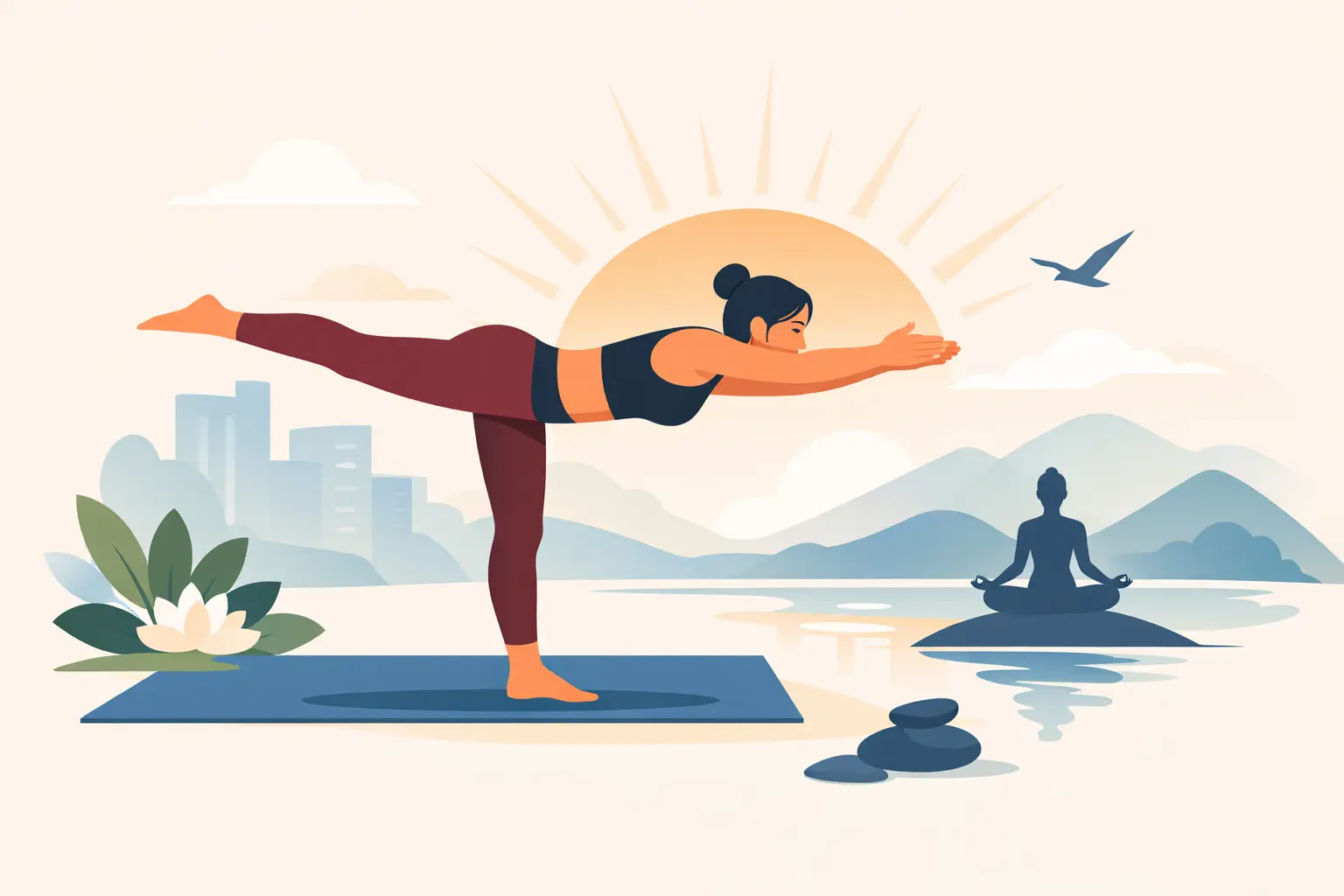
The room becomes quieter once the breath finds its rhythm. A familiar sequence begins, not as a performance to perfect, but as a practice of paying attention: where the body feels steady, where the mind rushes ahead, and what changes when you meet both with patience. That is part of the enduring appeal of ashtanga yoga. It offers a clear, energizing structure while leaving plenty of room for a deeply personal experience.
For some people, Ashtanga is the practice that builds reliable strength and mobility after years of inconsistency. For others, it becomes a welcome anchor in a demanding week. Its reputation for intensity is real, but so is its capacity to be adapted thoughtfully. The most meaningful place to begin is not with the most advanced posture. It is with breath, good instruction, and a willingness to practise exactly where you are.
What makes Ashtanga yoga distinct?
Ashtanga yoga is a traditional, dynamic system of postures linked by breath and movement. Rather than changing the sequence every class, practitioners return to an established series. The Primary Series is usually the starting point, with standing poses, forward folds, seated postures, twists, backbends, and a closing sequence.
This consistency is not about repetition for its own sake. When the order is familiar, you can notice more. You may see that a transition feels lighter than it did last month, that your breath stays calmer in a challenging shape, or that a tight area needs a more patient approach. Progress becomes less about collecting poses and more about building self-awareness.
The practice is often associated with vinyasa, the linking movements that connect one posture to the next. Breath guides the pace. Traditional teaching also emphasizes drishti, or a steady gaze, and bandhas, subtle actions that support stability and internal awareness. These elements can sound technical at first, and they do not need to be forced. An experienced teacher helps translate them into practical cues that make sense in your own body.
Why a structured practice can feel so grounding
Life in Toronto can move quickly. A fixed practice gives you fewer decisions to make when you arrive on the mat. Instead of wondering what comes next, you can return to the next breath, the next movement, the next opportunity to soften effort that is not serving you.
Ashtanga yoga develops physical capacity, but its benefits extend beyond flexibility. The repeated weight-bearing work can support upper-body and core strength. Standing postures build balance and leg stability. Forward folds, twists, and controlled transitions encourage mobility while asking the nervous system to remain present.
That last point matters. A strong practice is not automatically a regulated one. If you race through every vinyasa or push past signals of pain, the sequence can become another source of pressure. When taught with care, however, Ashtanga creates a useful conversation between effort and ease. You learn when to engage, when to modify, and when resting is the wiser choice.
For busy professionals, that skill can carry into the rest of the day. A few conscious breaths between meetings will not solve every stressor, but regular practice can make it easier to recognize tension before it takes over. Many students find that the ritual of showing up helps them feel more settled, capable, and connected to themselves.
Led classes and Mysore practice
There are two common ways to experience Ashtanga yoga, and each offers something valuable.
In a led class, the teacher guides the group through the sequence at a shared pace. This format can be especially helpful for learning the flow, understanding the rhythm of breath and movement, and feeling supported by the energy of the room. It is also a satisfying option for practitioners who enjoy practising in community without having to remember each posture independently.
Mysore-style practice is different. Students work through a portion of the sequence at their own pace while the teacher offers individualized guidance, hands-on assistance when appropriate, and modifications. Despite the name, it is not a silent test of independence. It is a supported learning environment where each person can receive a practice that meets their current needs.
Mysore can be an excellent entry point for beginners because there is no expectation to keep up with anyone else. You may begin with a short sequence and gradually add postures as your confidence, strength, and understanding grow. It can also serve experienced practitioners who want more personalized feedback than a group format allows.
The best choice depends on your learning style, schedule, and current relationship with movement. Some people enjoy the clarity of led classes first. Others appreciate the individual pacing of Mysore right away. There is no single correct pathway.
Starting Ashtanga yoga without trying to prove anything
It is easy to encounter striking images of arm balances and deep backbends, then assume they are the entry requirement. They are not. The foundation of Ashtanga is built through simpler, essential actions: standing with awareness, moving with the breath, and learning to distribute effort through the whole body.
A thoughtful first class may include modifications such as bending the knees in forward folds, stepping rather than jumping back, lowering the knees during a vinyasa, or taking a rest in Child’s Pose. These are not lesser versions of the practice. They are intelligent choices that help the body build capacity over time.
If you are returning to movement after an injury, managing joint sensitivity, navigating pregnancy or postpartum recovery, or living with a health condition, let the teacher know before class. A skilled instructor can help you understand what may need adjusting. Yoga is not a substitute for medical care, and persistent or sharp pain deserves professional assessment rather than determination.
There are trade-offs to consider, too. Because Ashtanga includes repeated movement patterns and weight-bearing transitions, it can be demanding on wrists, shoulders, hamstrings, and hips. Some students benefit from practising fewer vinyasas, using props, or alternating stronger classes with restorative yoga, Pilates, or a quiet walk. Sustainable progress usually comes from a balanced week, not from doing the most.
Building a practice that fits real life
Consistency does not have to mean a daily 90-minute practice. For one person, two studio classes a week may be the right rhythm. For another, one Mysore session plus a shorter home practice creates more ease. The practice is most supportive when it works with your life rather than becoming another standard you feel pressured to meet.
Try to measure progress in more than physical milestones. Notice whether you recover your breath sooner after effort. Pay attention to how you feel leaving class, how you sleep, or whether carrying groceries and climbing stairs feel a little more manageable. These quieter changes often matter more than touching your toes.
It can also help to set a simple intention before you begin. Perhaps you are there to build strength, to create space from work stress, or to practise moving without judgement. The intention does not need to be grand. It simply gives the practice a direction that is more meaningful than comparison.
Ashtanga yoga in a supportive community
A dedicated practice can be personal without being solitary. Practising alongside others brings a sense of shared commitment, especially on the mornings or evenings when motivation is low. In a welcoming studio setting, you can ask questions, receive guidance, and see that every practitioner has a different starting point.
At Breathe Yoga Studio in The Junction, Ashtanga and Mysore offerings are taught with respect for the tradition and care for the individual. Whether you are new to yoga or returning to a familiar sequence, the goal is not to rush your development. It is to create a steady practice that supports strength, recovery, focus, and a more grounded relationship with your body.
Your first Ashtanga class does not need to look impressive. Let it be a beginning: one breath, one posture, and one small decision to meet yourself with attention.
