


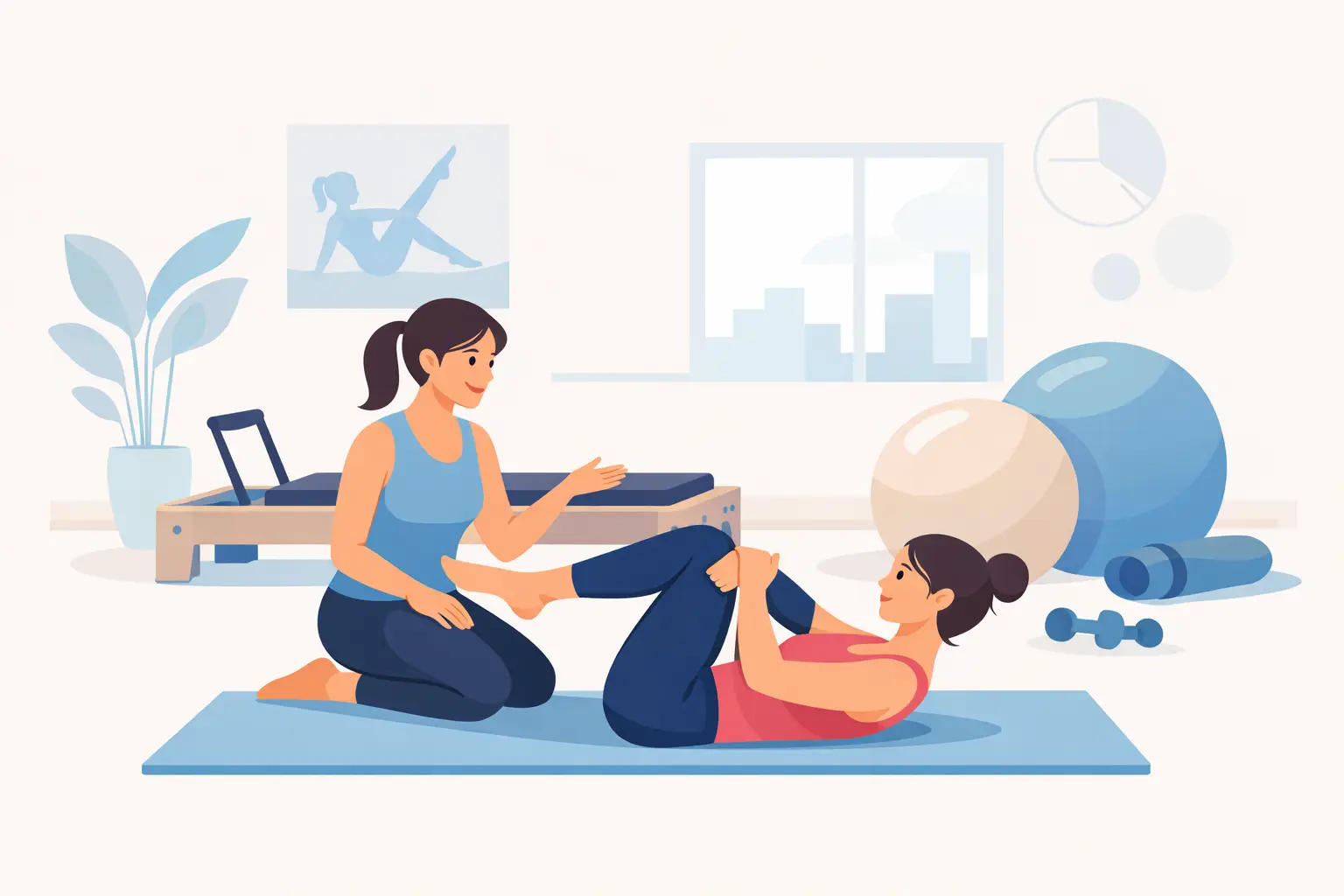
A first Pilates class can feel surprisingly personal. You may be learning new movement patterns, noticing muscles you have not used in a while, and discovering how much focus it takes to move slowly with control. This beginner pilates class guide is here to replace guesswork with a clear, supportive picture of what your first session may feel like.
Pilates is not about performing perfect shapes or keeping up with the person beside you. It is a practice of attention: to breath, alignment, strength, and the small choices that help your body feel more supported. Whether you are returning to movement, cross-training for another activity, or looking for a steadier way to build strength, a beginner class offers a thoughtful place to begin.
What Pilates Is Designed to Build
Pilates develops strength, but it does so differently from a fast-paced conditioning class. You will work with the deep muscles of the abdomen, back, hips, and pelvic floor while also building mobility, balance, coordination, and postural awareness. The aim is not simply to make an exercise harder. It is to help your body move with greater efficiency and control.
You may hear an instructor refer to your “centre” or “core.” This is more than pulling your stomach in. It involves creating gentle, responsive support around the trunk so your arms and legs can move without unnecessary strain through the neck, back, or hips.
For many people, the appeal is practical. Pilates can complement running, cycling, strength training, yoga, and the long hours spent at a desk. It can also be a valuable standalone practice for someone who wants to feel stronger without high-impact movement. Results tend to come from consistency rather than intensity alone.
Beginner Pilates Class Guide: What to Expect
Most beginner mat Pilates classes begin with a few minutes to arrive, settle your breath, and orient yourself on the mat. Your teacher may ask whether you are new, managing an injury, pregnant, or working with any movement considerations. This is useful information, not a test. The more your teacher knows, the better they can offer options that respect your body.
From there, class often moves through a progressive sequence. You might start with breathing and pelvic positioning, then explore gentle spinal mobility, abdominal work, glute and hip strength, and controlled movements for the legs and arms. Some exercises are performed lying down, while others may involve side-lying, kneeling, seated, or standing positions.
A well-taught class should include clear cues and room to adjust. You may be offered a smaller range of motion, a slower tempo, or a variation that removes load from a sensitive area. These choices are not shortcuts. They are how you learn the movement well enough to build from it.
Expect to feel challenged in subtle ways. A small leg lift or a slow arm reach can become demanding when you are asked to keep the ribs, pelvis, and breath organized. Shaking is common, especially when muscles are learning to stabilize. Sharp pain, pinching, numbness, or a sense that you cannot breathe normally are signals to pause and speak with your instructor.
Mat Pilates and Reformer Pilates
Your first experience may be on a mat, using body weight and simple props such as bands, balls, or light weights. Mat work is highly effective, and it teaches you to create stability without relying on a machine. It can be accessible, but it is not automatically easier. Holding your own alignment can be demanding.
Reformer Pilates uses a spring-based apparatus with a moving carriage, straps, and adjustable resistance. The springs can add challenge or provide assistance, depending on the exercise and setup. A reformer can offer useful feedback, but it also requires instruction on safe equipment use.
Neither format is inherently better. If you enjoy a straightforward, portable practice, mat Pilates may suit you. If you like tactile feedback and varied resistance, reformer work may be appealing. The quality of teaching, appropriate class level, and your comfort in the space matter more than the equipment alone.
What to Wear and Bring
Choose clothing that lets you bend, reach, and lie down comfortably. Fitted or lightly streamlined pieces help an instructor see your alignment, though you should always wear what feels comfortable and appropriate for you. Leggings, shorts, joggers, a T-shirt, or a close-fitting tank are all suitable options.
Pilates is usually practised barefoot or in grip socks, particularly if equipment is involved. Bring water, and arrive a little early if you can. Those extra minutes make it easier to complete any registration details, meet your teacher, and settle into the room without rushing.
There is no need to arrive with special flexibility, a strong core, or a matching workout set. Curiosity and a willingness to work at your own pace are enough.
How to Get More From Your First Class
Give yourself permission to be new. Pilates has a vocabulary, and terms such as neutral spine, imprint, lateral breathing, or tabletop may take time to become familiar. Listen for the overall intention of a cue rather than trying to execute every detail immediately.
Breathing deserves particular attention. Many beginners hold their breath when an exercise becomes difficult, which can create tension in the jaw, shoulders, and neck. Try to keep the breath moving, even if it is not perfectly timed. A calm exhale often makes it easier to find support through the centre.
It also helps to release the idea that more range is always better. If lifting your leg high causes your pelvis to tip or your back to grip, a lower lift may be the stronger choice. Pilates rewards precision. Over time, control can lead to more range, more strength, and greater confidence.
After class, you may feel energized, lengthened, or pleasantly tired. Mild muscular soreness a day or two later is possible, especially if the work is unfamiliar. Drink water, take a walk, and allow recovery to be part of the process. If discomfort feels joint-related, sharp, or persistent, seek guidance from an appropriate health professional before returning to that movement.
Choosing the Right Beginner Class
Look for a class clearly labelled beginner, introductory, fundamentals, or all levels with strong options for new students. Smaller classes can be especially helpful early on because they allow more individual feedback. An experienced teacher will offer language that is specific without being overwhelming and will make modifications feel like a normal part of class.
If you have a recent injury, chronic pain, osteoporosis, hypermobility, are pregnant, or have been advised to modify exercise, contact the studio before booking. Pilates can often be adapted, but the best choice depends on your history, symptoms, and the instructor’s training. A general group class may be appropriate, or you may benefit from a private session or a therapeutic referral first.
At Breathe Yoga Studio, beginner-friendly movement is approached with the same care given to every stage of practice: experienced instruction, a welcoming community, and space to learn without pressure. For West Toronto students balancing work, family, training, and recovery, a regular class can become a grounding appointment with your own wellbeing.
A Simple Plan for Your First Month
One class a week is a meaningful start. It gives your body time to absorb the new patterns without making the practice feel like another obligation. If you feel good and your schedule allows, adding a second class can help the cues become more familiar sooner.
Rather than measuring progress by whether an exercise looks advanced, notice everyday changes. Perhaps you sit taller at your desk, feel steadier climbing stairs, recover more easily after a run, or recognize when your shoulders are creeping toward your ears. These are valuable signs that awareness is carrying beyond the mat.
Keep your expectations generous. Some days you will feel coordinated; other days, the basics will ask for your full attention. Both experiences belong in a sustainable practice. Arrive as you are, ask questions when you need to, and let each class be a small opportunity to feel more at home in your body.
