


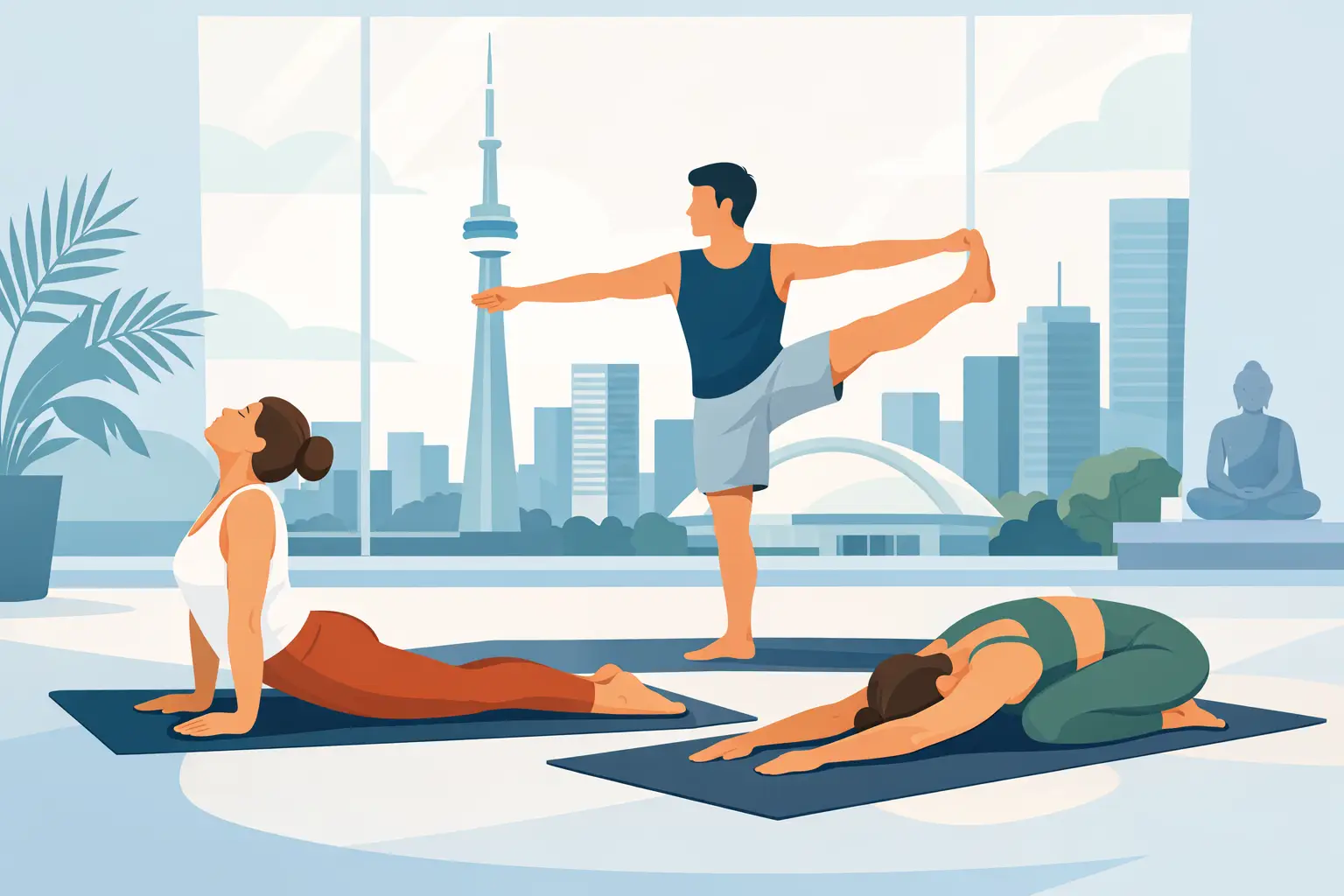
The room is quiet, but not silent. One student is moving through Sun Salutations, another is holding a steady backbend, and someone near the front is learning how to breathe evenly between postures. If you have been searching for ashtanga mysore practice toronto, this is usually the first surprise – Mysore is not a follow-the-leader class. It is a guided self-practice taught within a shared room, where each student receives individual support.
For many people, that sounds both appealing and a little intimidating. The good news is that Mysore is often more accessible than people expect. You do not need to know the full sequence. You do not need to be advanced. You do need curiosity, consistency, and a willingness to learn one step at a time.
What Mysore practice actually is
Mysore is the traditional teaching method of Ashtanga yoga. Instead of the teacher calling every movement for the whole room, each student practises a sequence at their own pace while the teacher offers one-on-one instruction, hands-on guidance when appropriate, and modifications based on the student’s level, mobility, energy, and experience.
That structure matters. In a led class, everyone moves together. In a Mysore room, the practice becomes more personal. You build memory, attention, and steadiness because you are not waiting for constant cues. At the same time, you are not left alone. A skilled teacher is watching carefully, adjusting the sequence as needed, and helping you develop safely over time.
This is one reason Mysore tends to attract both dedicated practitioners and thoughtful beginners. It offers structure without making everyone fit into the same pace.
Why people seek out ashtanga mysore practice in Toronto
Toronto students often want two things at once – depth and flexibility. Mysore supports both. It gives you a disciplined method, but it also meets you where you are on a given day. That balance can be especially valuable for people managing work stress, inconsistent energy, injury history, or simply the reality of a full schedule.
In a busy city, many wellness experiences feel rushed or performative. Mysore is different. It asks for presence. You repeat foundational postures, refine your breath, and learn to notice patterns in the body and mind. Over time, the practice can become an anchor – not because every day feels easy, but because the rhythm is dependable.
For some students, the appeal is physical. They want to improve mobility, build strength, and develop a more intelligent relationship to effort. For others, the deeper draw is nervous system regulation. Repetition, breath, and individual pacing can create a sense of steadiness that is hard to find in more stimulating formats.
Ashtanga Mysore practice Toronto students often ask about beginners
One of the biggest misconceptions is that Mysore is only for advanced students who have memorized long sequences. In reality, beginners are often well suited to this method when the teaching is supportive and the environment is welcoming.
A new student usually starts with a short section of the sequence, not the entire practice. You learn a few postures at a time and build gradually. That progression helps you understand alignment, breath, and transitions before adding more complexity. It also reduces the pressure to keep up with anyone else in the room.
The teacher’s role is central here. In a strong Mysore setting, instruction is not generic. A beginner who is tight in the shoulders, navigating low back sensitivity, or returning to movement after time away should not be given the same experience as a long-time practitioner. The method stays traditional, but the teaching remains responsive.
If you are completely new to yoga, it helps to be honest about that from the start. Good teachers appreciate transparency. It allows them to pace the introduction properly and support your confidence from the first visit.
What your first Mysore class may feel like
Your first session may feel slower than expected. That is not a problem. Mysore is not designed to impress anyone. It is designed to build a sustainable practice.
You may be shown how to begin with breath and Sun Salutations. You may pause often. You may receive the next posture only when the previous one is steady enough. Some students love that right away. Others need a few visits to settle into the quieter rhythm and reduced external instruction.
It is also common to notice the social atmosphere in a new way. Even though each person is doing their own practice, Mysore rooms can feel deeply communal. There is shared focus, mutual respect, and often a sense that everyone is working honestly at their own edge. That can be more supportive than a room where comparison is easy.
Wear comfortable clothing, arrive with enough time to settle, and expect to ask questions. If you are unsure whether to eat beforehand, when to arrive, or what level the room suits, ask in advance. Clear communication makes the first experience much smoother.
How Mysore differs from a led Ashtanga class
Both Mysore and led classes come from the same Ashtanga system, but they create very different learning experiences.
A led class is useful for rhythm, shared energy, and learning the overall cadence of the sequence. It can help students hear the breath count, understand transitions, and experience the traditional flow of the method. For some people, that collective structure feels motivating.
Mysore is more individualized. Instead of moving with the group, you work directly with your current practice. That means more personal attention, more room for modifications, and often more precise skill development. It can also expose habits more clearly, which is valuable but sometimes humbling.
Neither format is automatically better for everyone. If you thrive with verbal guidance and group pacing, a led class may feel more familiar at first. If you want tailored instruction and a practice that evolves with you, Mysore may be the stronger fit. Many students benefit from a mix of both.
The trade-offs worth knowing
Mysore has real strengths, but it is not magic, and it is not the right fit for every season.
The repetition that makes Ashtanga effective can also feel demanding if you prefer novelty in your movement practice. Some students love the consistency. Others need to balance it with restorative classes, strength work, Pilates, or gentler mobility-based sessions. That does not mean they are less committed. It means they are paying attention to what their body needs.
There is also a mental trade-off. Because the sequence is learned progressively, Mysore asks for concentration and patience. If you are used to being guided every minute, the quiet responsibility of self-practice may feel unfamiliar. Yet that same challenge is often what makes the method transformative.
And as with any disciplined practice, teacher quality matters. Traditional structure should never cancel out intelligent adaptation. A healthy Mysore room respects the method while also respecting the person.
Finding the right ashtanga mysore practice Toronto fit for you
Not every studio teaches Mysore in the same way. If you are exploring options, look beyond the class title. The best fit usually comes down to teaching quality, room culture, and whether the environment supports steady growth.
A good Mysore program should feel clear, attentive, and grounded. You want teachers who understand both tradition and practical application. You also want a space that welcomes questions, supports beginners, and makes room for experienced students to deepen their practice without creating a hierarchy in the room.
Schedule matters too. Many Toronto students are balancing work, family, commuting, and recovery. A practice is only sustainable if it can realistically fit your week. For that reason, consistency often matters more than ambition. Two steady visits can be more meaningful than an unrealistic plan to practise every day and burn out by the second week.
If you live in the west end, finding a studio that feels like a neighbourhood oasis can make a real difference. The easier it is to return, the more likely the practice becomes part of your life rather than something you keep postponing.
At Breathe Yoga Studio, Mysore practice sits naturally within a broader wellness approach that values strength, recovery, nervous system support, and sustainable progress. For students who want depth without losing a sense of care, that combination can feel especially supportive.
How to begin without overthinking it
Start where you are, not where you think an Ashtanga student should be. If you are curious, reach out, ask what the first class looks like, and choose a day when you can arrive without rushing. Let the teacher know about injuries, limitations, or concerns. Then give yourself more than one visit before deciding whether the method suits you.
Mysore tends to reveal itself over time. The first class may simply feel new. By the third or fourth, you may start to notice the quiet intelligence of the room, the comfort of repetition, and the confidence that comes from learning a practice that is truly your own.
If you are looking for steadiness in your movement practice, not just intensity, Mysore can offer something rare: a disciplined form that still leaves room for humanity. That is often where meaningful practice begins.
