


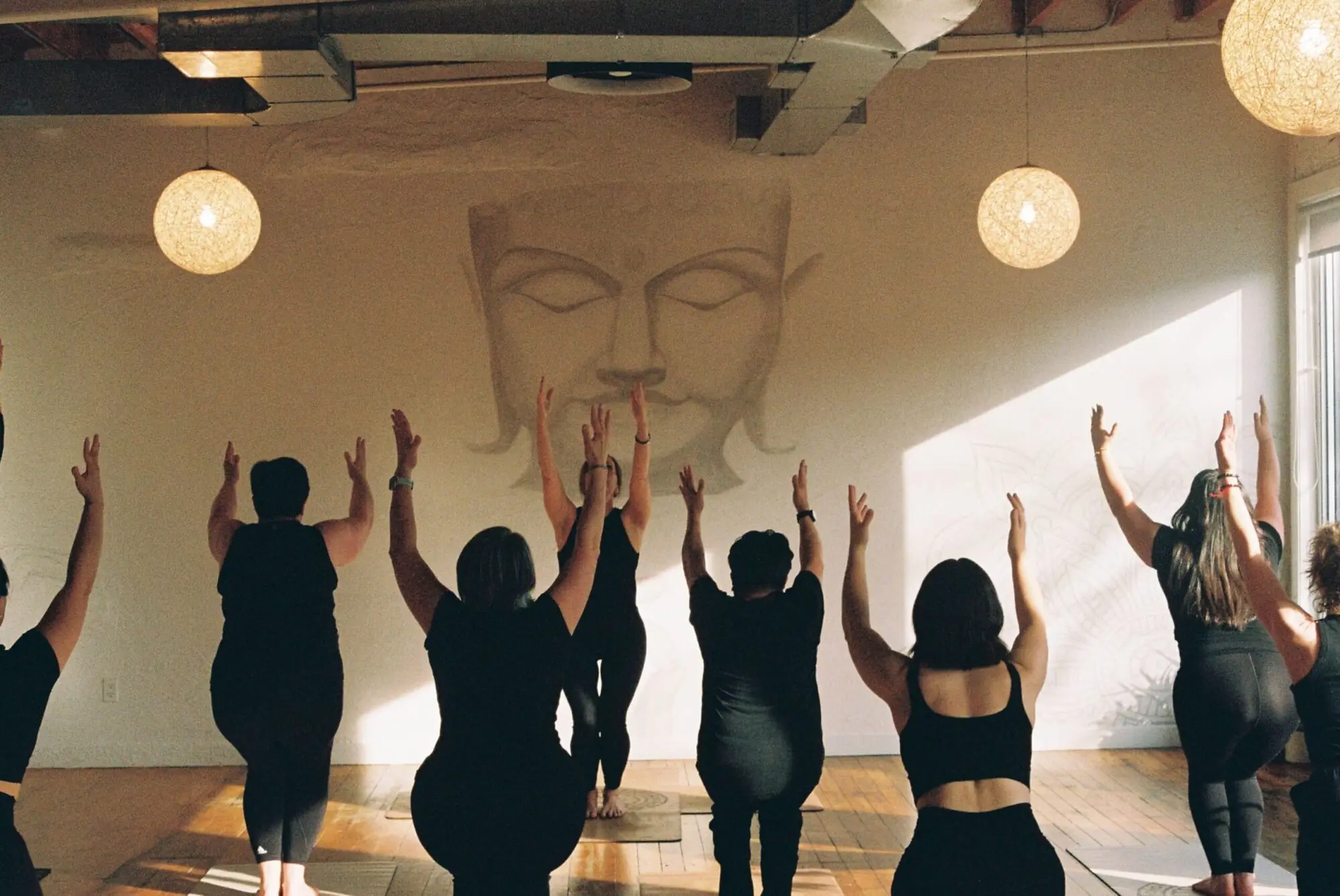
A deep squat feels different when your hips have room to move. Carrying groceries feels different when your shoulders and core know how to share the work. This is where yoga for mobility and strength becomes far more useful than a good stretch or a hard workout alone: it helps you move through everyday life with greater options, awareness, and confidence.
Mobility and strength are often treated as separate goals. One is associated with flexibility, the other with effort and muscle. In a thoughtful yoga practice, they support each other. You build the control to access a fuller range of motion, then learn how to use that range with steadiness rather than forcing it.
What mobility really means
Mobility is your ability to actively control movement through a joint’s available range. It is not the same as passive flexibility. If someone can gently lift your leg high while you lie on your back, that shows flexibility. If you can lift and hold that leg yourself, with a stable pelvis and easy breath, that is mobility.
This distinction matters because more range is not automatically better. A person with very open hips may still feel unstable in lunges or experience low-back tension in forward folds. Another person may have limited range because their body is protecting an area that does not yet feel strong, coordinated, or safe.
Yoga gives us a practical way to work with this. In a well-sequenced class, you might explore hip movement in low lunge, strengthen it in Warrior II, and integrate it in balancing postures. The goal is not to achieve the deepest shape in the room. It is to develop a range of motion you can own.
Why strength belongs in a mobility practice
Strength creates support around your joints. It helps your shoulders stay organized in Downward-Facing Dog, your knees track with care in Chair Pose, and your spine remain supported as you hinge, twist, and balance. It also makes everyday movement less demanding, whether you are climbing stairs, sitting at a desk for hours, or getting up from the floor.
In yoga, strength is often built through isometric work: holding a position while maintaining alignment and breath. Plank, Boat Pose, Chair Pose, Warrior variations, and standing balances can all develop meaningful endurance. Slow transitions are equally valuable. Moving from a lunge to a balance without rushing asks your hips, feet, and core to communicate.
The trade-off is that strength work needs appropriate load and recovery. Long holds are not always the answer, especially if you are returning from injury, managing joint sensitivity, or practising after a demanding week. Sometimes a shorter hold with clear alignment offers more benefit than pushing until your form collapses.
Yoga for mobility and strength starts with control
A useful practice does not chase sensation for its own sake. Intense stretching can feel productive, but pain, pinching, numbness, or a sense of joint instability are signals to ease back. Aim instead for a manageable level of effort where you can breathe steadily and make small adjustments.
Think of each pose as a conversation between stability and freedom. In a low lunge, for example, gently engage the back leg and lower abdomen before moving deeper into the front of the hip. In a seated forward fold, lengthen through the spine and bend the knees as much as needed rather than pulling aggressively on the hamstrings. These choices may make the pose look smaller, but they often make the work more effective.
Breath is part of that control. A slow exhale can reduce unnecessary bracing, while a calm inhale creates space to feel what is happening. This is not about making every practice quiet or easy. It is about recognizing when effort is constructive and when it has become strain.
The movement patterns worth practicing
A balanced yoga practice revisits a few foundational patterns often enough for your body to learn them. Squatting and lunging build hip, knee, and ankle capacity. Folding and hinging develop posterior-chain strength and awareness. Pushing through the hands supports the shoulders and upper body. Twisting and side bending encourage spinal movement when practised without forcing the end range.
Standing balances deserve special attention. Tree Pose, Warrior III preparations, and simple single-leg holds train the smaller stabilizing muscles of the feet, ankles, hips, and trunk. They also expose habits that are easy to miss in symmetrical poses. You may discover that one ankle feels less steady, one hip tends to hike, or one side of your waist works harder to keep you upright.
Gentle backbends can support mobility too, particularly for people who spend long hours seated. The key is to distribute the shape. Rather than compressing the low back, use your legs, upper back, and shoulder positioning to create extension through more of the spine. A supported Bridge Pose may be a wiser starting point than a dramatic backbend, depending on your body and experience.
How often should you practice?
Consistency usually matters more than intensity. Two or three well-chosen classes each week can create meaningful change, especially when paired with short movement breaks between long periods of sitting. If you are newer to yoga, beginning with one or two classes weekly gives your body time to adapt and helps you learn the shapes without rushing.
Your best schedule depends on your other activity, sleep, stress, and recovery. A runner may benefit from classes that address calves, hips, and hamstrings while also building single-leg control. Someone who lifts weights may choose yoga to improve shoulder movement, breathing, and spinal rotation. If you are feeling depleted, restorative practice is not a missed strength session. Recovery supports your ability to train well over time.
For many people, variety works best. A more active flow or strength-focused class can challenge muscular endurance, while a slower class can create time to refine alignment and notice restricted areas. At Breathe Yoga Studio, experienced teachers can help students choose classes that meet their current needs rather than following a one-size-fits-all plan.
Make familiar poses work harder for you
Progress does not always require advanced postures. Often, it comes from bringing more attention to the basics. In Downward-Facing Dog, press evenly through both hands, soften the knees, and lengthen your spine before worrying about heels reaching the mat. In Warrior II, let the front knee track in the direction of the toes while maintaining a stable back foot. In Plank, create a long line through the body instead of allowing the shoulders to sink or the ribs to flare.
Props are useful tools, not signs that you are behind. Blocks can bring the floor closer in a lunge or fold. A strap can support shoulder or hamstring work without encouraging you to pull beyond control. A bolster or blanket can make restorative positions accessible enough for your nervous system to settle. When your body feels supported, it is often more willing to move.
It also helps to measure progress beyond flexibility. Notice whether you can hold a balance with less gripping, rise from a chair more easily, or recover more quickly after a long walk. These changes tend to last because they reflect improved coordination, capacity, and body awareness.
When to slow down and ask for support
Yoga can be adapted for many bodies and life stages, but individual guidance matters. Speak with your teacher before class if you have a recent injury, persistent pain, hypermobility, dizziness, or a condition that affects balance or bone health. They can offer modifications and help you distinguish between healthy effort and a movement that needs a different approach.
If pain is sharp, worsening, or accompanied by swelling, weakness, or tingling, pause the movement and seek appropriate health-care guidance. Yoga supports wellbeing, but it does not replace diagnosis or treatment when something needs clinical attention.
The most sustainable practice is not the one that leaves you exhausted or chasing a perfect pose. It is the one you can return to, week after week, with enough curiosity to notice what your body needs. Give yourself permission to start where you are, move with care, and let strength and mobility grow together.
Contact us at info@breatheyogastudio.com to help you choose the right classes for your body type and fitness level – together we’ll be sure to find the optimal class for you.
